What Fork Fits My Bike? Wheel Size, Steerer, Axle, Travel and Brakes
Four things decide whether a fork fits: wheel size, steerer, front axle and travel. Here is where to find each one for your bike, how much longer you can go on travel, and the two brake and tire checks people skip.
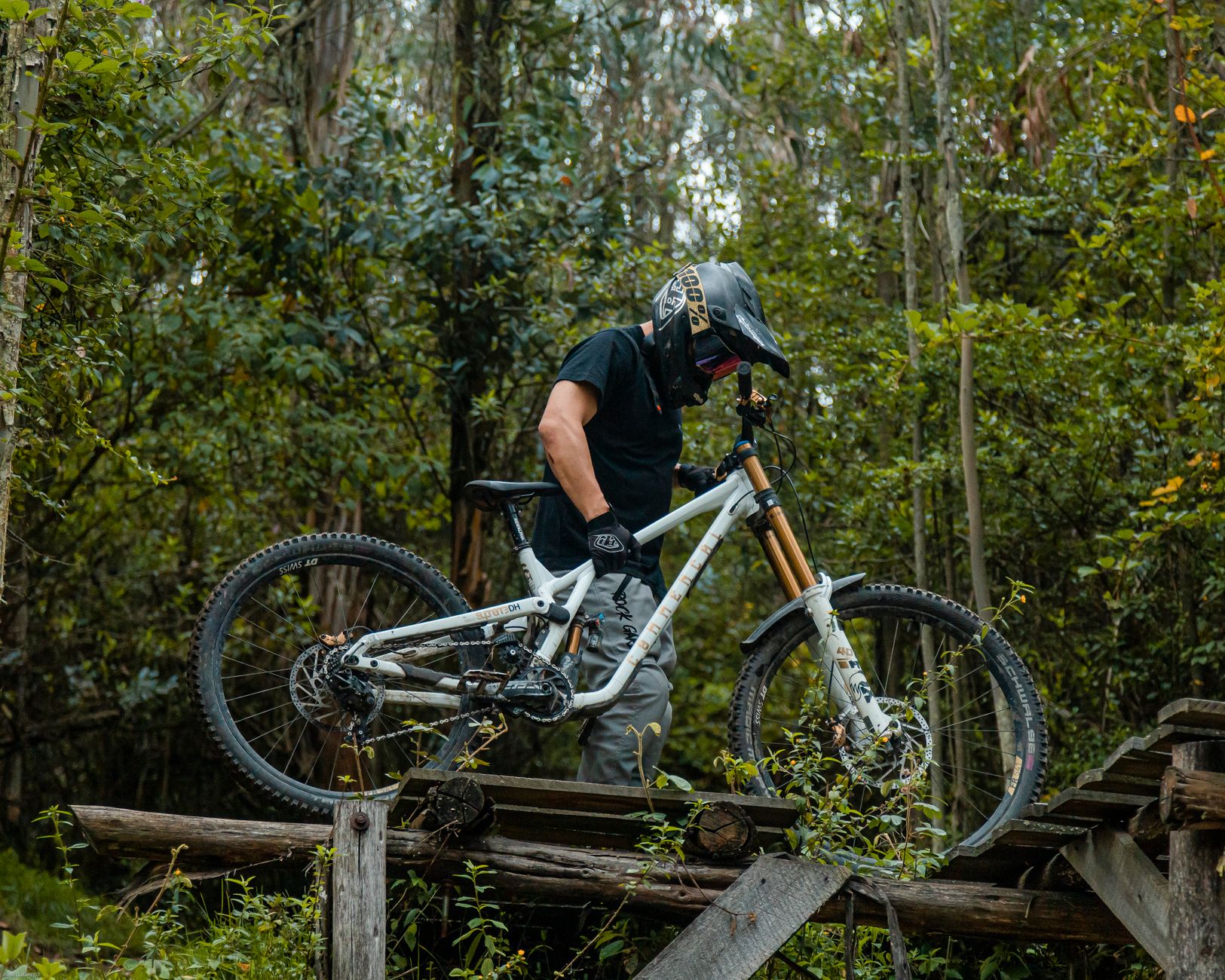
A fork fits your bike when four things match: wheel size, steerer, front axle and travel. Wheel size and steerer come straight off your frame. The axle has to match your front wheel, and travel is the one with some room to move. Get those four right and the fork bolts on. Then two quick checks decide whether it works with the rest of your bike: the brake rotor and the front tire.
Everything you need is on your frame maker's spec sheet and geometry chart for your exact model and year. Look for the wheel size, the fork travel the bike was designed around, the headset size, and, if they list it, the fork's axle-to-crown length and offset.
wheel size: match your front wheel
A 29in front wheel needs a 29in fork, and a 27.5in wheel needs a 27.5in fork. Most forks are sold in both sizes under the same name, so check the wheel size on the exact version you order.
On a mullet bike (29in front, 27.5in rear) that means a 29in fork. A 29in fork on a frame built for a 27.5in front wheel is a different story: the bigger wheel lifts the front end the same way a much longer fork would. Our mullet guide covers when that works.
steerer: tapered on almost anything modern
The steerer is the tube that sticks up out of the fork crown (the bridge that joins the two legs), runs through your frame's head tube and clamps into the stem. Almost every modern mountain bike uses a tapered steerer: 1.5in wide at the bottom, narrowing to 1-1/8in at the top. Older and cheaper bikes use a straight 1-1/8in steerer, the same width all the way down.
Your frame's headset size tells you which one it takes. Headset sizes are written as two numbers, top cup then bottom cup, like ZS44/ZS56. If the bottom number is 52 or 56, the frame takes a tapered fork. If it is 34, 42 or 44, it takes a straight one.
RockShox also makes the Lyrik and ZEB with a 1.8in tapered steerer for the handful of frames built around one. If your headset spec does not say 1.8, you want the regular 1.5in version.
One more thing about the steerer: its length. A new fork ships with a long, uncut steerer that you (or your shop) cut to fit your bike. A used fork has already been cut for somebody else's bike. Before you buy one, make sure the steerer is at least as long as the one on your current fork, measured from the top of the crown, or it will not reach your stem.
front axle: a match with the wheel, not the frame
The axle is the bolt-through rod that holds your front wheel in the fork. It is written as diameter x width: 15x110 means a 15mm axle and a 110mm wide hub. Three you will see:
| Axle | Where you find it |
|---|---|
| 15x110 Boost | Nearly every modern trail and enduro fork |
| 15x100 | Older bikes, from before Boost took over |
| 20x110 | Dual-crown downhill forks |
The front axle has nothing to do with your frame. It is a match between the fork and the front hub. So an older non-Boost bike can run a new Boost fork just fine, as long as you put a Boost front wheel in it.
Our call: if your bike is non-Boost and you want a new fork, buy the Boost fork and budget for a front wheel. Every current Lyrik and ZEB is 15x110 Boost.
travel: how much longer can you go?
Travel is how far the fork can compress. Your frame was designed around one number, and a longer-travel fork is also a physically longer fork. The number that measures it is axle-to-crown (A2C): the distance from the center of the axle to the bottom of the crown, with the fork fully extended.
Add 10mm of travel and you add about 10mm of length. The RockShox Lyrik Select 29 is 566mm at 150mm of travel, 576mm at 160 and 586mm at 170. That extra length lifts the front of the bike, which tips the whole thing back a little. On a typical trail bike, every 10mm slackens the head angle by about half a degree (that is our math, and it shifts a bit with wheelbase), raises the bottom bracket a few millimeters, and slackens the seat angle, so the bike climbs a touch less upright.
Going shorter does the opposite: steeper and lower, with more pedal strikes. Here is where we land:
- ›Same travel. The safe pick. The bike handles the way it was designed to.
- ›Plus 10mm. A common tweak that most frames take without complaint. You get a slightly slacker, calmer front end.
- ›Plus 20mm. The most we would go, and only if your frame maker says it is allowed.
- ›More than that. You are riding a different bike than the one you bought. If you want that much more travel, a bigger bike is the better buy.
If your frame maker publishes a maximum fork travel or a maximum axle-to-crown, that number beats any rule of thumb, including ours. Going past it can also be a warranty problem, so if they do not list one, ask before you buy.
Compare forks by axle-to-crown, not only travel. Two forks with the same travel can differ by a few millimeters, more if one is an older design, and the A2C is what actually sets your geometry.
dual crown forks are for downhill frames
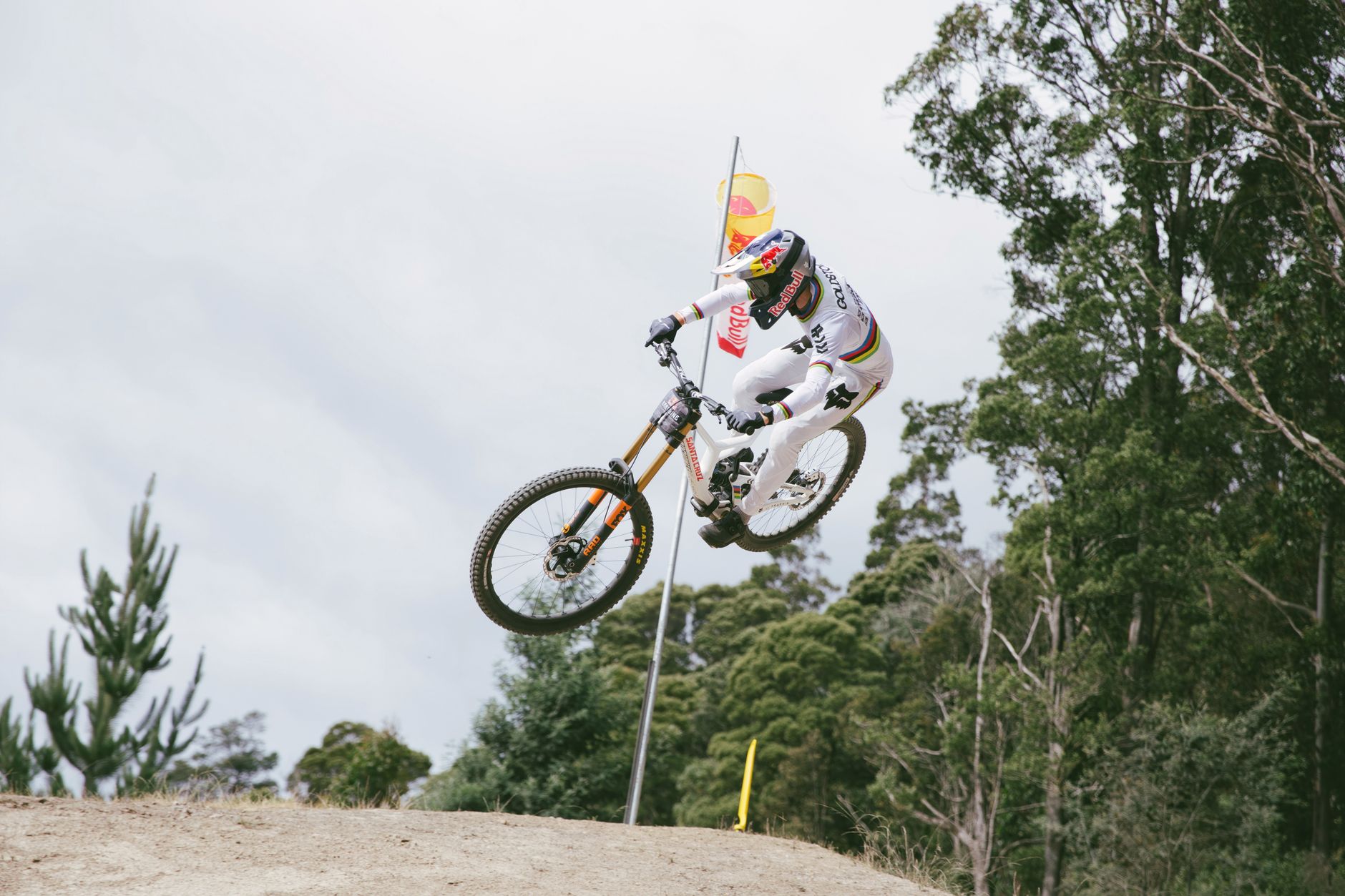
A dual crown fork, like a Fox 40 or RockShox BoXXer, has a second crown above the head tube. It is built for downhill bikes, and the frame has to be designed for it, so it is not an upgrade path for a trail or enduro bike. If you are building a DH bike, the frame spec will say so.
brakes: the fork sets your rotor size
Nearly every modern fork uses a post mount brake mount, and each one lists a smallest and largest rotor it will take. That minimum catches people. RockShox lists the Lyrik at 180mm to 220mm and the ZEB at 200mm to 220mm, so a ZEB will not run a 180mm front rotor.
If you are moving to a bigger fork, check that your current rotor is inside the new fork's range. If it is not, add a rotor (and possibly a caliper adapter) to the order. Our brakes guide covers what rotor size you actually want.
tire clearance: only matters on big tires
Each fork lists a maximum tire width. RockShox puts the Lyrik at 70mm and the ZEB at 74.5mm. A regular 2.4in or 2.5in trail tire is well inside both. It starts to matter if you run 2.6in tires or bigger, and it matters more in sticky mud, where the gap under the crown fills up fast.
offset: a handling question, not a fit one
Offset is how far forward the axle sits from the line of the steerer. It changes how the steering feels, not whether the fork fits. Some forks come in two offsets (the 29in Lyrik and ZEB only come in 44mm). If you get a choice, pick the offset your frame's geometry chart lists. The Builder does not check offset yet, so this one is on you.
how to read the fork on your bike now
Swapping forks on a bike you already own? Everything above can be read off the one you have. You need a tape measure.
- ›Wheel size. Read it off the front tire sidewall: 29 or 27.5.
- ›Steerer. Look where the steerer meets the crown. If it flares out wider at the bottom, it is tapered.
- ›Axle. Pull the wheel and measure between the inside faces of the fork dropouts: about 110mm is Boost, about 100mm is not.
- ›Travel. It is often printed on the fork. If not, look up your bike's original spec for that model year.
- ›Axle-to-crown. With the bike on a stand and no weight on the fork, measure from the center of the axle to the bottom of the crown. Compare it to the A2C of the fork you want.
- ›Rotor. The size is printed on the rotor itself, usually 180, 200 or 220.
Put those into your bike in the Garage and the Upgrader checks forks against your bike. Or start from a frame in the Builder, and every fork you add gets checked against it.
Once those line up, the rest is the fun part: damper, chassis stiffness and price. Our RockShox and Fox trim guides cover what the extra money gets you.
common questions
- What fork fits my bike?
- One that matches your frame on wheel size, steerer and travel, and matches your front wheel on axle standard. Most modern trail and enduro bikes take a tapered-steerer fork with a 15x110 Boost axle in the same wheel size as the front wheel. Then check that the fork accepts the rotor size you run and clears your front tire.
- Can I put a longer travel fork on my bike?
- Usually by 10mm without much fuss, and by 20mm if your frame maker allows it. Every 10mm of travel makes the fork about 10mm longer, which slackens the head angle by roughly half a degree and raises the bottom bracket. If your frame maker publishes a maximum fork travel or axle-to-crown length, stay under it.
- Will a Boost fork fit a non-Boost bike?
- Yes, if you also change the front wheel. The front axle standard is a match between the fork and the front hub, not the frame, so a 15x110 Boost fork needs a 15x110 Boost front hub. The frame only cares about the steerer, wheel size and travel.
- How do I know if my fork has a tapered steerer?
- Look where the steerer meets the fork crown. A tapered steerer flares out to 1.5 inches at the bottom and narrows to 1-1/8 inches at the top. A straight steerer is 1-1/8 inches all the way down. Your frame headset spec tells you the same thing: a lower cup sized 52 or 56 means tapered.
check the fork before you order it.
Pick a frame and add a fork. The Builder checks wheel size, front axle, travel against what the frame was designed for, and the rotor sizes the fork accepts.
 filed under · build roadmap
Is There a PCPartPicker for Mountain Bikes? (Yes, and Here’s How It Works)
 filed under · suspension setup
How to Set Sag on a Mountain Bike (Front + Rear, by Discipline)
 filed under · build roadmap
What Order to Choose Parts for a Custom MTB Build (Frame First, and Why)
 filed under · disciplines & bike types
Hardtail vs Full Suspension: Which Mountain Bike Should You Actually Buy?