How to Choose MTB Brakes: Pistons, Pads, Rotor Size and Fit
How much brake you actually need, why rotor size is the cheapest power upgrade, which pads to run, what fits your fork and frame, and the brakes we would buy for each kind of riding.
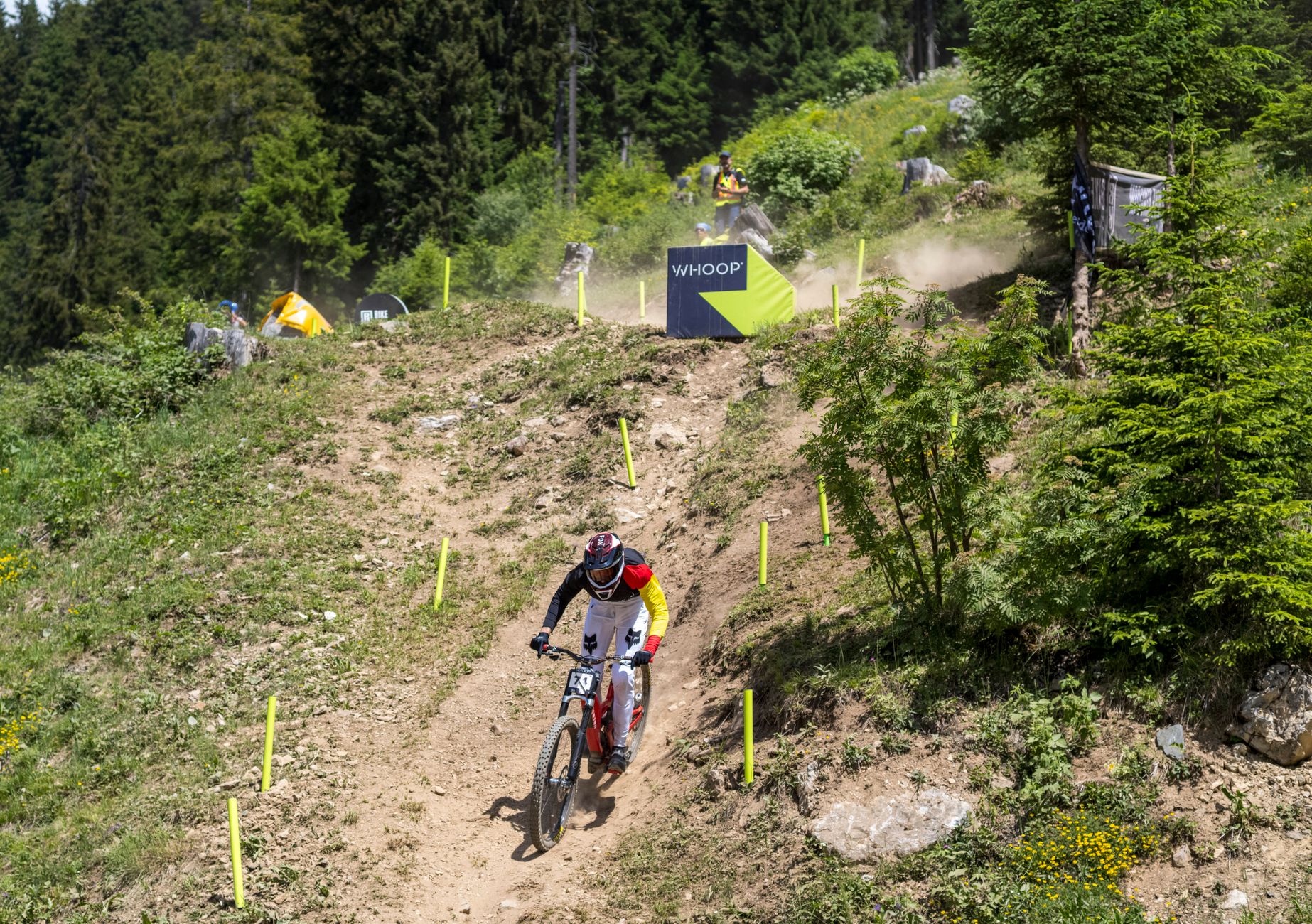
On a trail bike or anything bigger, run a four-piston brake with a 200mm rotor up front and a 180mm out back. Ride steep, ride wet, or weigh more than about 90kg, and go a size bigger on both rotors with metallic pads. A two-piston brake only makes sense for cross-country and light riders on mellow trails.
how much brake do you actually need
A brake turns your speed into heat. The more heat it has to soak up, the more brake you need, and three things decide that: how long and steep your descents are, how much you and the bike weigh together, and how wet it gets. A brake that is too small for the job overheats, and an overheated brake fades: the pads stop gripping and the lever goes soft right when you need it.
Two riders show the range. A 70kg rider on rolling singletrack with a few minutes of descending at a time barely warms a brake, and a two-piston setup with 180mm and 160mm rotors does the job. A 100kg rider on an enduro bike doing bike park laps is dragging brakes for ten minutes straight, and needs the biggest four-piston brake and rotors the bike will take.
Your rotors will tell you if you got it right. Shimano's rule of thumb: a light brown tint after a long descent means the brake is in its happy zone, rainbow colors mean it is running too hot and you should size up, and a rotor that never changes color could go a size smaller.
2-piston vs 4-piston brakes
The caliper is the clamp that sits at the wheel. Inside it, pistons (small plungers pushed by the brake fluid) press the pads onto the rotor. A two-piston caliper has one piston on each side. A four-piston caliper has two on each side pushing bigger pads, so it makes more power and has more pad to spread the heat across.
Our call: four pistons for trail riding and anything steeper. The weight you save with two pistons only pays off when heat is never the problem, which means cross-country racing and lighter riders on gentle trails. You can also split the difference: Shimano sells the same Deore lever with either a four-piston or two-piston caliper, so a four-piston front with a two-piston rear works.
what size rotor do you need
The rotor is the steel disc the pads squeeze. A bigger rotor gives the pads more leverage on the wheel and more metal to shed heat, so the same brake makes more power and stays cooler. SRAM puts each 20mm step up at about 14% more power. A rotor costs a fraction of a brake, so size up rotors before you replace a brake that feels weak.
Run the bigger rotor up front. When you are pointed downhill your weight shifts forward and the front brake does most of the stopping, up to 70% of it by Shimano's figure. Our starting points:
| Riding | Front | Rear |
|---|---|---|
| XC and light trail | 180mm | 160mm |
| All-round trail | 200mm | 180mm |
| Heavier rider or steep enduro | 220mm | 200mm |
| Downhill and bike park | 220mm | 200mm |
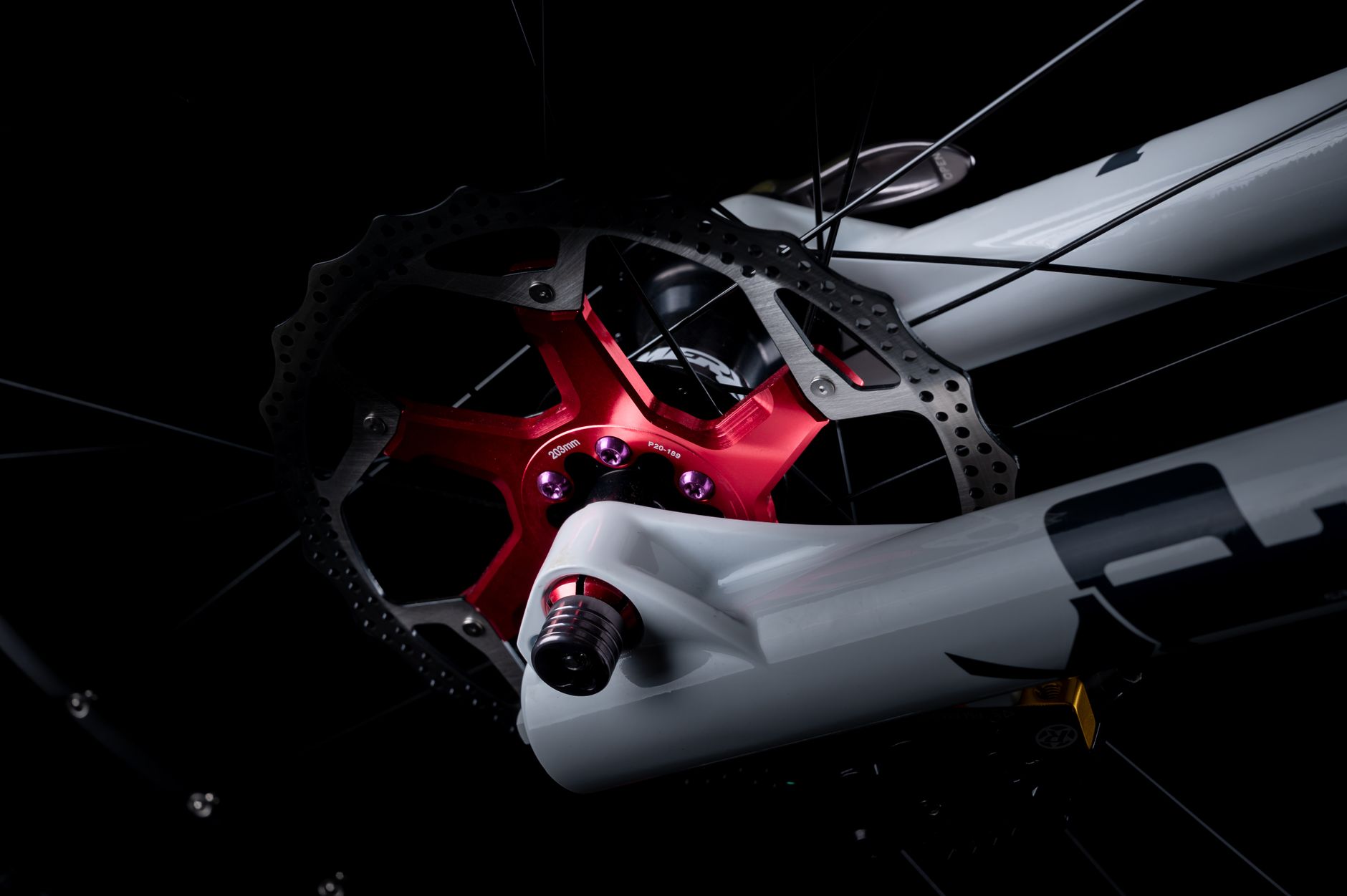
200 or 203?
Shimano's older rotors and some from Hayes and TRP are 203mm, where SRAM's are 200mm. TRP's biggest is 223mm against everyone else's 220. Those 3mm matter, because the adapter that moves the caliper out has to match the rotor, so buy the two as a pair. Shimano's new 2.2mm-thick rotors moved to 200mm to make that setup simpler, and Shimano says its other rotors will follow.
what your fork and frame allow
Every fork and frame lists three rotor numbers: the native size the caliper bolts straight on for, a minimum and a maximum. Anything bigger than native needs an adapter, a spacer bracket that lifts the caliper by the difference. A fork built for 180mm takes a +20 adapter to run a 200. A 2023 RockShox Lyrik lists 180mm minimum and 220mm maximum, so a 160 rotor will not go on that fork at all. Frames often cap the rear smaller than the fork caps the front, so check the frame manual before you buy a big rear rotor.
The Builder checks your rotor against the fork's minimum and maximum and the wheel's limit, and flags anything under 180mm on an enduro build or under 200mm on a downhill build. It does not know your frame's rear limit yet, so that one is still the manual.
resin vs metallic brake pads
Resin pads (also sold as organic) are pad material bound in resin. Metallic pads (also sold as sintered) have metal fused into the compound. Here is how SRAM lays out the tradeoff:
| Resin | Metallic | |
|---|---|---|
| Bite | Strong from the first pull, no warm-up | Less initial grab |
| Heat | Less suited to sustained heat | Built for steep, sustained descents |
| Wet and mud | Not the best choice | Better, especially wet and muddy |
| Wear | Faster, especially wet | Longer in harsh conditions |
| Noise | Quieter | Louder, especially dry and dusty |
| Bed-in | Quick | Needs a more thorough bed-in |
Shimano mostly agrees, with one twist: it recommends resin for long mountain descents and admits resin fades a little sooner than metal. Our call goes with SRAM. Run metallic if your descents are long and steep, if it is wet where you ride, or if you are on the heavy end. Run resin on dry trails with shorter descents, or if a squealing brake drives you nuts. Wet riding is the one place both brands say metal.
will it fit your bike
Brakes are close to universal, and front and rear can even be different brands, because each one is its own sealed system. Three things have to line up.
- ›The caliper mount. Nearly every trail, enduro and downhill fork and frame is post mount: two threaded posts the caliper bolts to, with adapters to change rotor size. Flat mount shows up on some cross-country frames and gravel bikes, and a post-mount caliper will not bolt to it. Older bikes may have IS mount, which takes an IS-to-post-mount adapter.
- ›The rotor interface on the hub. A 6-bolt rotor bolts to the hub with six small bolts. A Centerlock rotor slides onto splines and a lockring holds it. A Centerlock hub can take a 6-bolt rotor with an adapter. A 6-bolt hub cannot take a Centerlock rotor.
- ›Rotor thickness. Standard rotors swap between brands, but the new thick ones are matched to their brakes. Shimano lists its 2.2mm rotors for its new-generation four-piston brakes only, and the TRP DH-R EVO is built around TRP's own 2.3mm rotors.
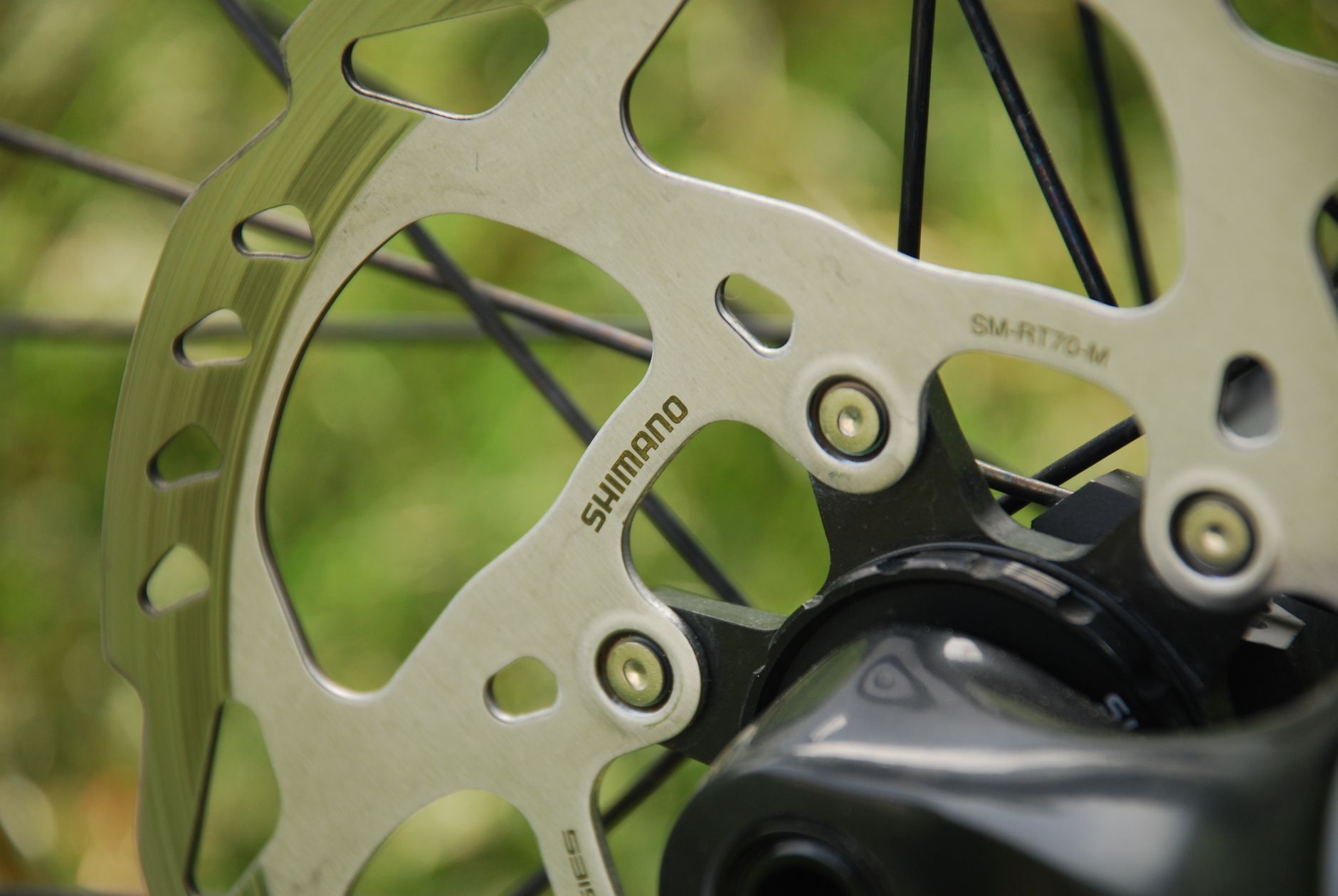
Add a brake and rotors to a build in the Builder and it checks the caliper mount against your fork and frame and the rotor against your hub.
mineral oil vs DOT fluid
Every hydraulic brake runs one fluid, and its seals are made for it. Put the wrong one in and the seals swell or break down, so never mix them and never swap. The fluid is printed on the lever or the reservoir cap.
- ›Mineral oil: Shimano, Magura, TRP, Tektro and the SRAM Maven. It barely absorbs water and will not eat your paint, and SRAM puts a mineral-oil bleed at once every two years.
- ›DOT 5.1: SRAM Code and G2, Hayes and Hope. It slowly absorbs water from the air, which is why SRAM wants a DOT brake bled at least once a year, and it strips paint, so wipe spills straight away.
Our call: fluid should not decide your brake. Bleeding either one is a home job with the right kit. Lever feel matters more. Shimano's lever moves the pads to the rotor in very little travel, so the bite comes early and quick. Some riders love that and some find it sudden, so if you can, squeeze a few brakes in a shop before you buy.
what we'd buy
Pair these with the rotor sizes from the table above for the same kind of riding.
| Riding | Value pick | Spend-up pick |
|---|---|---|
| XC and light trail | Shimano Deore 2-piston (M6100) | Shimano XT 2-piston (M8100) |
| All-round trail | Shimano Deore 4-piston (M6120) | Shimano XT 4-piston (M8120) |
| Heavier rider or steep enduro | Hayes Dominion A4 | SRAM Maven Silver |
| Downhill and bike park | Shimano Saint (M820) | TRP DH-R EVO |
Brakes are sold one end at a time, and the prices below are each. Rotors and adapters are almost always extra.
- ›Shimano Deore and XT 4-piston. The Deore M6120 ($170) is the most brake for the money we know of. The XT M8120 ($229) adds bite-point adjustment on the lever and drops some weight. The known Shimano quirk is a wandering bite point, where the lever engages at a different spot from one pull to the next. It is usually air trapped in the caliper, and a slow bleed with the caliper tapped and rotated fixes most of them.
- ›Hayes Dominion A4. Dominion A4 ($249.99) has the lightest lever of the big brakes, which your hands feel at the bottom of a long descent. It runs DOT, and Hayes sells the rotors and brackets separately.
- ›SRAM Maven. The most raw power here. The Maven Silver ($290) is the one in stock. The original Maven had a heavy lever and needs a perfect bleed with free-moving pistons, or the bite point wanders. The 2027 update roughly halves the force it takes to start the lever moving, so check which generation you are buying. The cheaper Maven Bronze is out of stock at the retailers we link to right now.
- ›Shimano Saint and TRP DH-R EVO. The Saint M820 ($229) is Shimano's downhill brake, an older design that is still strong and costs less than the newer big brakes. The DH-R EVO ($274.99) runs TRP's 2.3mm rotors up to 223mm, so budget for TRP rotors with it.
- ›Shimano 2-piston. The Deore M6100 and XT M8100 are the light-bike picks, and both are out of stock at the retailers we link to right now, so they are named here without a link.
Before you order, put the brake and rotors into a build in the Builder, or start from your own bike in the Upgrade Finder.
common brake questions
- How do I choose mountain bike brakes?
- Start with how much heat you will make: how steep and long your descents are, how much you and the bike weigh, and how wet it gets. For most riders on a trail bike or bigger that means a four-piston brake with a 200mm front rotor and a 180mm rear. Heavier riders, steep enduro and bike park riding go a size bigger on both rotors and run metallic pads. Then check the brake fits: caliper mount, rotor interface on the hub, and the rotor sizes your fork and frame allow.
- Is a 4-piston brake better than a 2-piston brake?
- For trail riding and anything steeper, yes. A four-piston caliper pushes bigger pads with more force, so it makes more power and handles heat better. A two-piston brake is lighter and is the right call for cross-country racing and lighter riders on mellow trails, where heat is rarely the problem.
- What size brake rotor do I need for my mountain bike?
- Our starting points: 180mm front and 160mm rear for cross-country and light trail riding, 200mm front and 180mm rear for all-round trail, and 220mm front with 200mm rear for heavier riders, steep enduro and downhill. Run the bigger rotor up front, because the front brake does most of the stopping. Check your fork and frame first: each lists a minimum and a maximum rotor size.
- Should I run resin or metallic brake pads?
- Metallic (sintered) pads for long, steep descents, wet and muddy riding, and heavier riders, because they handle heat better and last longer. Resin (organic) pads for dry trails with shorter descents, or if noise bothers you, because they bite harder when cold and run quieter. Check your rotor first: some cheaper Shimano rotors are marked resin pad only.
- Can I mix mineral oil and DOT brake fluid?
- No. Every hydraulic brake is built for one fluid, and its seals are made to suit it. The wrong fluid damages the seals and the brake stops working properly. Shimano, Magura, TRP and the SRAM Maven use mineral oil. SRAM Code, Hayes and Hope use DOT 5.1. The fluid is printed on the lever or the reservoir cap.
- Are mountain bike brakes universal?
- Mostly, with three checks. The caliper has to match the mount on your fork and frame, which is post mount on nearly every modern mountain bike. The rotor has to match your hub: a Centerlock hub can take a 6-bolt rotor with an adapter, but a 6-bolt hub cannot take a Centerlock rotor. And the rotor size has to sit inside your fork and frame limits. Brakes from different brands mix fine front and rear.
check the fit before you order.
Add a brake and rotors to a build and the Builder checks the caliper mount against your fork and frame, the rotor against your fork and hub, and the rotor size against your discipline.
 filed under · build roadmap
Is There a PCPartPicker for Mountain Bikes? (Yes, and Here’s How It Works)
 filed under · suspension setup
How to Set Sag on a Mountain Bike (Front + Rear, by Discipline)
 filed under · compatibility
How to Build a Mountain Bike From Parts (And the Compatibility Traps)
 filed under · build roadmap
What Order to Choose Parts for a Custom MTB Build (Frame First, and Why)