Hardtail vs Full Suspension: Which Mountain Bike Should You Actually Buy?
The first real fork in the road when you're buying a mountain bike. Here's what actually changes between the two, how each one rides, and the honest budget math that decides it for most people.
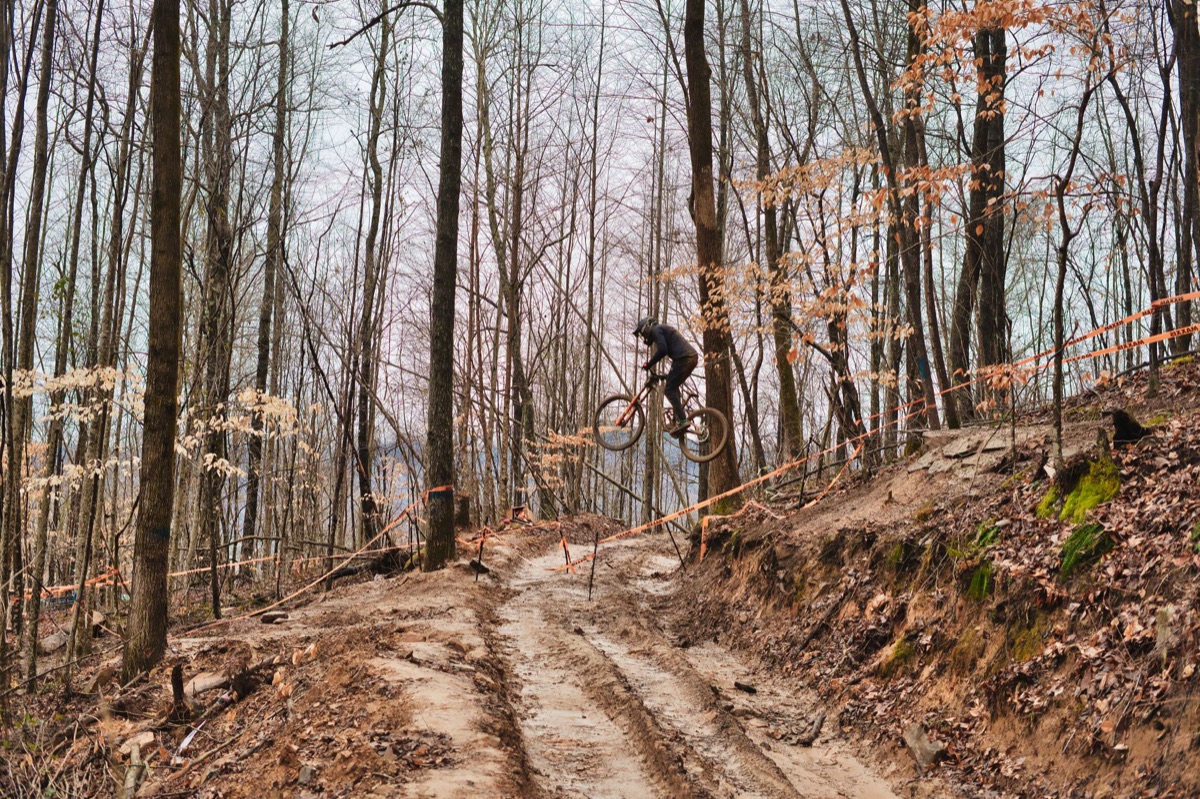
If you're shopping for your first mountain bike, this is the question that stops everyone in the aisle. Two bikes at basically the same price. One has a shock on the back, the other doesn't. Both call themselves mountain bikes. So what actually changes, and does the bike with more parts win?
Short answer: it depends on where you ride, how much you're spending, and how rough you want the bike to feel underneath you. The rest of this post walks the honest tradeoffs, without pretending either one is the right pick for everyone.
what actually makes them different
A hardtail has suspension only up front, in the fork. The back of the frame is one solid piece of metal or carbon, and the rear wheel bolts straight to it. When the tire hits a root, the bump goes right through the frame into you.
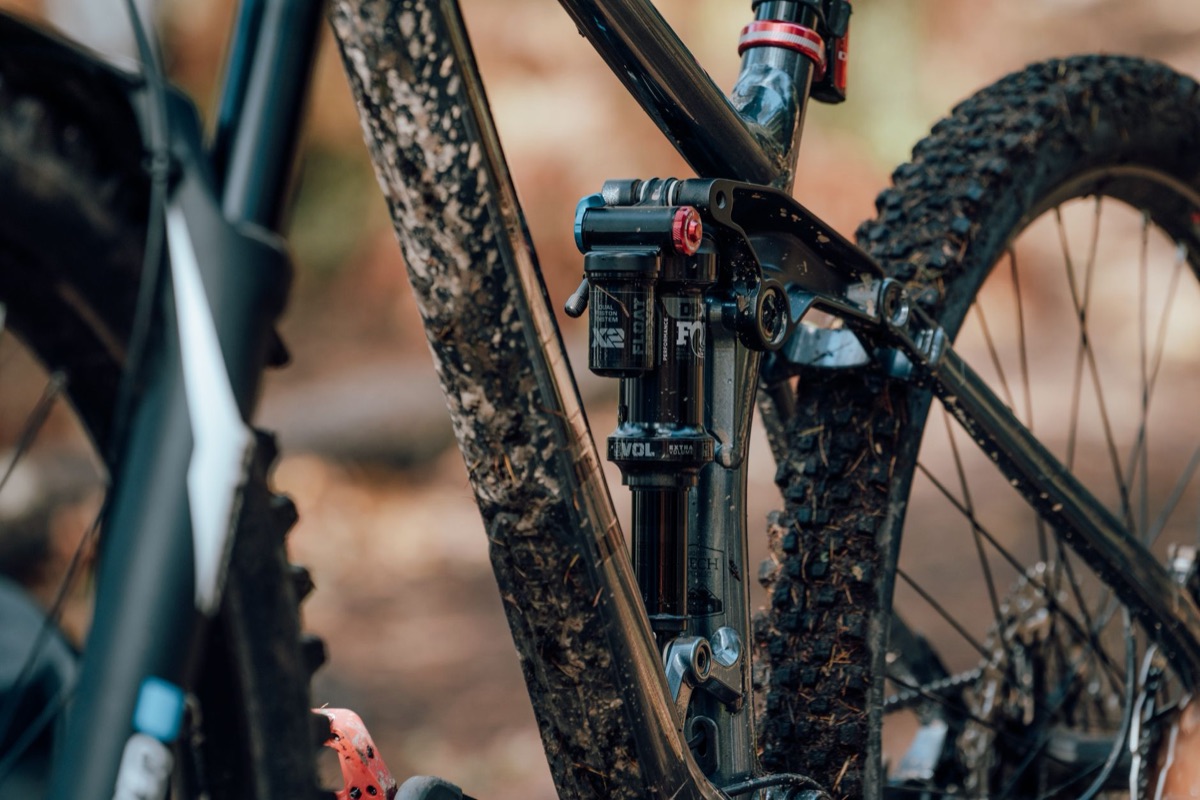
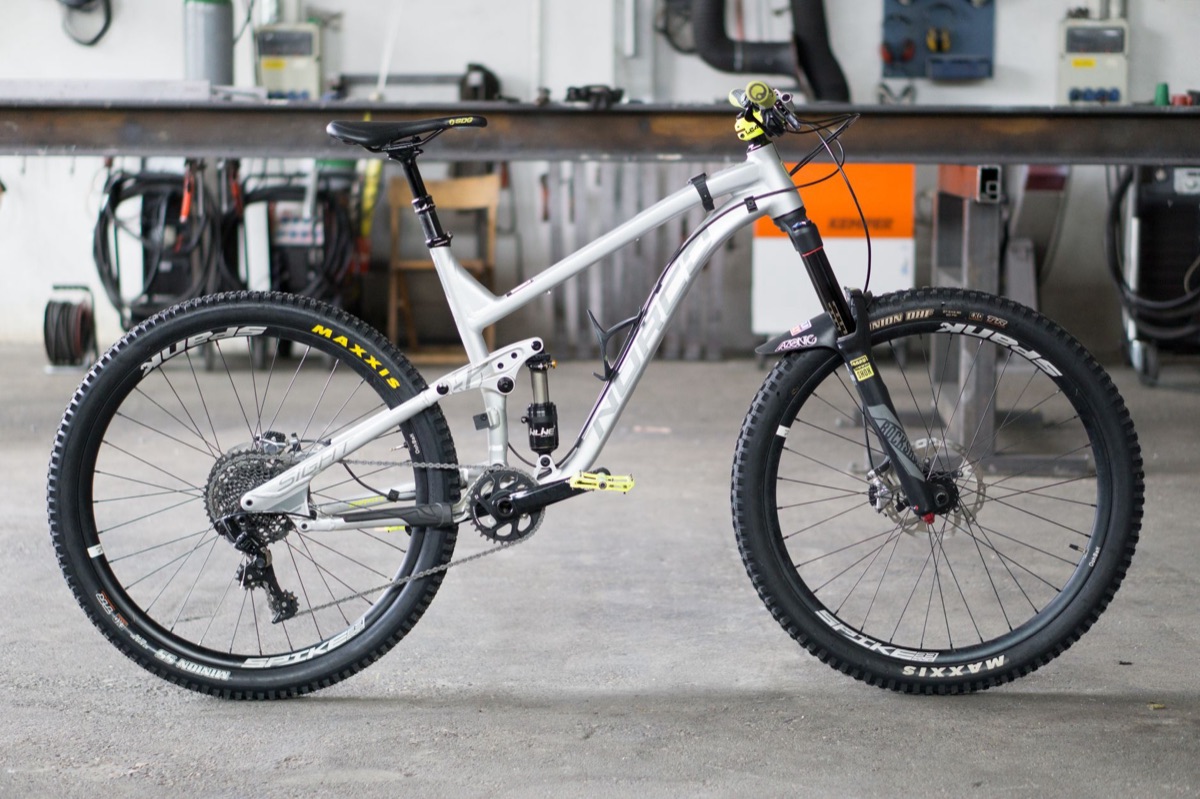
A full-suspension bike (people also just say “full-sus” or “dual-sus”) has that same fork plus a second suspension unit on the back: a rear shock. The frame is cut into two halves that pivot against each other on a set of bearings called a linkage. When the rear wheel hits a bump, the back half of the frame rotates up around those pivots and squishes the shock instead of jarring your body.
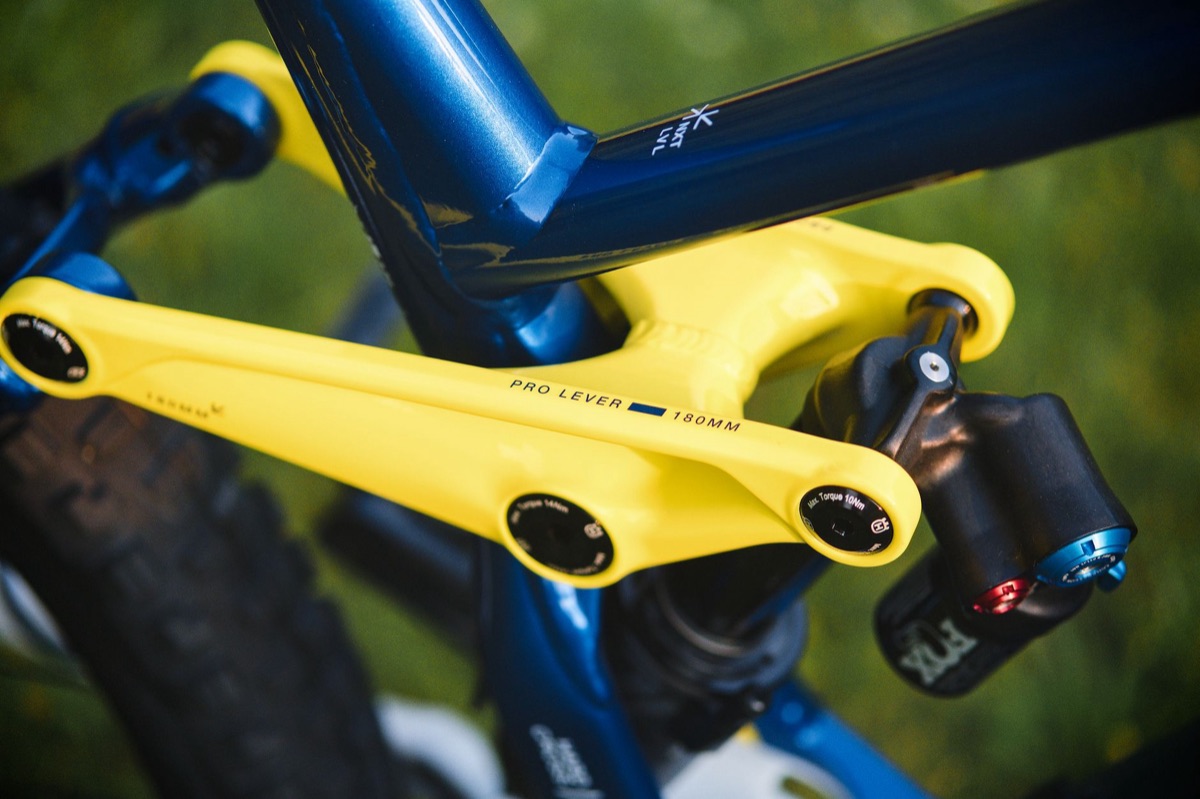
Everything else on the bike, the wheels, drivetrain, brakes, dropper, cockpit, is the same on both types. The only real difference is what happens between the rear wheel and the seatpost.
how each one rides
A hardtail feels direct. Pedal strokes shoot the bike forward without anything soaking up the effort, so smooth climbs feel efficient and sprints feel snappy. It also feels punishing when the ground gets rough. Every root, every square-edge hit, every washboard section shakes through the saddle. That's not a flaw, it's the tradeoff.
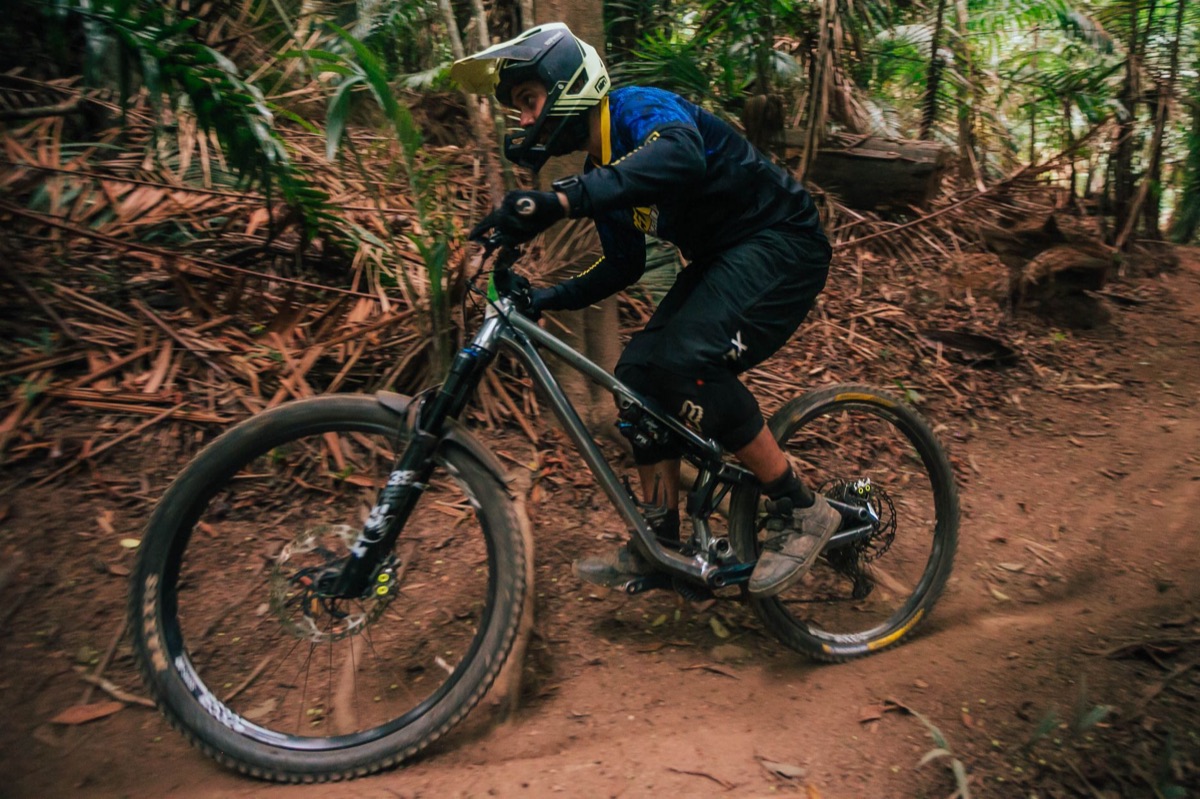
A full-suspension bike feels settled. When the trail turns nasty, the rear shock eats the hits and the back wheel stays glued to the ground instead of bouncing off. That means more grip in corners, more traction when you're braking, and way less of a beating on long descents. The cost is a little bit of pedal efficiency (some of your energy goes into moving the linkage instead of the bike forward) and a lot more weight and complexity.
which one for how you ride
Pick the row that matches the kind of trails you actually ride, not the ones you want to ride someday. If your local trails are hardpack singletrack, buy for hardpack singletrack.
| What you ride | Better pick | Why |
|---|---|---|
| Smooth XC / gravel doubletrack | Hardtail | Efficient, light, cheap to maintain. |
| Flowy trail center loops | Either | Both work. Budget usually decides. |
| Chunky natural trail, roots and rocks | Full-sus | Rear grip and control open up. |
| Enduro / long steep descents | Full-sus | You will get beat up otherwise. |
| Bike park, jumps, lift-served DH | Full-sus (long-travel) | Landings and repeat hits need the rear shock. |
| Dirt jumps, pump tracks, slopestyle | Hardtail | Short, stiff, poppy is the whole point. |
where a hardtail wins
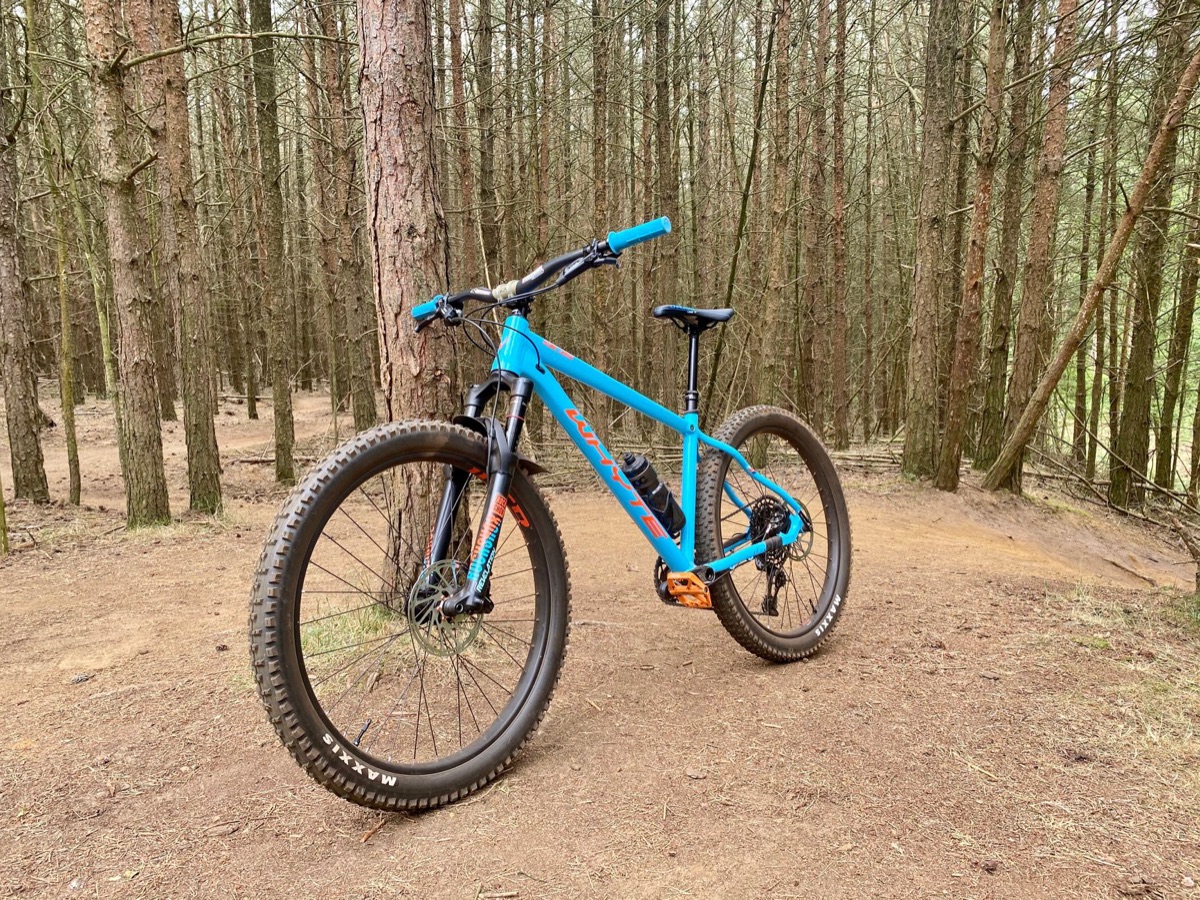
- ›Money. At the same price, a hardtail gets you noticeably better components. No rear shock, no linkage bearings, no complex swingarm, so the brand can put that money into the fork, the wheels, and the drivetrain instead. A $1,500 hardtail is a real bike. A $1,500 full-suspension bike usually is not.
- ›Maintenance. One suspension unit to service (the fork), no pivot bearings to replace, no rear shock bushings to wear out. Way less to keep an eye on and way less to fix.
- ›Weight. A hardtail is usually 2 to 4 lb (about 1 to 2 kg) lighter than a comparable full-suspension bike. You feel it on climbs and when you're lifting the bike into a truck.
- ›Skill building. You have to actually pick lines and unweight the bike over stuff, because there's nothing back there to save you. Riders who learn on a hardtail tend to ride cleaner on any bike.
- ›Simplicity. Nothing weird happening between pedal strokes. On smooth climbs the bike just goes forward.
where a full-suspension bike wins
- ›Rough terrain. Roots, square-edge rocks, choppy braking bumps. Anywhere the trail is beating up your rear tire, a full-sus is the one you want. The shock keeps the wheel on the ground, which keeps you in control.
- ›Long descents. A 20-minute descent on a hardtail is a full-body workout. On a full-sus, your hands, arms, and lower back stay fresher, which means you ride longer and safer.
- ›Technical climbing. Sneaky but real. On a rocky or rooty climb, the rear shock lets the tire stay planted so you keep pedaling instead of spinning out. A hardtail hooks up better on smooth climbs, but the second the ground gets ugly, the full-sus often outclimbs it.
- ›Confidence at speed. The bike stays composed when things get fast and messy. You'll ride harder on a full-sus than a hardtail on the same trail, because the bike lets you.
the budget question (the honest version)
Money is where this decision actually gets made for most people, and it's worth spelling out because bike-shop staff sometimes won't.
At the same price, a hardtail always has better parts. A rear shock and a linkage cost real money to build, so the brand has to cut somewhere else on a cheap full-suspension bike. That's usually the fork (cheaper coil unit with no real damping), the drivetrain (heavier, fewer gears), and the brakes (weaker, harder to modulate). The bike looks like it should be capable because it has a shock on it, but the parts that actually keep you upright are worse.
Rough guide for a new bike in 2026:
- ›Under $1,500 new: buy the hardtail. Almost every time. A full-suspension bike at this price is going to be heavy, undersprung, and put together with parts that don't last.
- ›$1,500 to $2,500 new: the crossover zone. A good hardtail at this price beats an okay full-sus. Look at the fork, the brakes, and whether it has a dropper post before you decide.
- ›$2,500 to $4,500 new: now full-suspension bikes start being worth their price. Real fork, real rear shock, decent wheels, dropper included.
- ›Used market: a used, well-cared-for full-sus from two or three years ago is often the smartest money in mountain biking. Just have someone who knows bikes check the pivot bearings and shock service history first.
is a hardtail actually faster?
On smooth ground, yes, a little. On the flat and on hardpack climbs, a hardtail has slightly better pedal efficiency, because none of your effort is moving the linkage. That gap is real but small, maybe a few percent.
On rough ground, the answer flips. A full-sus bike is faster over chunder because the rear wheel keeps rolling instead of skipping off rocks, and you can carry more speed into corners because the bike isn't bouncing you around. Take those same two bikes down a rocky descent and the full-sus will be at the bottom first, every time.
stuff people get wrong
- ›Buying a cheap full-sus to look serious. A $700 dual-suspension bike from a big-box store is worse than a $700 hardtail from a bike shop at every single thing that matters. The shock on the back is decoration.
- ›Assuming you need full-sus for beginner trails. Green and easy blue trails at most trail centers are perfectly fun on a hardtail. A lot of people rip on hardtails their whole riding lives.
- ›Ignoring the fork. The fork matters way more than whether the bike has a rear shock. A good fork on a hardtail beats a bad fork on a full-sus every day.
- ›Forgetting the dropper. A dropper post (the seatpost that goes up and down with a bar-mounted lever) does more for descending confidence than the rear shock does. If you have to choose between a full-sus without a dropper and a hardtail with one, take the dropper.
- ›Discounting the maintenance side. Pivot bearings need to be inspected once a year and replaced eventually. Rear shocks need a service every 50 to 100 hours. If you hate wrenching and don't want a shop bill twice a year, a hardtail is a real answer.
so how do you actually decide?
Two honest questions. First: how rough is your local trail on a normal Saturday? If it's smooth and flowy, a hardtail covers you. If it's rocky, rooty, or steep, you'll be happier on a full-sus.
Second: what's your all-in budget for the bike? If it's under about $1,500 new, the hardtail wins the parts fight by so much that terrain barely matters. If it's over $2,500, you can get a full-sus that's actually worth its price.
Everything else, the geometry, the wheel size, the travel, the drivetrain brand, is a detail the Builder walks you through once you've made the chassis call. Pick the frame first, and the rest of the bike gets a lot easier to spec.
Pick a chassis, then let the Builder finish the bike.
Once you know whether you want a hardtail or a full-suspension frame, the Builder handles the rest. Filter by discipline, and it only shows frames, forks, and wheels that fit each other.
 filed under · build roadmap
Is There a PCPartPicker for Mountain Bikes? (Yes, and Here’s How It Works)
 filed under · suspension setup
How to Set Sag on a Mountain Bike (Front + Rear, by Discipline)
 filed under · compatibility
How to Build a Mountain Bike From Parts (And the Compatibility Traps)
 filed under · build roadmap
What Order to Choose Parts for a Custom MTB Build (Frame First, and Why)