What Is a Mullet Mountain Bike? Mixed Wheels, Explained
A 29" wheel up front, a 27.5" out back. Why race bikes went mixed, what you gain and give up, and what actually happens to your geometry if you convert a 29er yourself.
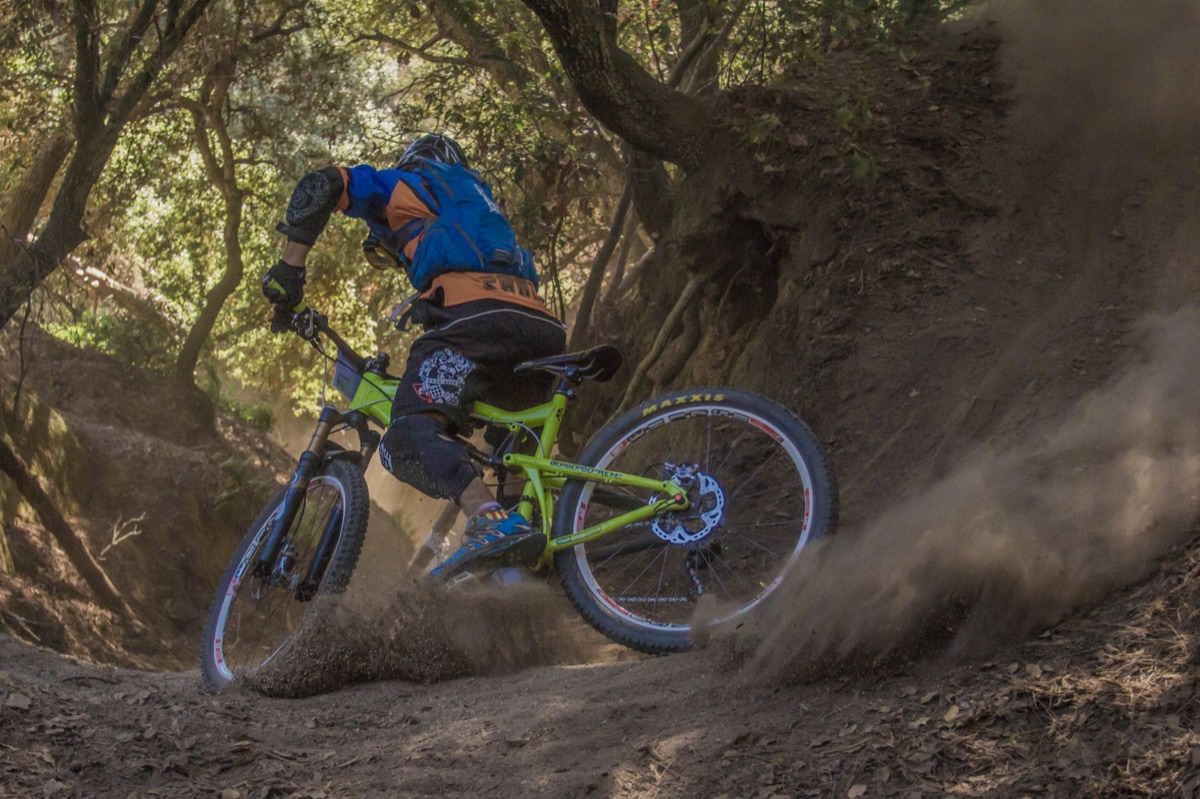
A mullet mountain bike runs two different wheel sizes: a 29" wheel in the front and a 27.5" wheel in the rear. The name is the haircut joke, and it stuck hard enough that brands print it on spec sheets now. You'll also see it written as MX or “mixed wheel.”
This isn't a gimmick setup. Most of the downhill World Cup field races mixed wheels, a growing pile of enduro and e-bikes ship that way from the factory, and the reasons are mechanical, not fashion.
why put two different wheels on one bike?
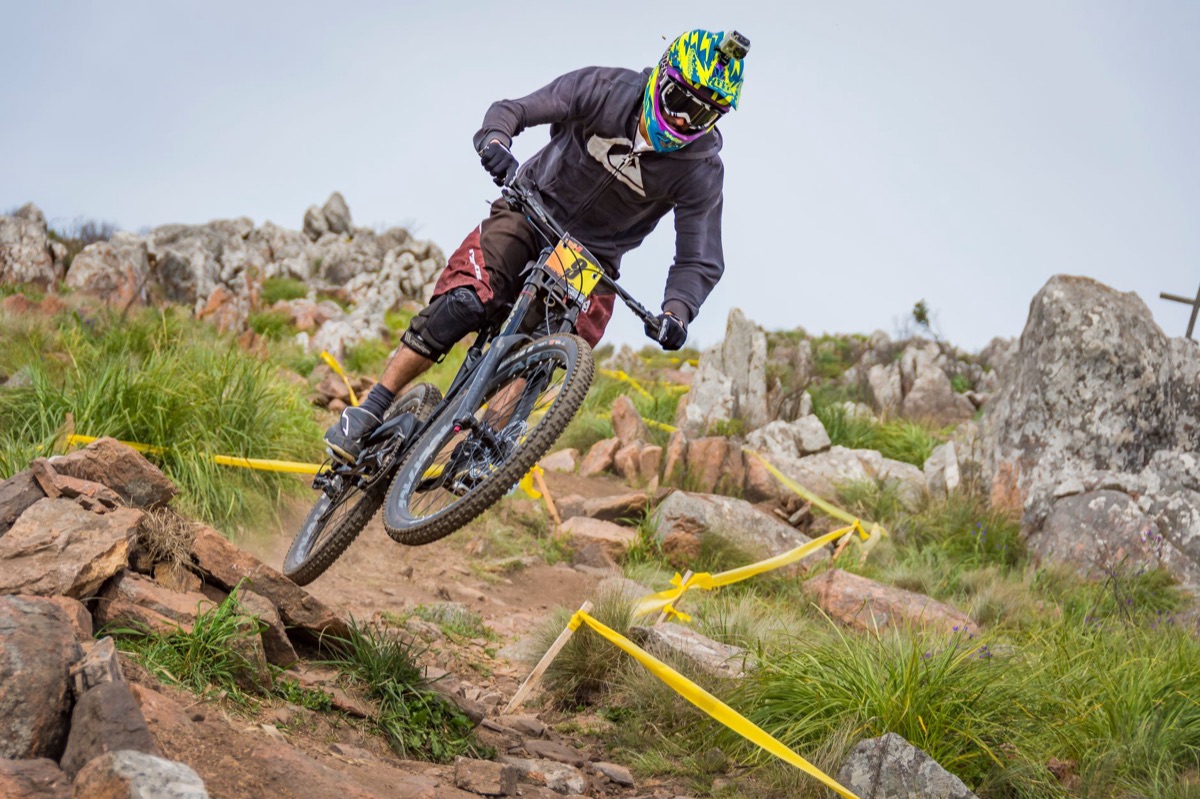
Each size is doing the job it's best at. The big 29" front wheel rolls over holes and rocks more smoothly and puts a longer contact patch on the ground, which is grip and confidence where you need it most: the wheel that steers and does most of the braking.
The smaller 27.5" rear buys you two things. First, clearance: on steep terrain you slide your weight back behind the saddle, and a smaller rear wheel is that much further from your body. Taller riders do this for fun; shorter riders sometimes need it just to get a modern long-travel 29er down a steep chute without the tire buzzing them. Second, a smaller, lighter rear wheel changes direction and accelerates a touch quicker, which is why mullet bikes get described as playful or easy to throw around.
the tradeoffs in one table
| Setup | Stronger at | Weaker at |
|---|---|---|
| Full 29er | Rolling speed, big-hit stability, open terrain | Tight corners, steep-terrain body clearance |
| Mullet (29F / 27.5R) | Steeps, tight corners, quick direction changes | Rear rollover, flat-out rolling speed |
| Full 27.5 | Agility, smaller riders, jump/park bikes | Rollover everywhere, mostly phased out of new frames |
can i convert my 29er to a mullet?
Mechanically, a 27.5" wheel bolts into most 29er frames, same axle, same brakes. The catch is what it does to your geometry. A 27.5" wheel with a typical tire stands roughly 15 to 20mm shorter than a 29. Drop the rear of the bike that much and the whole frame tips backward: the bottom bracket (the spindle your cranks turn on) sits lower, and the head angle and seat angle both get slacker by most of a degree.
Sometimes that's fine. Sometimes it means pedal strikes on every rocky climb and a seat angle that puts your hips behind the pedals. Frames that are designed for it handle this properly: some ship with a flip chip (a small two-position insert in the linkage) that corrects the geometry when you swap wheel sizes, and purpose-built mullet frames bake the right numbers in from the start.
- ›Best case: your frame is officially mullet-approved or has a flip chip for it. Swap the wheel, flip the chip, ride.
- ›Workable case: a slack, long-travel 29er with a high-ish bottom bracket. The conversion costs you some pedal clearance and you accept it.
- ›Skip it: XC and short-travel trail bikes. The geometry hit hurts exactly the pedaling manners those bikes exist for.
who a mullet is actually for
Gravity riders, park rats, anyone whose local trails are steep and tight, and shorter riders who want 29er rollover up front without a rear wheel crowding them on descents. If that's you, mixed wheels are worth a serious look. If you mostly pedal rolling singletrack, the full 29er is still the sensible answer, and that's most riders, most places.
If you're building from scratch, the frame decides everything here. Dedicated mullet frames lock you into the 27.5 rear; mullet-capable 29ers give you both options. The Builder tags each frame either way and filters wheels and tires to the sizes the frame actually takes, front and rear separately.
Mullet-ready frames, flagged for you.
The Builder knows which frames are designed for mixed wheels and which are 29-only, and it filters wheels and tires to match. Pick a mullet frame and the right sizes just show up.
 filed under · build roadmap
Is There a PCPartPicker for Mountain Bikes? (Yes, and Here’s How It Works)
 filed under · suspension setup
How to Set Sag on a Mountain Bike (Front + Rear, by Discipline)
 filed under · build roadmap
What Order to Choose Parts for a Custom MTB Build (Frame First, and Why)
 filed under · disciplines & bike types
Hardtail vs Full Suspension: Which Mountain Bike Should You Actually Buy?