Mountain Bike Geometry Explained: Read the Chart Like It Matters
Reach, stack, head angle, chainstay: a geometry chart tells you how a bike fits and how it behaves before you ever swing a leg over it. Here's every number that matters, in plain words.
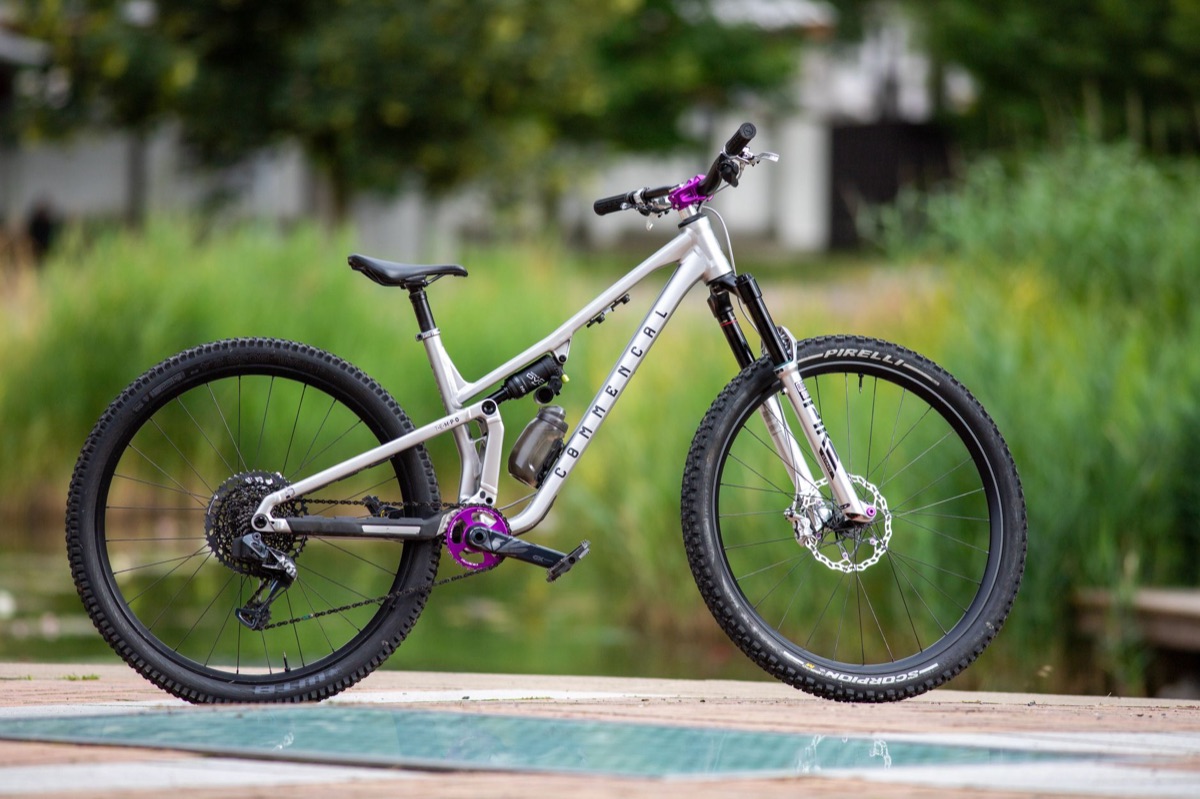
Every frame has a geometry chart: a table of numbers describing the exact shape of the bike. It looks like homework, and most people skip straight past it to the paint job. But those numbers are the honest description of how the bike fits your body and how it behaves on a trail. Two bikes with the same travel and the same parts can ride completely differently because of what's in that table.
You don't need all of it. You need about eight numbers, and once you know what each one does, any spec sheet from any brand reads the same way.
reach: the real size of the bike
Reach is the horizontal distance from the bottom bracket (the spindle your cranks spin on) straight forward to the top of the head tube. In plain terms: how much room the bike gives you to stand in, pedals level, when you're out of the saddle. It is the single most useful sizing number, far more useful than the S/M/L sticker, because brands disagree wildly on what “large” means but a millimeter is a millimeter.
Rough modern trail-bike landmarks: around 430 to 445mm for a small, 450 to 470mm for a medium, 475 to 490mm for a large, and 500mm and up for an XL. More reach feels roomy and stable at speed; less feels compact and easy to move around. If you're between sizes, descending-focused riders usually go bigger and tight-trail riders usually go smaller.
stack: how high the front end sits
Stack is reach's partner: the vertical distance from the bottom bracket up to that same point on the head tube. High stack puts the bars higher, which is easier on your lower back and more confident on steeps. Low stack puts weight on the front wheel for climbing and cornering grip. You can raise bars with spacers, but you can't meaningfully lower them below the frame's stack, so if you like a low front end, look for it in the chart.
head tube angle: slack vs steep
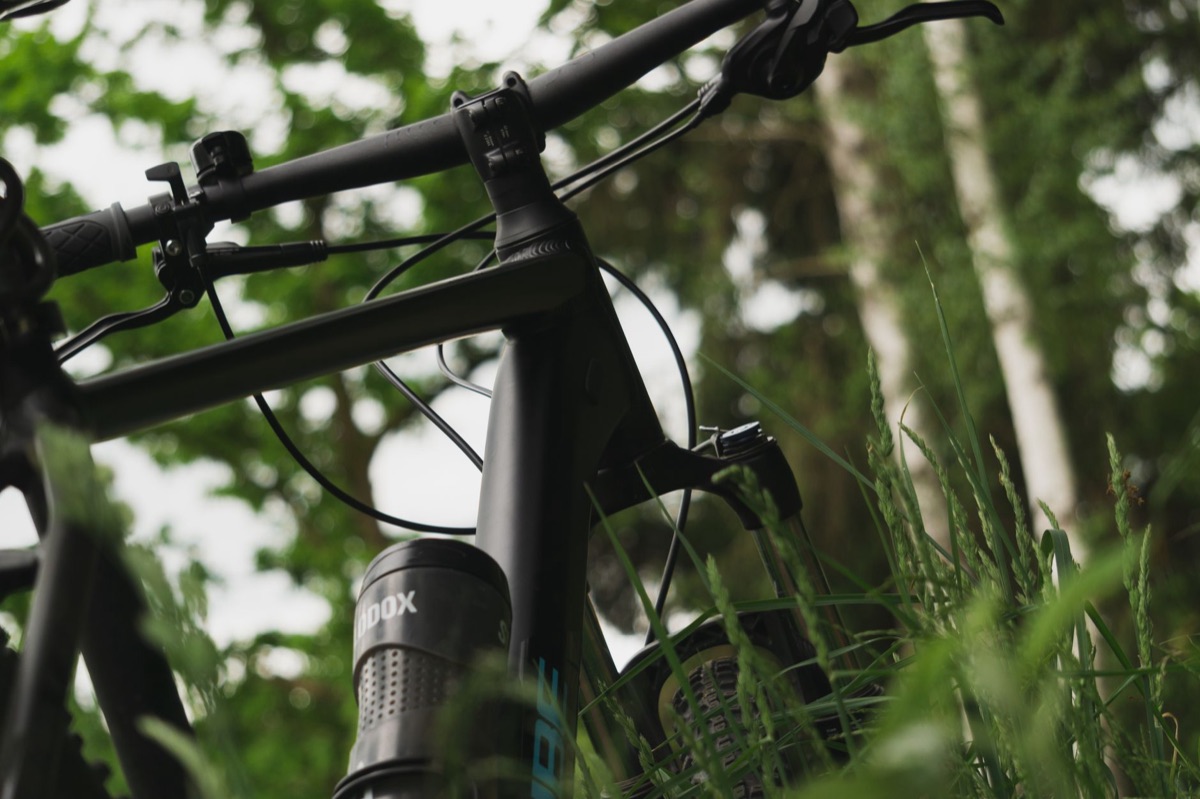
The head tube angle is the angle of the fork relative to the ground. Smaller number = more raked out = slack. Bigger number = more upright = steep. A slack front end puts the front wheel further out ahead of you, which is calm and confident when the trail points down and slightly floppy and wandering when it points up. Steep is the reverse: sharp, quick steering that gets nervous at speed.
| Discipline | Typical head angle | Character |
|---|---|---|
| XC | 66.5–68° | Quick steering, climbs sharp |
| Trail | 64.5–66.5° | The do-everything middle |
| Enduro | 63.5–64.5° | Built for descending speed |
| DH | 62–63.5° | Full commitment, lift-served |
seat tube angle: where you sit when you climb
The seat tube angle sets where the saddle puts you relative to the pedals. Modern bikes run steep seat angles, around 76 to 78 degrees, which perch you almost directly over the bottom bracket. That keeps weight on the front wheel on steep climbs so the bike doesn't wander or loop out. Older frames with slack seat angles (74° and below) feel like pedaling from the back seat by comparison. If you climb a lot of steep stuff, this number matters more than almost anything else on the chart.
chainstay length: playful vs planted
Chainstays are the tubes from the bottom bracket back to the rear axle, and their length sets how the back of the bike behaves. Short stays (under about 435mm) make it easy to lift the front wheel, manual, and snap through tight corners. Long stays (440mm and up) put your weight more between the wheels, which means more rear traction on climbs and more stability at speed. Neither is better; it's the clearest personality dial on the chart.
wheelbase and bottom bracket height
Wheelbase is axle to axle, and it's mostly the sum of everything above: long reach, slack head angle, and long stays all stretch it. Longer is more stable in a straight line and wider in switchbacks. Modern trail bikes sit around 1,200 to 1,250mm in a medium.
Bottom bracket height (or BB drop, the same idea measured downward from the axles) sets how low you stand in the bike. Lower feels glued to the ground in corners and costs you pedal clearance over rocks. If a chart lists BB height around 330 to 345mm for a trail bike, that's normal territory.
reading a real chart, start to finish
Say a size M trail frame lists: reach 455mm, stack 630mm, head angle 65°, seat angle 77°, chainstay 435mm, wheelbase 1,230mm, BB height 340mm. Translated: roomy-but-normal medium (455), average bar height (630), descent-leaning steering (65), modern climbing position (77), neutral rear end (435), stable but not barge-like (1,230), standard cornering height (340). That's a modern do-it-all trail bike, and you knew it without a single review.
Geometry is a frame decision. Once the frame is picked, every one of these numbers is locked, and the rest of the build is about parts that fit it. Compare a few frames' charts side by side in the Builder and the personalities jump out fast.
Geometry lives on the frame. Pick that first.
Every number in this post is set the moment you choose a frame. The Builder puts the full spec sheet on every frame card, so you can compare reach, angles, and travel side by side before anything gets bought.
 filed under · build roadmap
Is There a PCPartPicker for Mountain Bikes? (Yes, and Here’s How It Works)
 filed under · suspension setup
How to Set Sag on a Mountain Bike (Front + Rear, by Discipline)
 filed under · compatibility
How to Build a Mountain Bike From Parts (And the Compatibility Traps)
 filed under · build roadmap
What Order to Choose Parts for a Custom MTB Build (Frame First, and Why)