Fox Rhythm vs Performance vs Performance Elite vs Factory: What Each Trim Gets You
What each Fox trim actually gets you: the dials and their click counts, what is inside GRIP, GRIP X, GRIP X2 and GRIP SL, and what Kashima is worth. Chassis, trim and damper charts for the 34 SL, 36, 38 and 40 and for FLOAT, FLOAT X and FLOAT X2 shocks.

A Fox fork tells you two things. The model number, 32 through 40, is the chassis: stanchion size, travel and the riding it was built for. The trim, Rhythm to Factory, is the damper inside it and the finish on the outside.
The model decides whether a fork suits your bike at all. The trim decides how much of it you can tune. Fox sells the same 36 chassis at the bottom and the top of its range, so once the model is settled, the only question left is which trim is worth paying for.
the lineup, by chassis
Pick the chassis first, and let the frame decide it. A 38 on a 130mm trail bike is weight you carry uphill for stiffness you cannot use.
| Fork | Stanchions | Travel | Built for |
|---|---|---|---|
| 32 Step-Cast | 32mm | 100mm | XC racing |
| 34 SL | 34mm | 120–130mm | XC and downcountry |
| 34 | 34mm | 130–140mm | Trail |
| 36 | 36mm | 150–160mm | Trail and light enduro |
| 38 | 38mm | 160–180mm | Enduro |
| 40 | 40mm | 203mm | Downhill |
the four trims, and where the ride changes
Fox stacks four trims on most models. Only one step between them changes how the fork behaves.
| Trim | Damper | Chassis and finish | Where you get it |
|---|---|---|---|
| Rhythm | A less adjustable FIT damper | Heavier lowers, cast from a more affordable grade of aluminium | Complete bikes only |
| Performance | GRIP: compression lever and rebound | Black anodised stanchions | The cheapest trim sold on its own |
| Performance Elite | The same damper Factory gets | Black anodised stanchions | Aftermarket and complete bikes |
| Factory | GRIP X, GRIP X2 or GRIP SL | Gold Kashima coating | Aftermarket and complete bikes |
Performance to Performance Elite is the step that changes the ride, because that is where the damper changes. Performance Elite to Factory is a coating. Rhythm sits below all of it on a cheaper casting, which is why a Rhythm 36 and a Factory 36 are not the same fork underneath the same number.
Lined up against RockShox: Performance plays the Select role, one simple compression control. Performance Elite and Factory are Select+ and Ultimate, the same damper with different extras on top. Our RockShox trims guide covers that side.
the dials, by their real names
On a Fox fork, compression sits on top of the right leg and rebound at the bottom of it. What each of LSC, HSC, LSR and HSR does is in our dials breakdown. Here is what each Fox damper gives you to turn.
| Damper | LSC | HSC | LSR | HSR | Trim |
|---|---|---|---|---|---|
| GRIP X2 | 18 clicks | 8 clicks | 16 clicks | 8 clicks | Factory, PE |
| GRIP X | 16 clicks | 15 clicks | 17 clicks | Set at the factory | Factory, PE |
| GRIP SL | 3 positions | none | 17 clicks | none | Factory, PE |
| GRIP | Lever: open, medium, firm | none | Yes | none | Performance |
The 34 SL is the exception in the range. Its Performance Elite runs GRIP SL rather than a two-circuit damper, so separate high- and low-speed compression only arrives on the Factory build with GRIP X.
inside the dampers
For 2025 Fox replaced GRIP2 and FIT4 with three dampers split by discipline: GRIP X2 for enduro and downhill, GRIP X for trail and enduro, GRIP SL for cross-country.
- ›GRIP X2. Four adjusters, and the most hardware behind them: a 23-shim stack on a base valve grown from 20mm to 24mm, which is how it moves enough oil to stay composed at speed. Fox kept its VVC valving for rebound. It is the heaviest of the three and the one that rewards a setup session.
- ›GRIP X. Separate high- and low-speed compression with rebound set at the factory, about 120 grams lighter than the X2, and the last position on its high-speed dial firms the fork for climbing with a blow-off in case you forget to open it. A smaller piston runs higher internal pressures, which is why some riders hear it working on big compressions.
- ›GRIP SL. A three-position lever and rebound, around 60 grams lighter than the FIT4 it replaced. Built for riders counting grams, not clicks.
- ›GRIP. The Performance damper: an open, medium and firm lever with micro-adjustment between the positions, plus rebound. No separate high- and low-speed compression.
the air spring, and the spacers inside it
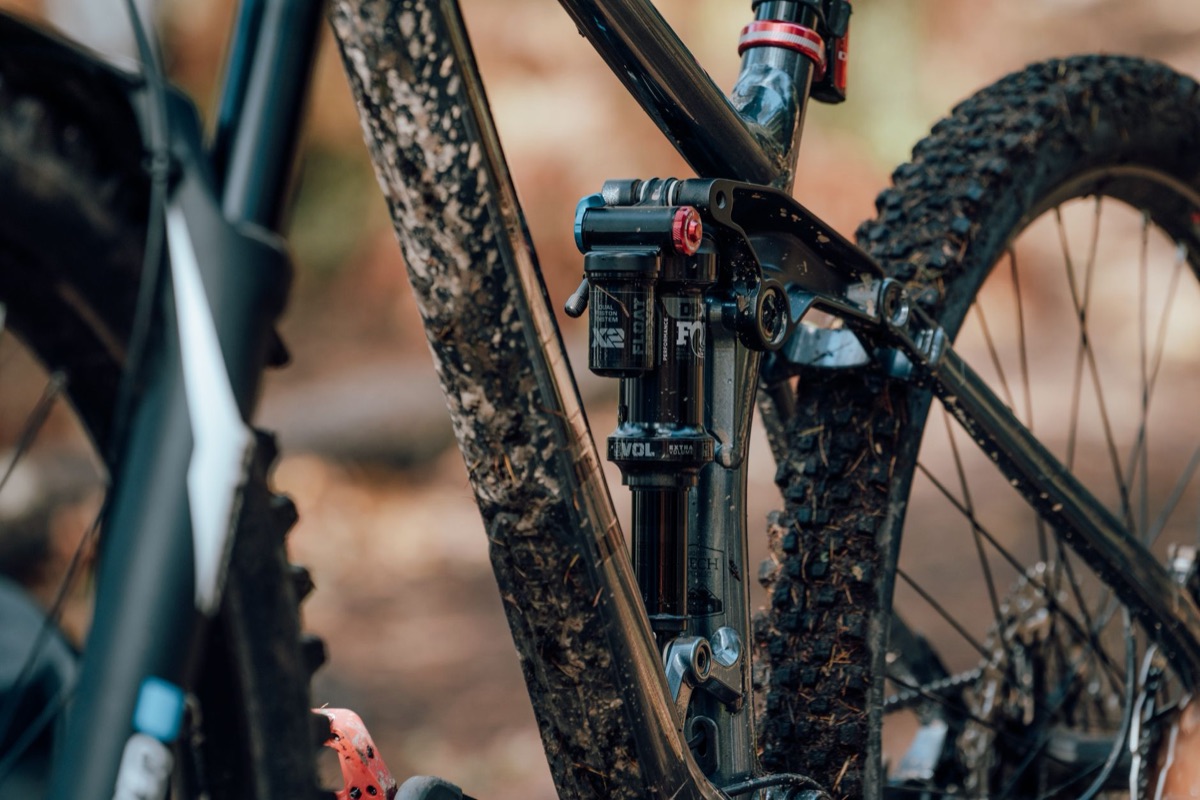
The damper controls speed. The air spring holds you up and decides how the force builds through the travel, and Fox runs the same one across every trim of a given fork or shock: FLOAT with an EVOL sleeve. A Performance fork and a Factory fork have the same spring in them.
- ›EVOL is the negative chamber. An extra volume of air on the other side of the piston, pushing back against the main spring at the top of the stroke. It cuts the force needed to get the suspension moving, which is the small-bump sensitivity riders talk about, and makes the spring curve more linear through the middle.
- ›Volume spacers are the free tune. Add spacers and the air has less room, so the spring ramps harder at the end and resists bottoming out. Take them out and it stays more linear and plusher deep in the travel. They cost a few dollars and a lower leg strip, and they change the ride more than a coating does.
- ›Shocks get negative spacers too. Cutting the volume of the EVOL negative chamber makes pressure build sooner off the top, which heavier riders use to stop the shock feeling vague in the first part of its travel.
what the trims change past the damper
The damper is most of the difference, and it is not all of it. Here is everything else that moves as you climb the trims.
| Part | What it does | Where you get it |
|---|---|---|
| Kashima coating | A gold, low-friction surface treatment on the stanchions or shock body, sold on friction and wear. | Factory only |
| Lower leg bleed ports | Buttons that let the pressure that builds in the lower legs out, so the fork does not stiffen up as it heats and works. | Performance Elite and Factory |
| Kabolt X axle | A floating axle that lets the lowers settle where the hub puts them instead of being pulled into a bind. | Performance Elite and Factory |
| Lower leg casting | Rhythm lowers are heavier, cast from a more affordable grade of aluminium. | Performance and up get the lighter casting |
So Performance to Performance Elite is a damper, a pair of bleed ports and an axle, which is why it is the step worth paying for. Performance Elite to Factory is the coating, and a serviced fork beats a gold one every time.
shocks: the model carries the adjustment
On shocks Fox puts the ladder into the model rather than the trim. Pick the shock for the riding, and the trim mostly decides the finish.
| Shock | Built for | You adjust | Trims |
|---|---|---|---|
| FLOAT SL | Cross-country | Open, medium and firm lever, rebound. Factory adds open mode adjust | Performance and Factory |
| FLOAT | Trail | Open and firm lever, rebound. Factory adds a three-setting open mode adjust | Performance and Factory |
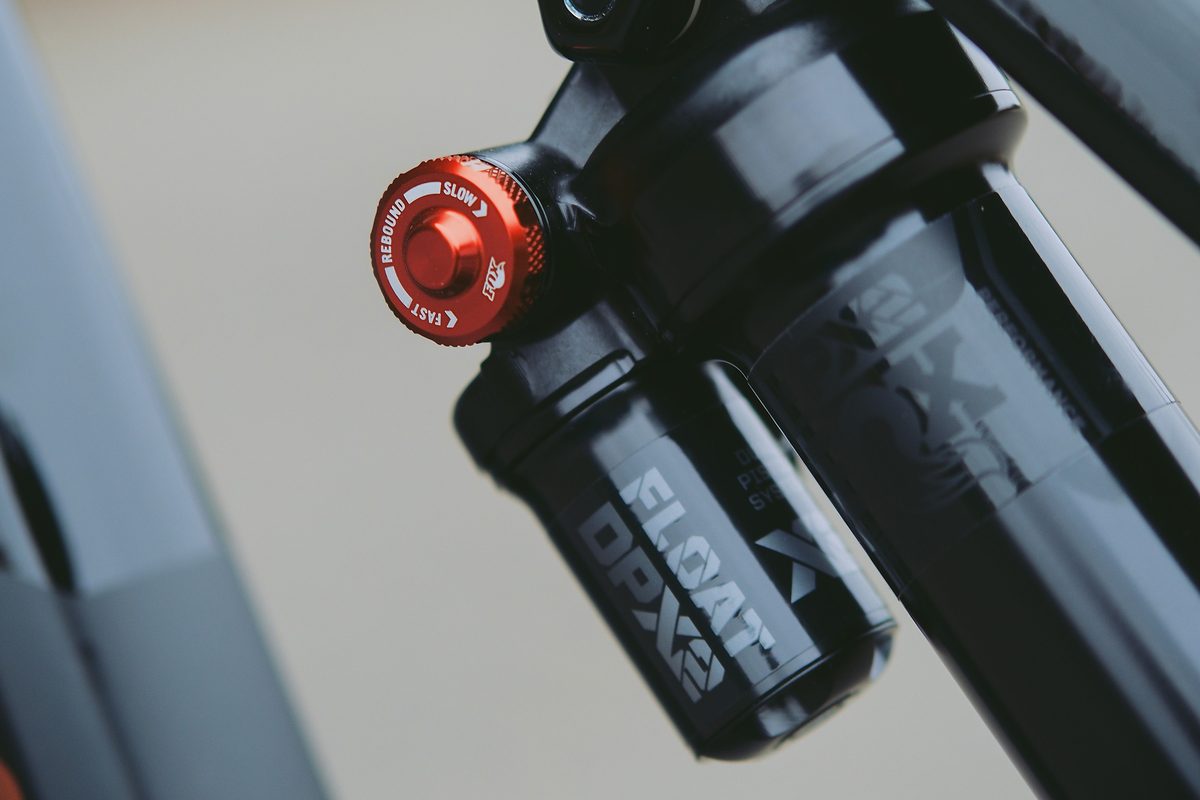
| FLOAT X / DHX | Aggressive trail | Firm switch, 11-click low-speed compression, 16-click rebound | PE and Factory |
| FLOAT X2 / DHX2 | Enduro and downhill | High- and low-speed compression, high- and low-speed rebound, firm mode | PE and Factory |
DHX and DHX2 are the coil versions, both Factory. Live Valve Neo versions of the FLOAT X, DHX and FLOAT X2 read the trail with sensors and firm or open the compression circuit on their own, in 1/70th of a second by Fox's figure, with the sensor and battery kit sold separately.
when stepping up is worth it
Before you spend anything, get your sag and rebound right and keep the fork and shock serviced. A fresh Performance fork that is set up properly can ride better than a neglected Factory one. Log what you run in the Garage so any upgrade has a baseline.
- ›36 Performance to Performance Elite: worth it. You gain separate high- and low-speed compression, which is the difference you feel on fast, rough trail. You can add it with a damper instead of a fork: Fox makes GRIP X and GRIP X2 upgrade kits for the 36, at around $320 to $380 in shops, listed for 36 forks from 2015 on. None of the retailers we link to carry them, and on a 2026 or newer 36, confirm fit with Fox or your shop first. For a 38 on the basic GRIP damper, the 38 GRIP X upgrade kit is $369 and fits 38s from 2020 on.
- ›Performance Elite to Factory: only for the finish. Same damper, same chassis.
- ›GRIP X to GRIP X2: rarely. Worth it for racers and bike park regulars who will set high-speed rebound. Without that setup time it rides no better than a well set up GRIP X.
- ›FLOAT to FLOAT X or X2: depends on the frame. The move up in adjustment is real, but a shock has to match your frame's size and mount, so that one starts with what fits.
The Upgrade Finder takes your bike and shows only the forks and shocks that fit the frame.
common fox questions
- What is the difference between Fox Performance Elite and Factory?
- On current Fox forks and shocks they share the same damper and chassis. Factory adds Genuine Kashima Coat, the gold coating on the fork stanchions or shock body, where Performance Elite is black anodized.
- Is Fox Kashima coating worth it?
- For most riders, no. Fox sells Kashima for surface durability and it is a low-friction coating, but most riders cannot feel it back to back against a black Performance Elite part with the same damper. Buy Factory when you want the gold finish or the price gap is small, and put the money into setup or a damper upgrade otherwise.
- What is the difference between Fox GRIP X and GRIP X2?
- GRIP X is a three-way damper: separate high- and low-speed compression plus low-speed rebound, with high-speed rebound set at the factory. The last position of its high-speed dial firms the fork for climbing, with a blow-off for hits you forget about. It is about 120 grams lighter. GRIP X2 adds an adjustable high-speed rebound circuit for four adjustments in total, and is aimed at enduro racing, bike park and downhill.
- What does the GRIP damper on a Fox Performance fork adjust?
- A three-position compression lever with Open, Medium and Firm settings, micro-adjustment between those positions, and low-speed rebound. It has no separate high- and low-speed compression adjusters. Those arrive with GRIP X, GRIP X2 and GRIP SL on Performance Elite and Factory forks.
- Which Fox rear shocks have high-speed adjustment?
- The FLOAT X2 air shock and the DHX2 coil shock, which adjust high-speed compression, low-speed compression, high-speed rebound and low-speed rebound, plus a firm mode. The FLOAT X and DHX adjust low-speed compression and rebound with a firm switch. The FLOAT and FLOAT SL use a compression lever plus rebound.
see what fits before you pick a trim.
Enter your bike and the Upgrade Finder shows only the forks and shocks that fit your frame, with what each one changes compared with the part you already own.
 filed under · build roadmap
Is There a PCPartPicker for Mountain Bikes? (Yes, and Here’s How It Works)
 filed under · suspension setup
How to Set Sag on a Mountain Bike (Front + Rear, by Discipline)
 filed under · compatibility
How to Build a Mountain Bike From Parts (And the Compatibility Traps)
 filed under · build roadmap
What Order to Choose Parts for a Custom MTB Build (Frame First, and Why)