Wolf Tooth Locked-In Bar Ends: The Most Hyped MTB Part of 2026
The Wolf Tooth Locked-In Bar Ends are a $34.95 pair of bar ends that bolt into your handlebar so the outside of your hand has something to push against instead of squeezing the grips. They fit bars with an 18.0mm or wider internal diameter and need grips with an open outboard end.
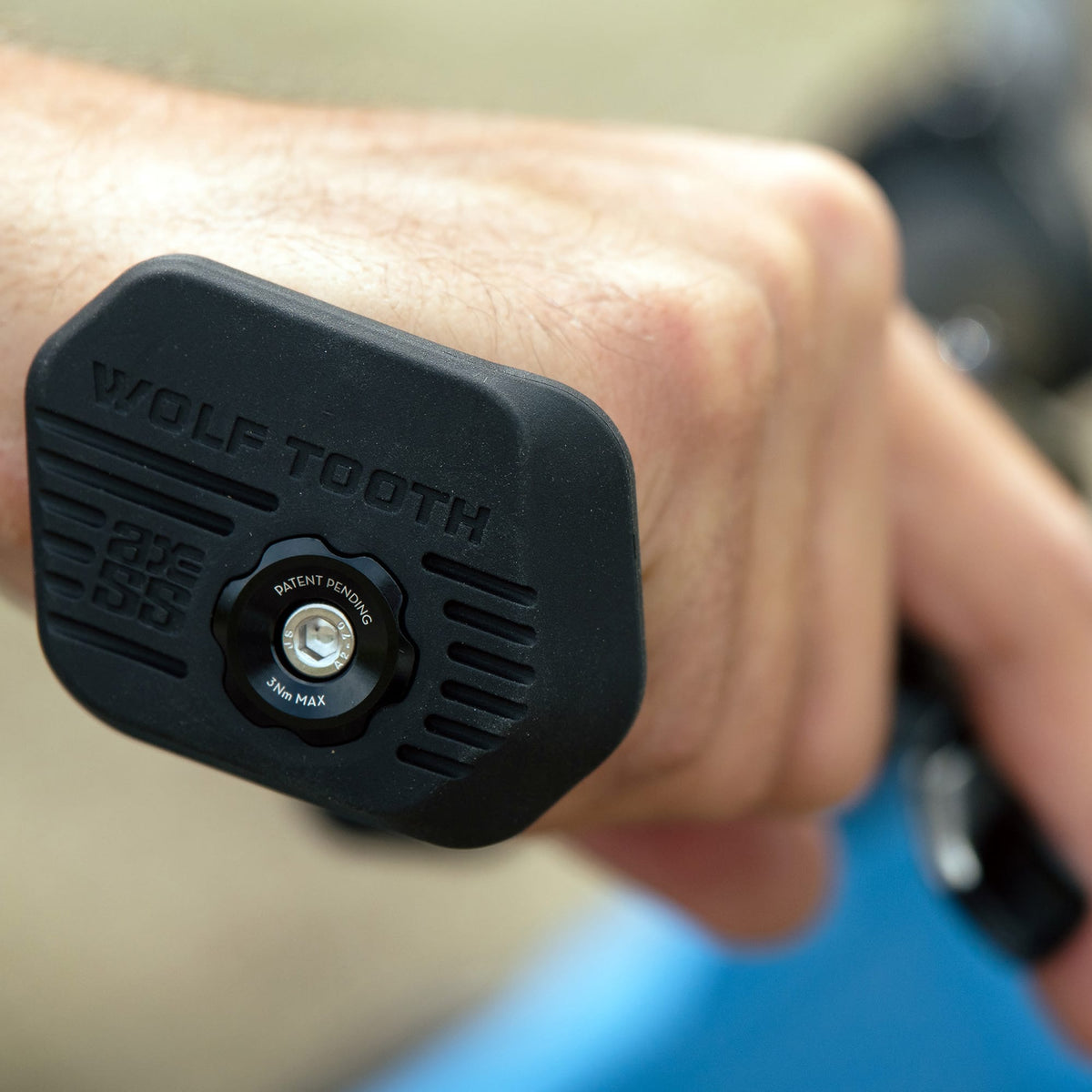
The Wolf Tooth Locked-In Bar Ends are two rubber blocks that bolt into the open ends of your handlebar and sit just outboard of your grips. You do not hold them. The outside edge of your hand pushes against them.
Grip force is what burns your forearms out halfway down a run. Once the side of your hand has something solid to load through, you can steer and lean on the bike without white-knuckling the grips to stay attached to it.
They sold out the week they launched in May, and three months later stock is still coming and going. Cheap bolt-on parts do not normally do that. These did because they showed up under World Cup downhill racers before they showed up in shops.
what a bar end does that a grip cannot
Arm pump is your forearm muscles swelling up from sustained squeezing until your hands stop working properly. It is a grip-force problem, not a fitness problem, which is why fitter riders still get it on long tracks.
A grip only gives you one way to hold the bar: wrap your fingers around it and clamp. Every input you make, steering, leaning, pulling the bike into a rut, goes through that clamp. Add a flange outboard of the grip and you get a second surface, facing the other way. Push the outside edge of your hand into it and the bar goes where you want it without your fingers doing the work.
why the world cup pits got interested
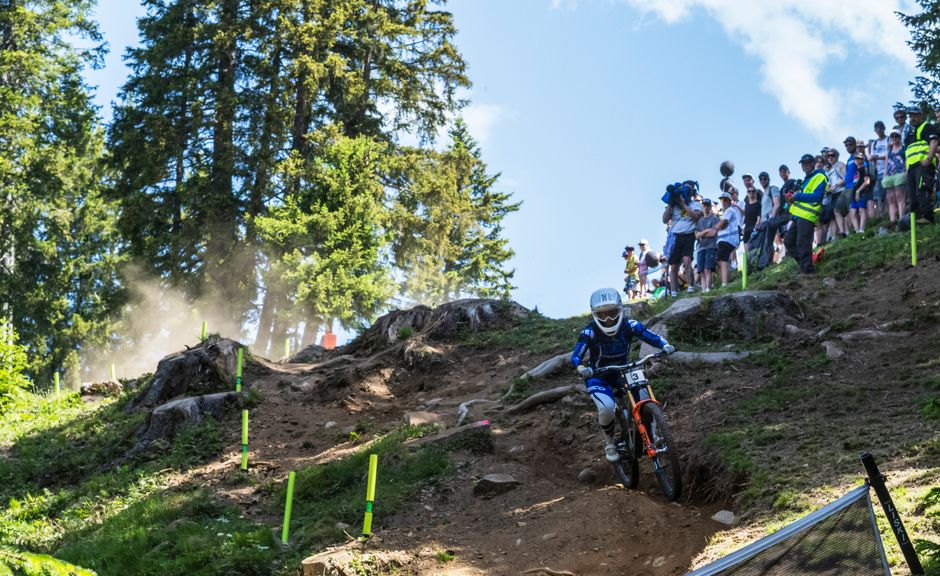
Wolf Tooth co-developed these with Joe Breeden and Nukeproof Axess Racing, with input from World Cup DH racers on several teams. Breeden had been testing the idea since the 2023–24 off-season, and by his own account got laughed at for it on a training camp by Andreas Kolb and Charlie Hatton. Both went on to win World Cups running them.
Racers were running them a season and a half before anyone could buy a pair.
They have not won everyone over, though. Kolb ran them for several races this season, then showed up at Val di Sole for Worlds on OneUp Goldstone grips, which have a big outboard flange that does a softer version of the same thing.
the second job: your pinky finger
The flange sticks out forward of the bar end, so the first thing that touches a tree is a block of rubber instead of your outside knuckles. Pinkie fingers take a beating on tight trails and there has never been much protecting them.
The obvious worry with anything that sticks out is snagging a branch, and hooking a bar on a tree at speed is a genuinely bad crash. Wolf Tooth chamfered the leading edge so a strike pushes the bike away from the tree rather than catching on it. Our read: the snag risk is real but it is smaller than the risk of the bare bar end you are running now, which has no chamfer at all and is a metal tube waiting to core into something. They also protect the bar itself, which matters most on carbon.
where they get in the way
Three situations where the flange stops helping and starts being a problem, none of which appear on the box.
- ›Jump trails. The moment you throw a whip or a table, the flange is right where your wrist wants to go, and it will catch a loose jersey too. If your bike park diet is jump lines, skip these.
- ›Climbing and pulling on the bars. Anything where you drive the front wheel up and over something puts your hand in a position the flange fights. That is a real reason they have not caught on with enduro racers the way they have with downhillers, and why they are a hard sell on an XC bike.
- ›Leaning your bike on things. The exposed bolt head scratches whatever you rest the bar against. Minor, but you will notice it on a nice truck tailgate.
There is also a settling-in period. Some hand soreness on the outside bone in the first few rides is normal and usually turns out to be angle, not fit. If it does not fade, that is the product telling you something.
will they fit your bar and your grips?
Two separate checks. The bar is the easy one and the grips are where most people get stopped.
Your handlebar needs an internal diameter (the size of the hole at the end of the bar, not the 31.8mm or 35mm clamp size from our cockpit compatibility rundown) of 18.0mm or wider. Most alloy and carbon bars clear that. Three that Wolf Tooth calls out:
| Handlebar | Verdict |
|---|---|
| Hope 35R Carbon | No. Internal diameter is too small. |
| Deity Speedway Carbon | Internal step. May fit if the bar has not been cut down. |
| Chromag BZA Carbon | Internal step. May fit if the bar has not been cut down. |
That list is not exhaustive. If your bar is not on it, measure or ask.
the grip question
The bar end needs to slide past the grip and into the bar, so the grip has to have an open outboard end and has to be able to shift inboard a few millimeters. Most lock-on grips (the ones held on by a metal collar and a bolt rather than friction) have a single collar at the inboard end and an open outboard end, which is exactly what you want.
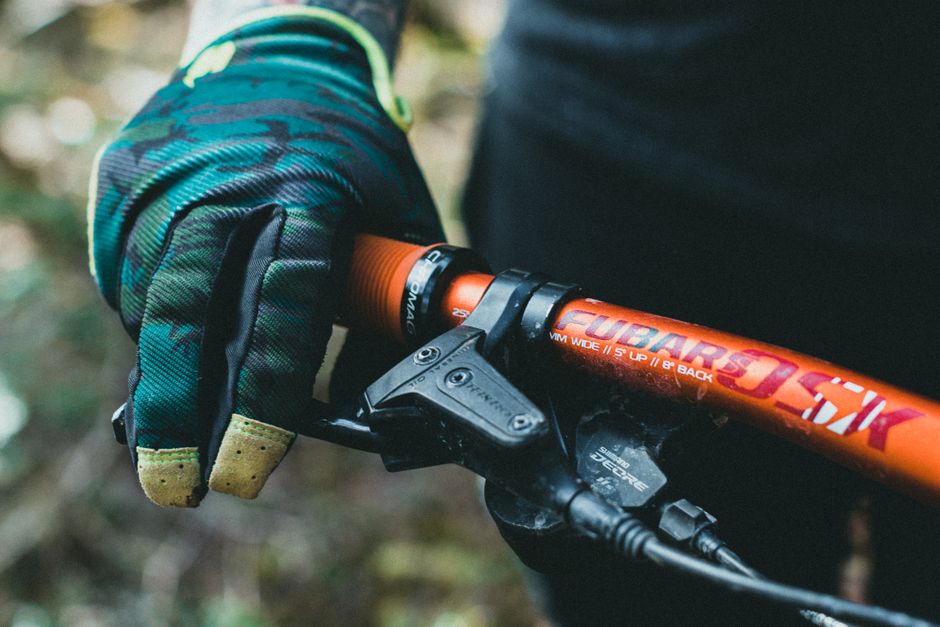
| Your grips | Verdict |
|---|---|
| Lock-on, single inboard clamp, open end | Yes. The intended setup. |
| Push-on or foam (ODI Longneck, Renthal) | Yes. Trim the mushroomed end for more room. |
| Lock-on with a closed outboard end (ODI Reflex) | Yes, after punching the end out. |
| Ergon GA2 / GDH | Yes. May need the plastic liner lip sanded off. |
| RevGrips | No. The collar leaves a big gap at the bar end. |
| Angled ends or an outboard lock ring (Ergon GE1 Evo, Chromag Squarewave) | No. |
Grip diameter matters more than the marketing suggests. Somewhere around 31 to 34mm, with a raised outboard section of 33 to 35mm, is the range where the grip blends into the ramp of the bar end instead of leaving a step for your skin to bind on. A grip with a small outboard flange, like the OneUp Goldstone or an Ergon GDH, makes the nicest transition.
Wolf Tooth sells a grip punch for the closed-end case, which cuts a clean hole instead of the ragged one you get with a knife. Buy it direct from them. Jenson does not stock it, so we are not going to send you to a search page that returns two hundred things that are not it.
setting them up
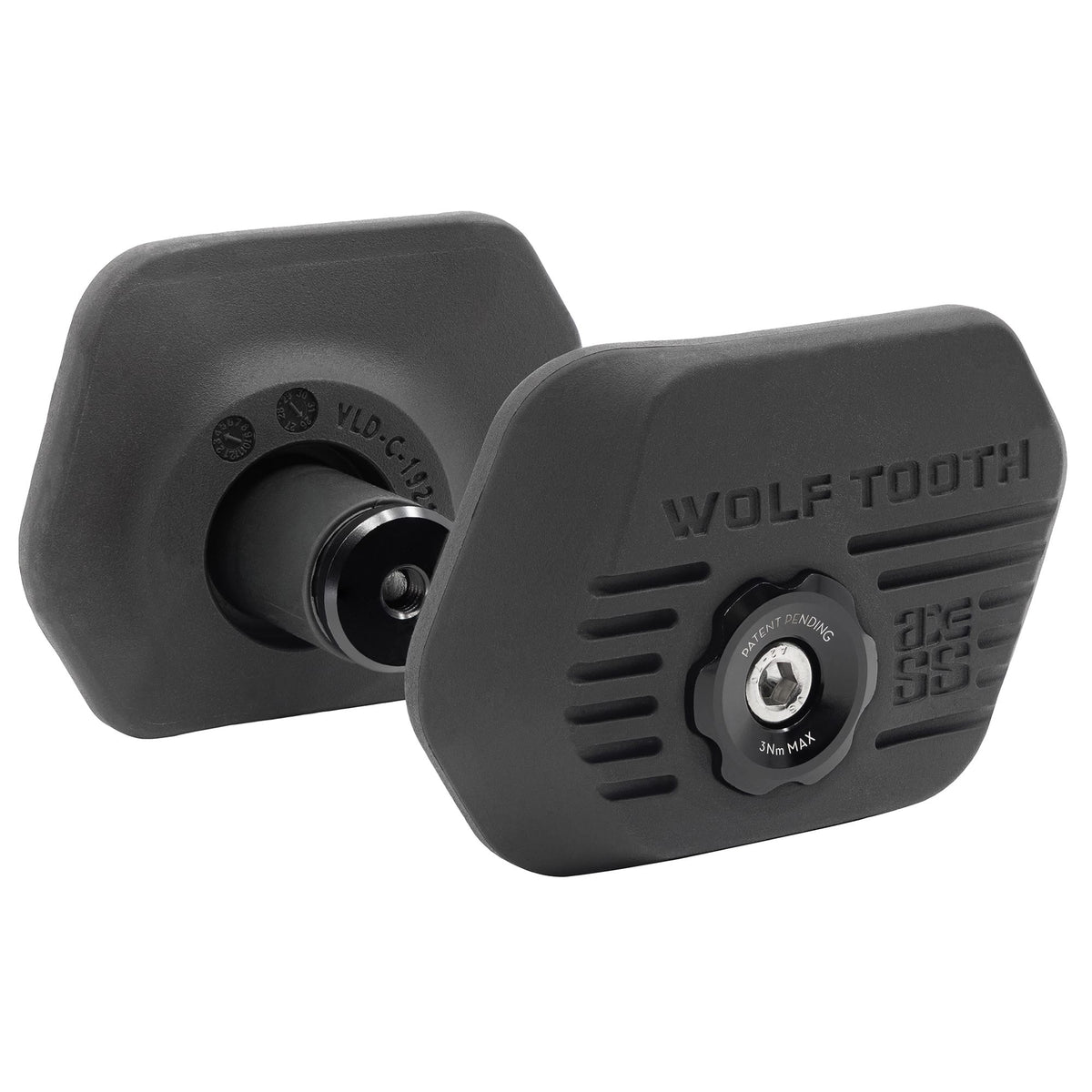
It is a 4mm hex wrench and about ten minutes a side. Slide the grip inboard, drop the bar end in with the hexagonal faces of the cap and wedge actually engaged with each other, nip the bolt up lightly, then slide the grip back out until it touches the bar end and clamp it. Only then set the angle and torque it to 3Nm, which is barely more than snug.
Two things that catch people out.
- ›Re-torque them. The wedge expands into the rubber and the rubber then relaxes, so the bolt goes loose the first couple of rides. Retighten to 3Nm until it stops spinning, and check it periodically after that.
- ›Move your brake levers outboard. Your hand now sits a few millimeters further out than it used to. Slide the levers out to match, or you end up reaching inward for the brake and losing the contact with the flange you just paid for.
Angle is the setting that decides whether you like these. It depends on your hand position, how much your wrists drop, and where your levers sit, and it is different for everyone. If you get a hot spot on the side of your hand, that is the angle talking, not the product. Loosen the bolt, rotate a few degrees, retighten.
so should you buy them?
$34.95 for the pair, 93 grams, 80A durometer rubber (about as firm as a skateboard wheel) over a 6061-T6 aluminum core. That is cheap for a cockpit part, and it is the cheapest thing you can bolt to your bike that changes how it feels in a corner.
Buy them if you ride steep, rough, technical trails, race downhill, or ride a heavy e-bike you have to physically wrestle into turns. Braking bumps and long, chattery descents are where the extra contact point earns its money, and the e-bike case is underrated: a 25kg bike takes real effort to throw around and this gives you somewhere to throw it from.
Skip them if your riding is mostly jump lines, mostly climbing, or mostly cross-country. Skip them too if your grips are on the no list and you like your grips.
Otherwise, just try them. It is $35. They might change your riding, or you might hate them and hand them to a buddy who ends up loving them. It is not that deep.
If your hands are the thing ending your runs, the other half of the fix is suspension that is not beating you up. Our sag setup guide covers that side.
Ready to go: Wolf Tooth Locked-In Bar Ends at Jenson USA, $34.95.
common questions
- What do the Wolf Tooth Locked-In Bar Ends actually do?
- They add a firm rubber flange just outboard of your grip that the outside edge of your hand pushes against. That gives you a second contact point to load the bar through, so you can hold the grips more lightly and still steer and lean on the bike. Less grip force is the whole point, because grip force is what causes arm pump. They also shield your outside knuckles and pinky from tree and rock strikes.
- Will the Locked-In Bar Ends fit my handlebar?
- They fit most carbon and aluminum bars with an internal diameter of 18.0 mm or wider. Wolf Tooth lists the Hope 35R Carbon as not compatible because its internal diameter is too small, and the Deity Speedway Carbon and Chromag BZA Carbon have an internal step that may still allow a fit if the bars have not been cut down.
- Do the Locked-In Bar Ends work with lock-on grips?
- They work with lock-on grips that have an open outboard end, which is most single-clamp lock-ons. Closed-end grips can be converted with the Wolf Tooth grip punch. Grips with angled ends or an outboard lock ring, such as the Ergon GE1 Evo and Chromag Squarewave, do not work.
- How much do the Wolf Tooth Locked-In Bar Ends weigh and cost?
- They are $34.95 for the pair and weigh 93 grams for the pair. The construction is an 80A durometer rubber over a 6061-T6 aluminum core, and they install with a 4 mm hex wrench torqued to 3 Nm.
- What are the downsides of the Wolf Tooth Locked-In Bar Ends?
- Three. They get in the way on jump trails, where the flange sits right where your wrist goes on a whip or a table and can catch a loose jersey. They fight your hand position when you are climbing or pulling up on the bars, which is why they suit downhill far better than enduro or cross-country. And the exposed bolt head scratches whatever you lean the bike against. Some soreness on the outside bone of the hand in the first few rides is normal and is usually a sign the angle needs adjusting.
- Who developed the Locked-In Bar Ends?
- Wolf Tooth co-developed them with World Cup downhill racer Joe Breeden and Nukeproof Axess Racing, with input from other top-level DH racers. They went on sale in May 2026 after being raced through the World Cup season.
one change at a time, in order.
The Upgrade Finder looks at what is on your bike now and tells you which part is actually holding you back, so the next $35 goes somewhere it changes how the bike feels.
 filed under · build roadmap
Is There a PCPartPicker for Mountain Bikes? (Yes, and Here’s How It Works)
 filed under · suspension setup
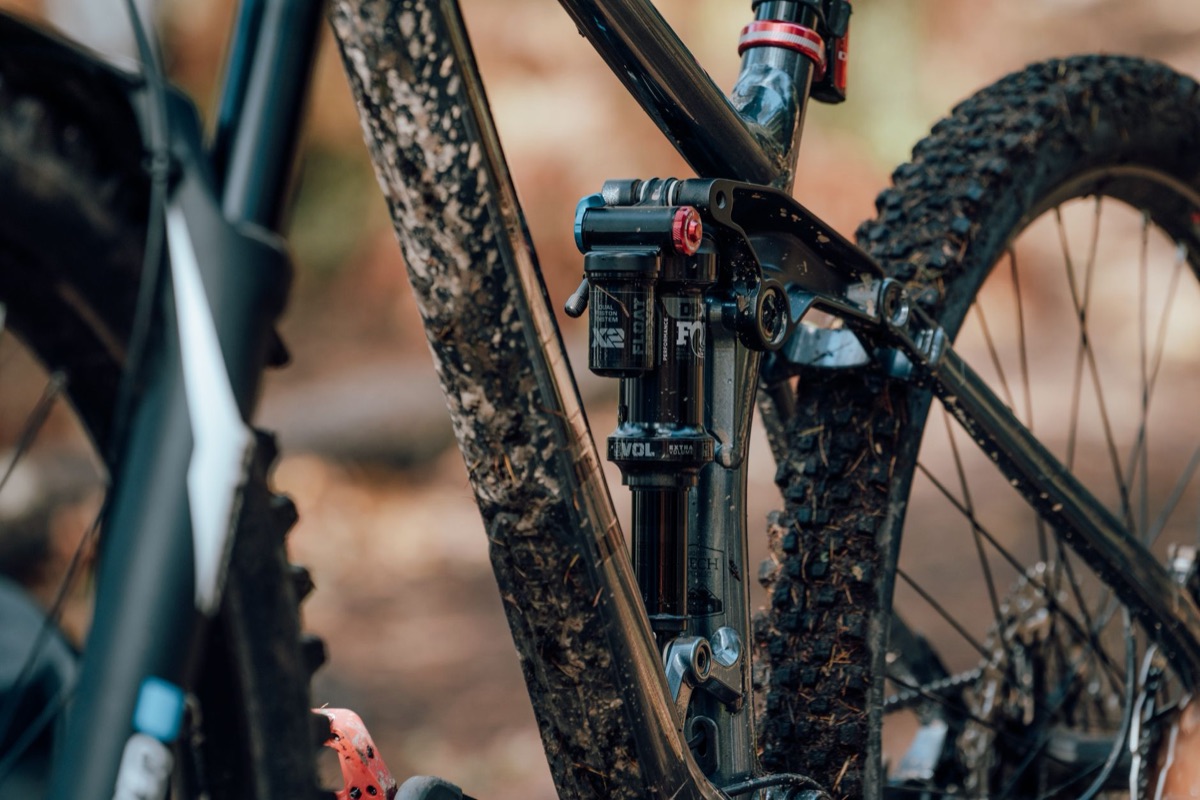
How to Set Sag on a Mountain Bike (Front + Rear, by Discipline)
 filed under · compatibility
How to Build a Mountain Bike From Parts (And the Compatibility Traps)
 filed under · build roadmap
What Order to Choose Parts for a Custom MTB Build (Frame First, and Why)