Tuned Mass Dampers on Mountain Bikes: The World Cup Part That Hides in Your Fork
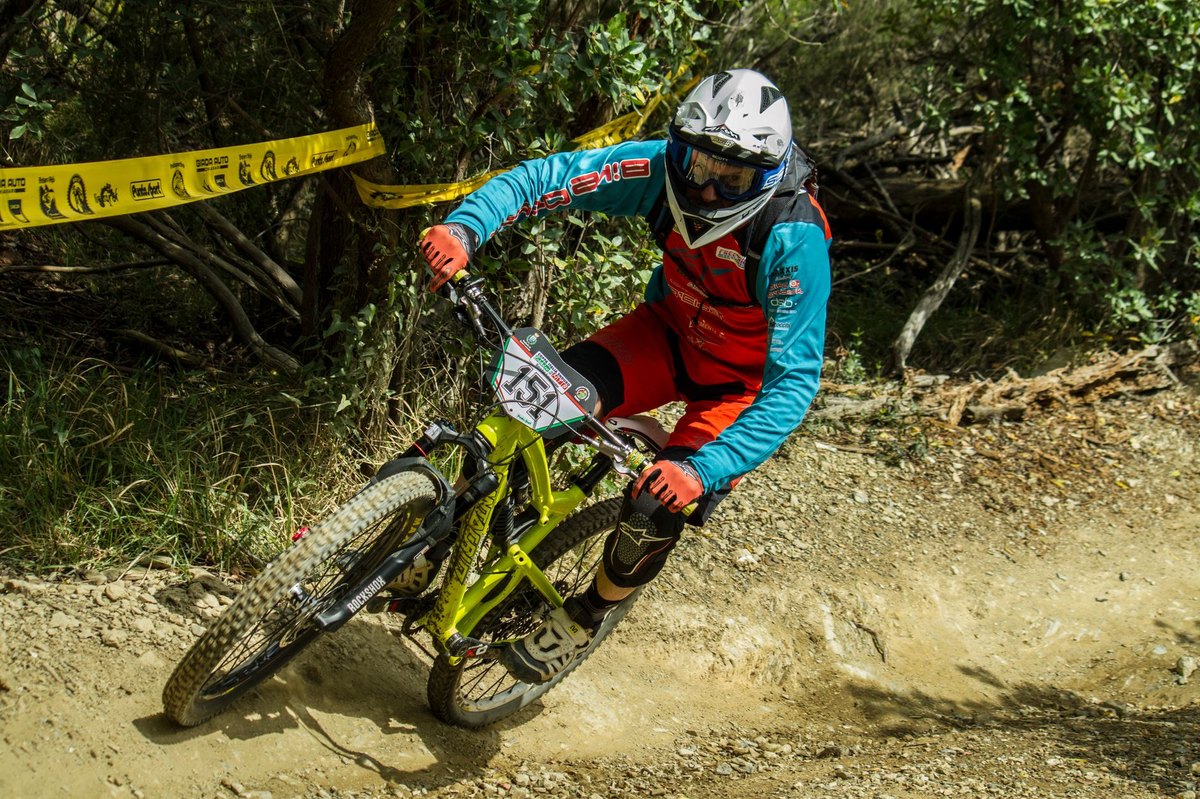
A tuned mass damper is a weight on springs that hides inside your fork steerer and cancels part of every hit before it reaches your hands. They are all through the World Cup downhill pits. Rimpact’s TMD V2 is £199.99, the CounterShox CounterSycle is $275, and the only blinded test anyone has published could barely tell one from a dummy.
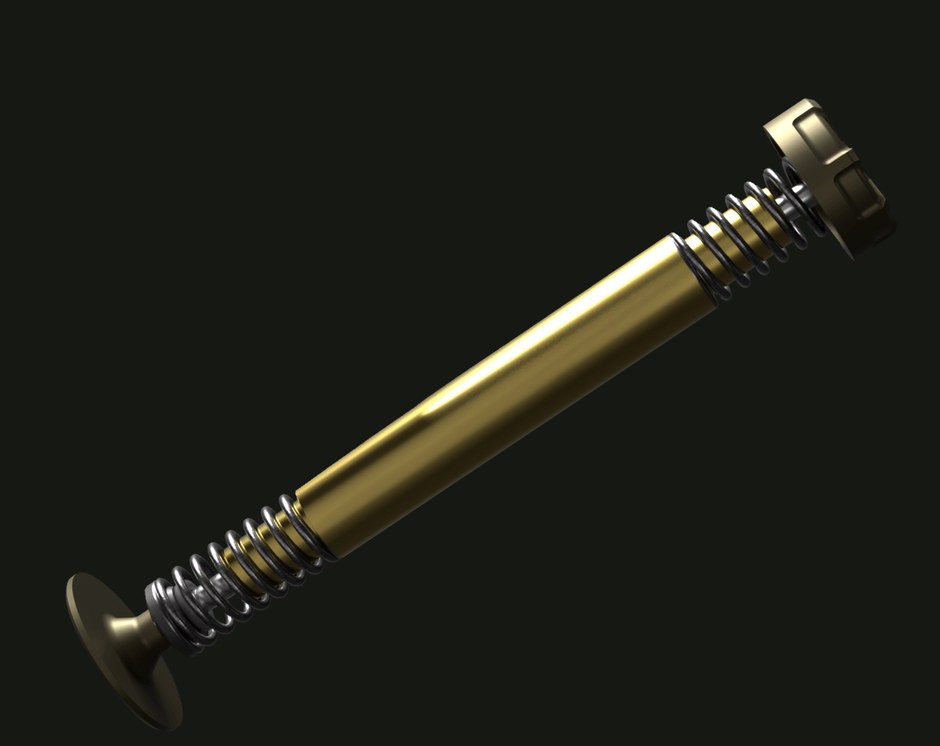
A tuned mass damper is a brass slug with a spring at each end, sealed in a tube and dropped down inside your steerer tube, the part of the fork that runs up through your frame and that the stem clamps around. When the front wheel slams a rock and the front of the bike snaps upward, the slug moves down. The two fight each other, and a slice of the hit never reaches your hands.
On a long, rough descent your hands quit before your legs do. That is the problem this is pointed at.
Pit photos from the Loudenvielle World Cup in May had the old and new Rimpact units laid out side by side. In August one turned up in the steerer of Victor Koretzky's Specialized Epic at the cross-country World Championships, on a race bike where people argue about grams. Two seasons ago this was a curiosity on a handful of downhill bikes.
what a tuned mass damper actually is
Take a weight and hang it between two springs inside a tube. Bolt the tube to something that gets shaken. When the tube jerks upward the weight lags behind and squashes the upper spring. When the tube drops back the weight is still travelling up. It is always moving against the thing it is bolted to, and every time it does, it cancels part of the movement.
Skyscrapers use them. Taipei 101 has a 660 tonne steel ball hanging in the middle of it, and in a big enough wind it cuts the tower's sway by up to 40 percent.
The line every brand reaches for is Formula 1. Renault ran one on Fernando Alonso's car in 2006 and the FIA outlawed it. That is true and it is doing more work in the marketing than it deserves. The FIA banned it by reclassifying it as a moveable aerodynamic device, and the job it was doing in an F1 car was holding the nose at the right height for airflow. Nobody was trying to save the driver's hands.
The frequency matters more than the F1 story. These are tuned to somewhere around 8 to 10 hertz, which is the whole front of the bike moving up and down over braking bumps and rock gardens. It is not the fine buzz that stings your palms on a fast fire road. If that sting is what you are chasing, this is the wrong part and softer grips are the right one.
why the world cup pits filled up with them
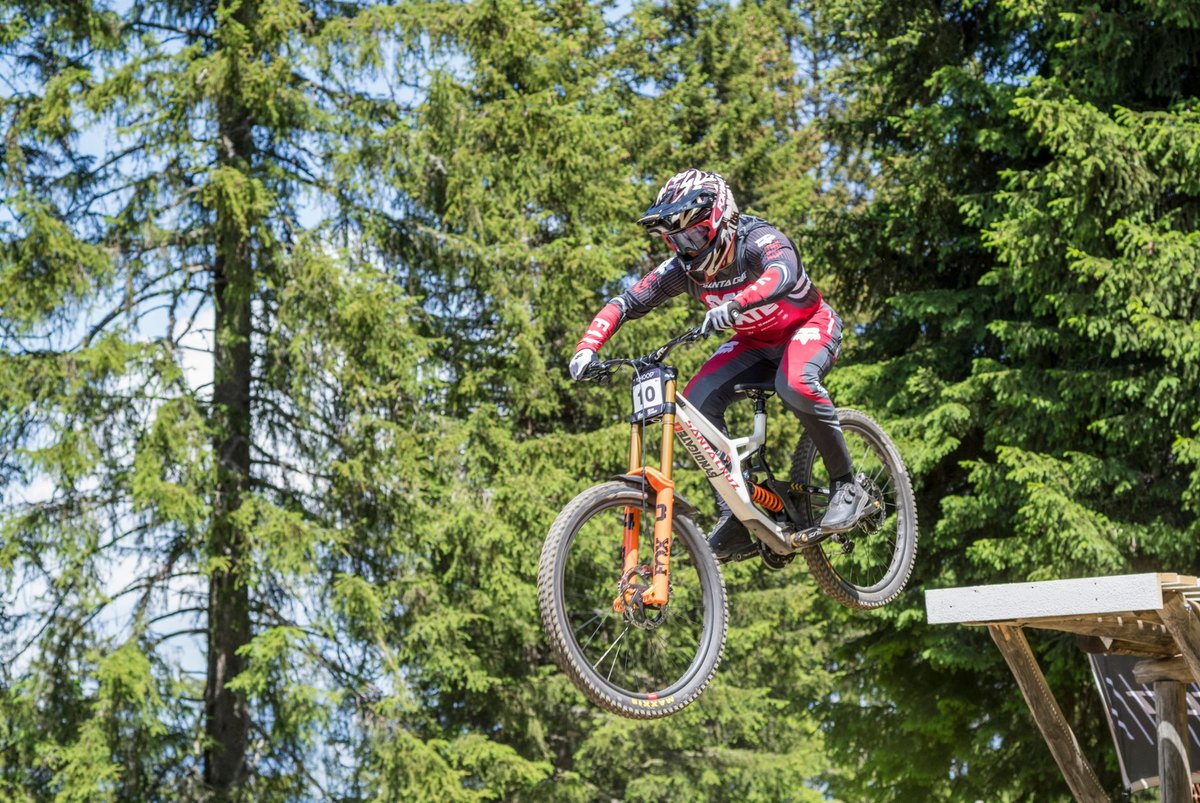
The first ones showed up in 2024, bolted where you could see them, on the Commencal Supremes of Amaury Pierron and Myriam Nicole. Loris Vergier, who won the World Championship that year, ran his on the front triangle, and ran two of them during his race run in Andorra. Mondraker had one bolted to the swingarm of a prototype.
Rimpact's version hides in the steerer, which is why you stopped seeing them. Their own team list runs Scott Factory DH, Canyon CLLCTV, Trek Factory Racing, Cube Factory DH and Commencal Muc-Off. Founder Matt Shearn says every team at a World Cup ended up in his inbox asking for units and he could not build enough of them, because the weight inside the first version was tungsten and tungsten is hard to get hold of.
Rimpact lead their own product page with Jesse Melamed saying he was a second per minute quicker with one, which is a quote a brand chose to print. The harder fact to wave away is that Fox has a patent application in for a version you can tune the frequency on.
Pros running something is weaker evidence than it looks. They get the part free, they will bolt on anything for a tenth of a second, and a World Cup track is four minutes of the roughest ground anyone can find. It tells you the idea is not nonsense. It does not tell you what it does on your Tuesday evening lap.
does it actually work?
One proper test exists. In May 2025 Pinkbike put the CounterSycle against a dummy: same shape, same look, 366 grams against the real unit's 380, and the only way to tell them apart is to shake it. Two testers spent a day lapping a downhill track they both knew, blind to which one was bolted on, guessing after every run.
Jessie-May Morgan got three of five blind runs right and two wrong, could not consistently feel a difference, and said she could not recommend spending $275 on one. Seb Stott got four of five, though only two of his were a clean swap from one unit to the other, and he thought his hands were fresher at the bottom with the real one. His conclusion was that most riders should sort their suspension setup, tire pressures and handlebars first.
Our read: that is a real result and it is not a flattering one. Two experienced testers, on a track they knew, on a day built around telling the difference, and the honest answer came out as maybe. Whatever the damper is doing, it is smaller than the difference a few clicks of rebound makes.
There is data, and it has a hole in it. A rider ran a downhill lap with four accelerometers on an Atherton A.200 and measured about 10 percent less vertical acceleration at the handlebar with a CounterShox fitted, plus the fork using more of its travel. One run each, no averaging, and the run without the damper had nothing bolted on in its place. So 380 grams of dead weight on the front of the bike is not ruled out as the cause.
That is not a theoretical objection. A rider testing a damper on Pleney cable-tied 900 grams under his down tube afterwards and got the same result: better tracking through the rough corners, less deflection off the front wheel, and less choppiness under braking.
what it feels like, and where it gets worse
The front end tracks straighter through rough corners and deflects less off square edges. It also feels heavier, in a way some riders read as the bike pulling itself down the hill, and that part takes a few runs to stop noticing.
The place it goes backwards is specific: slow, steep, technical ground. The front goes vague and floppy, and it is worst at the top of a steep roll or a drop, right when you have slowed down to pick a line and the front wheel is doing the least work. If that is most of your riding, the damper is buying you nothing and costing you feel.
Jumping is fine. Rimpact say it is largely unnoticeable on jumps and manuals, and riders who fitted one expecting to lose pop have not found it.
Four things people ran into with the first Rimpact version, three of which the V2 was built to answer.
- ›Noise on the big hits. V1 could make a genuine racket on square-edged impacts and repeated braking bumps, which is the weight bottoming out on its springs inside the steerer. V2 added elastomer bumpers at each end for exactly this.
- ›A chattery feel. Some riders found V1 chattery on one particular fast, steep section of trail, and a stiffer spring did not fix it. Most people ended up on the lightest of the three springs it shipped with. V2 drops the choice entirely: one rate, and 30 percent less force needed to get the weight moving, which lands nearer the light spring than the heavy one.
- ›Springs going soft. V1's springs sat under heavy preload all the time and lost rate, so the thing quietly stopped working. V2 keeps them inside 80 percent of their travel. V1 spares are £19.99 if you already own one.
- ›420 grams. High up and at the front, which is where you notice weight on a bike. That one is not going away.
it changes how you set your suspension up
Rimpact's own FAQ answers "do I need to set my fork up differently" with no, just plug and play, then in the next sentence says a slight increase in spring rate and compression helps make the most of it. Both halves are true.
Here is the logic. Plenty of riders run their suspension softer than they actually want to, because soft is how you buy comfort on a rough track. If the damper is taking some of the harshness out before it reaches you, you stop having to pay for comfort with a soft setup. One rider with sensors logging his own bike went stiffer on compression and faster on rebound after fitting one, having previously run an extremely soft setup purely chasing comfort.
It goes both ways, though. Take the damper off a bike that was set up around it and the thing deflects the whole way down the trail and is no fun to ride, because the setup underneath it is now wrong.
Which is the argument for doing the free version first. Sag, rebound and tire pressure are the three settings that decide how much the trail beats you up, they cost nothing, and most bikes are wrong on at least one of them. Our sag setup guide walks through both ends, and the Garage does the arithmetic and remembers what you ran last time.
will one fit your bike?
Two products, two completely different fitment problems.
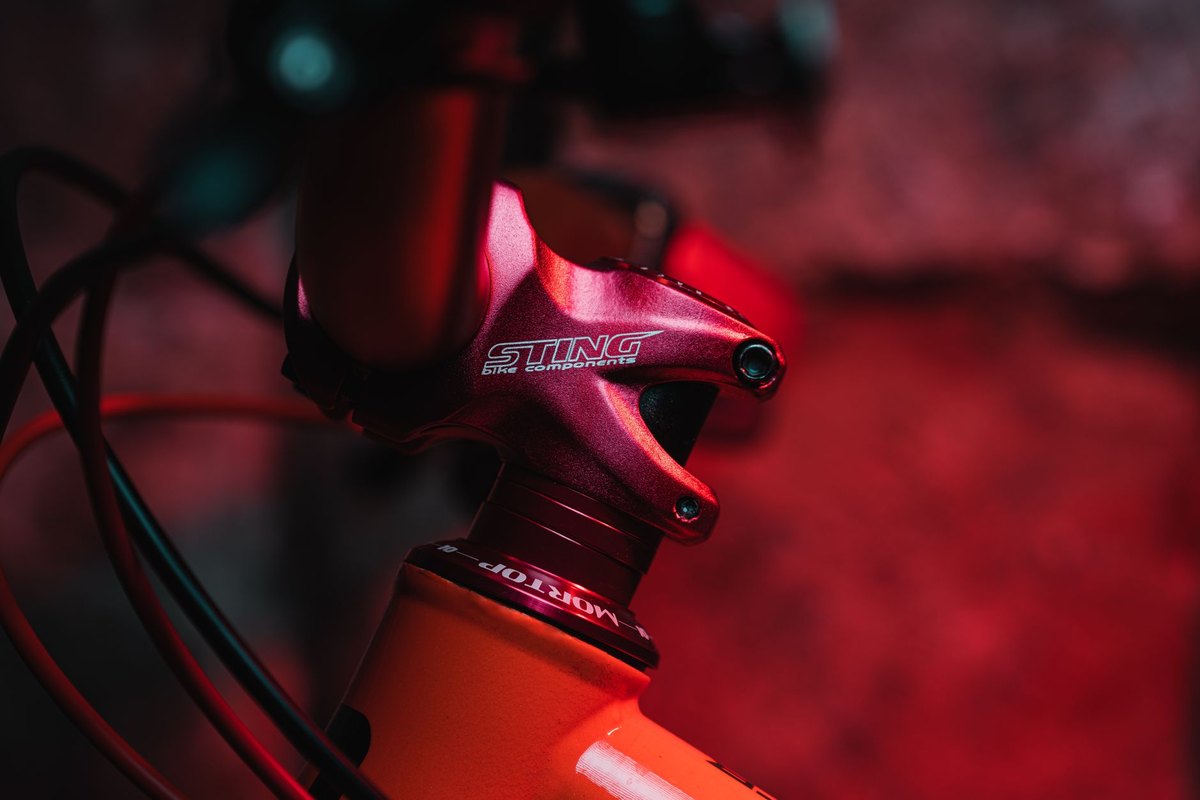
The Rimpact TMD goes inside the steerer, so the steerer is what matters. Aluminium and steel, tapered or straight 1 1/8 inch, oval or round, single crown or dual crown. Carbon steerers are not on that list.
Then length. Rimpact optimise it for a steerer of 180mm or more and say anything shorter needs spacers above the stem. Treat that as a hard number. A shop fitted a V1 to a downhill bike with a short head tube and a direct mount stem, and there was so little steerer left that the springs were squashed flat before it was even bolted in, so the weight almost certainly never moved at all. It fitted. It just did nothing. Measure from the top of the headset to the top of the steerer before you order.
The CounterSycle hangs outside instead, on a bracket that clamps to the steerer as a 5mm headset spacer for trail and enduro, or to one of the fork uppers on a downhill bike. So the question is clearance rather than length. Around 107mm of it hangs below the clamp and it has to clear the fork arch, the brace between the two fork legs, when the fork is fully compressed. If it does not, the stem goes higher up the steerer, and then you are hunting for a taller rise bar to get your bar height back.
| Rimpact TMD V2 | CounterShox CounterSycle | |
|---|---|---|
| Where it goes | Inside the fork steerer | Outside, on the steerer or a fork upper |
| Price | £199.99 | $275 |
| Weight | 420g, of which 250g moves | 380g enduro / 550g downhill |
| The gate | Alloy or steel steerer, 180mm or longer | Clearance to the fork arch at full compression |
| Buying one today | Pre-order, next batch end of September | Downhill unit out of stock |
Neither has any oil in it. Both are a brass mass that is a tight enough fit in its tube for the friction alone to do the damping, and someone took a CounterSycle apart to check: brass, soft springs, a bit of grease, nothing else. The comment sections are not wrong about the bill of materials.
so is it worth £200?
Buy one if the boring stuff is already done. Fork and shock serviced, sag set, rebound somewhere you chose rather than wherever it was in the box, tire pressures you picked, tires that are not square. If all of that is true and your riding is long, rough, repeated descents, bike park laps, downhill racing, big alpine days, or a heavy e-bike you have to wrestle, then this is a real thing to try, and reduced fatigue is the strongest part of the case for it.
Skip it if any of that list is undone. A fork service, correct sag and the right tire pressure each move the needle further than this does, and together they cost less than the damper.
Skip it too if your riding is mostly slow steep technical, mostly jump lines, or mostly climbing. And skip it if you need to know a part works before you spend the money, because right now nobody can show you that.
For £200 you are buying a maybe. The riders who fitted one and kept it are not wrong, and neither is the guy in the comments who printed his own mount, stacked some washers on springs, and reckons it works.
If it is your hands specifically that end your runs, the cheap end of that problem is the cockpit. Our bar ends post covers the $35 version of the same idea, and it came out of the same World Cup pits.
common questions
- What does a tuned mass damper do on a mountain bike?
- It is a weight suspended between two springs inside a sealed tube, mounted at the front of the bike. When the front wheel hits something and the chassis is thrown upwards, the weight moves down, out of phase with it, and cancels part of the movement. The goal is a front end that deflects less and transmits less of the hit into your hands, so you fatigue slower on a long rough descent.
- Do tuned mass dampers actually work?
- Partly, and less than the price suggests. The only blinded test published so far put a CounterSycle against a near-identical dummy weight over a day of downhill laps, and neither tester could reliably tell which one was fitted. One of the two thought his hands were fresher with the real unit. Manufacturer data acquisition shows around 10 percent less vertical acceleration at the handlebar, but from a single run with no dead-weight control, so the extra mass alone is not ruled out as the cause.
- Will a Rimpact TMD fit my fork?
- It fits aluminium and steel steerer tubes, tapered or straight 1 1/8 inch, oval or round, on both single and dual crown forks. Carbon steerers are not on Rimpact’s compatibility list. The bigger catch is length: it is optimised for a steerer of 180mm or more, and a shorter one needs spacers above the stem. Fit it to a very short steerer and the springs end up fully preloaded, which stops the weight moving at all.
- How much does a mountain bike tuned mass damper cost?
- The Rimpact TMD V2 is £199.99 direct from the UK, and the CounterShox CounterSycle is $275 including a choice of bracket. Both are pre-order or out of stock more often than not, and the Rimpact price does not include shipping or any customs charge on the way to the US.
- Do I need to change my suspension setup if I fit one?
- Probably, even though Rimpact call it plug and play. Their own FAQ then says a small increase in spring rate and compression helps, and riders running data acquisition have gone stiffer on compression and faster on rebound after fitting one, because they were previously running a soft setup to buy comfort. It works the other way too: set the bike up around the damper and it feels harsh and deflective if you take the damper off.
- Are tuned mass dampers legal in mountain bike racing?
- Yes. They have been raced at UCI World Cup downhill rounds since 2024, and Loris Vergier was running them in the season he won the 2024 World Championship. Formula 1 is where they were banned, and the FIA did it by reclassifying the device as a moveable aerodynamic device rather than by ruling on vibration damping.
the free version of this upgrade.
Sag, rebound and tire pressure decide how much the trail beats you up, and most bikes are wrong on at least one of them. The Garage does the arithmetic and remembers what you ran last time.
 filed under · build roadmap
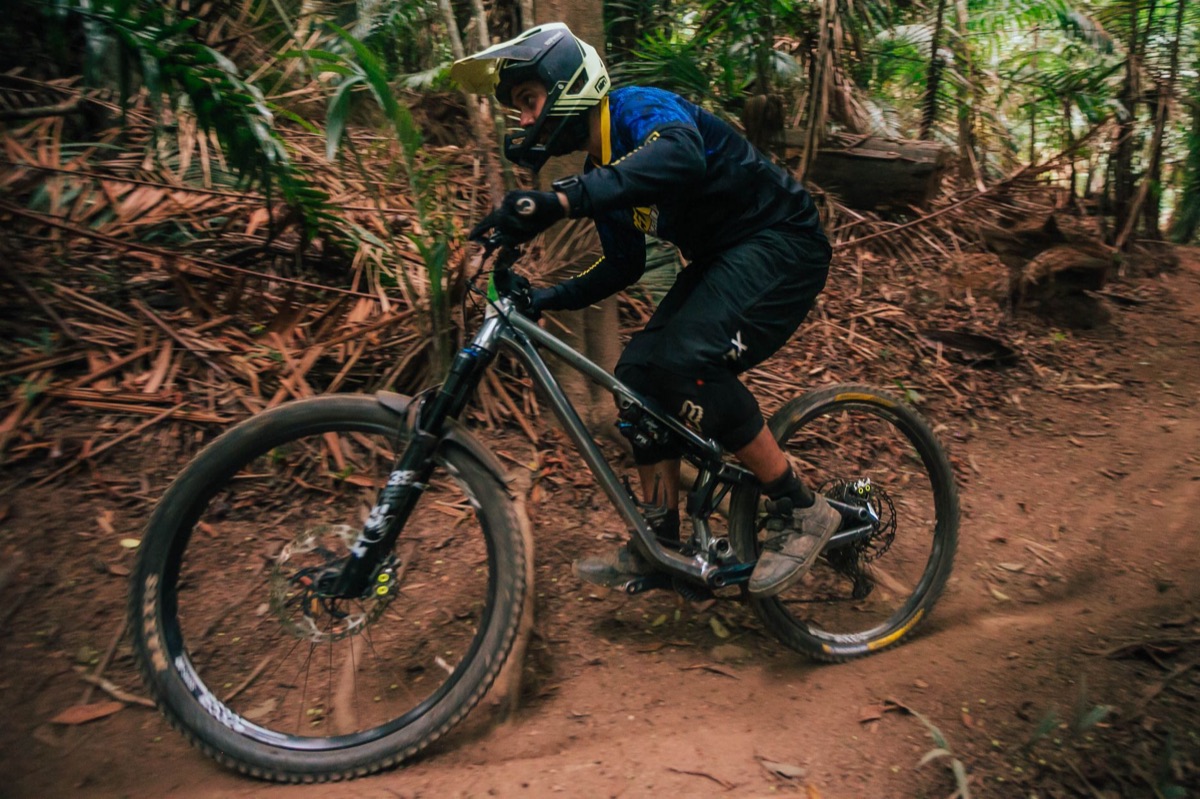
Is There a PCPartPicker for Mountain Bikes? (Yes, and Here’s How It Works)
 filed under · suspension setup
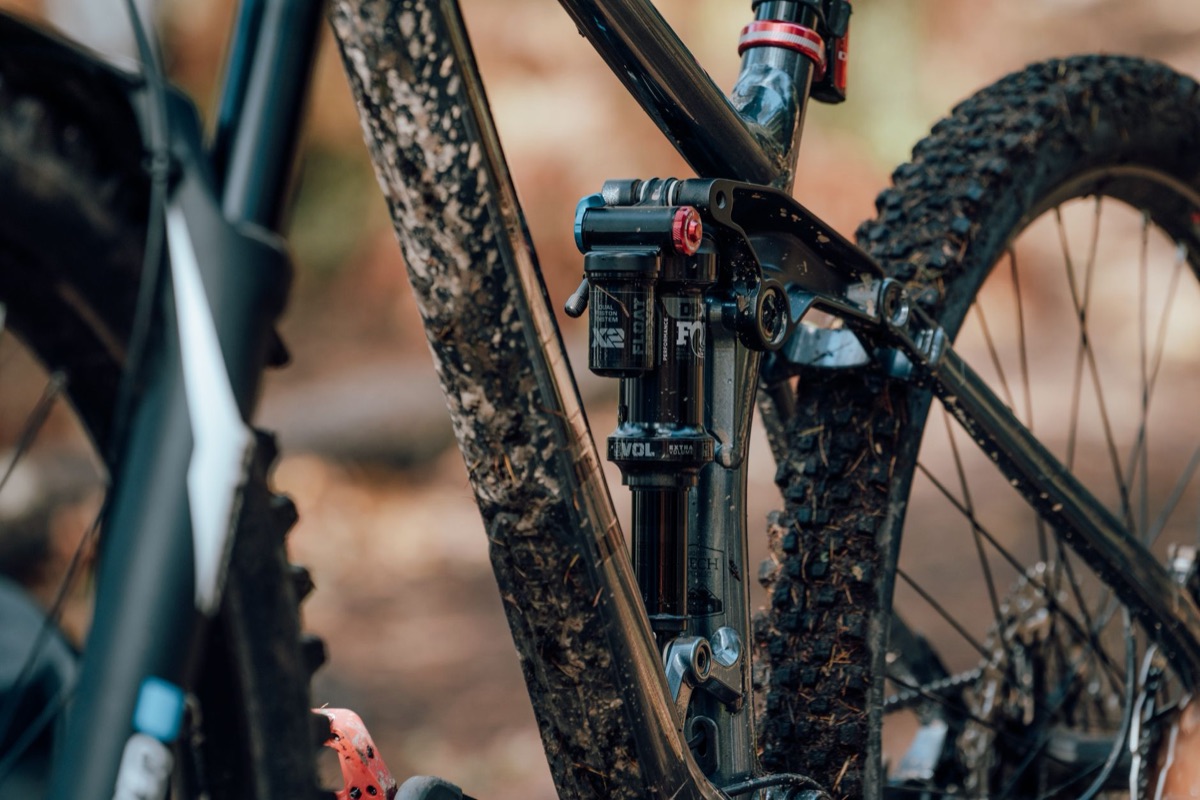
How to Set Sag on a Mountain Bike (Front + Rear, by Discipline)
 filed under · compatibility
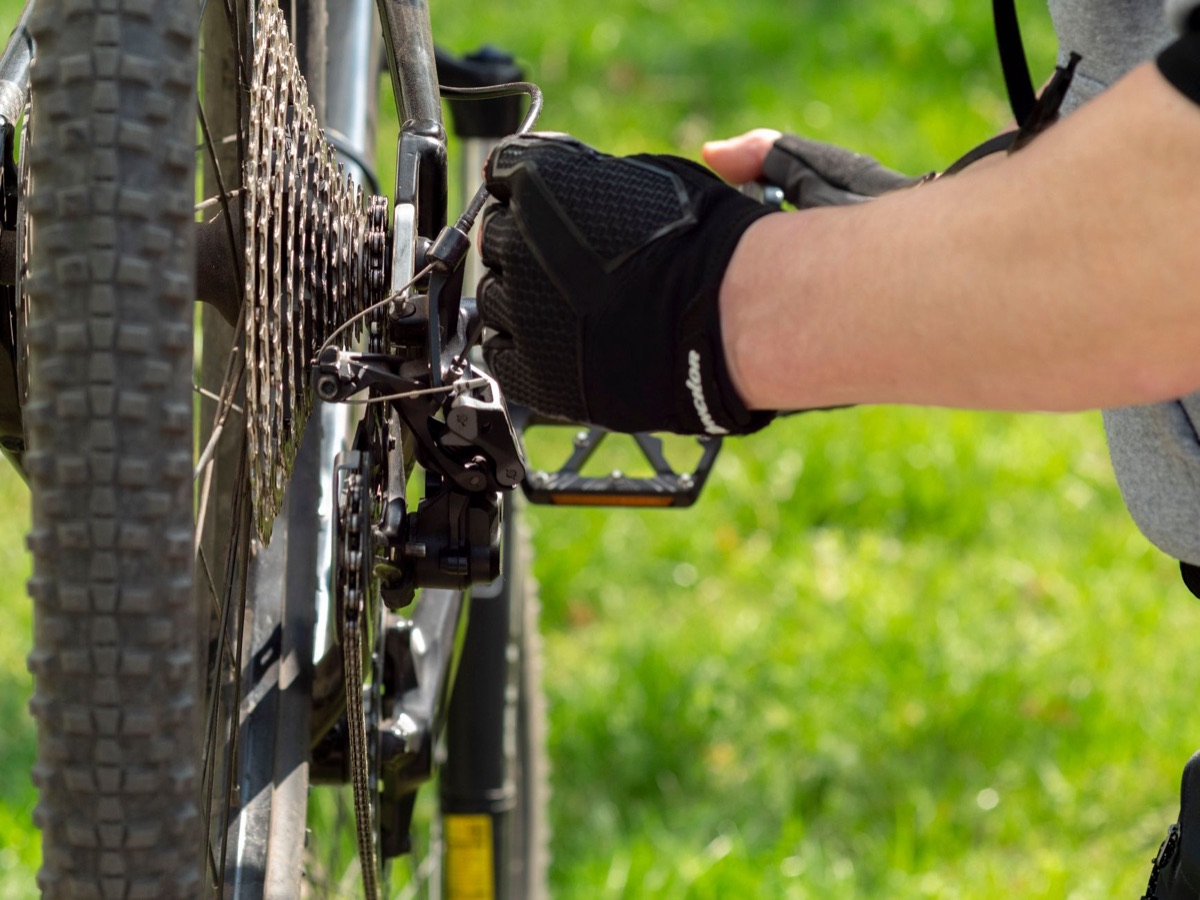
How to Build a Mountain Bike From Parts (And the Compatibility Traps)
 filed under · build roadmap
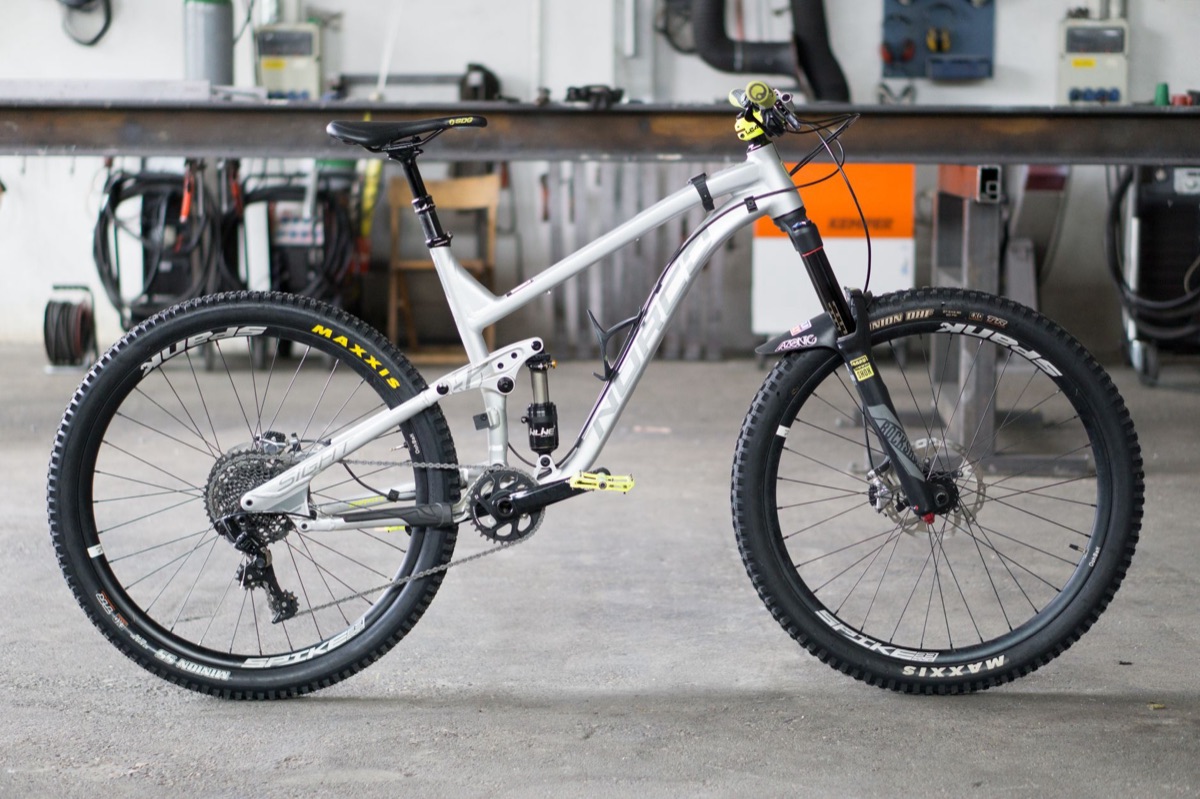
What Order to Choose Parts for a Custom MTB Build (Frame First, and Why)