Schwalbe Tires, Explained: Radial vs Diagonal, Every Casing and Compound
Schwalbe renamed most of its mountain bike range, killed three treads people liked, and is the only brand selling radial casings at scale. Here is what radial actually does, whether you want it, and how to read the new sidewall.
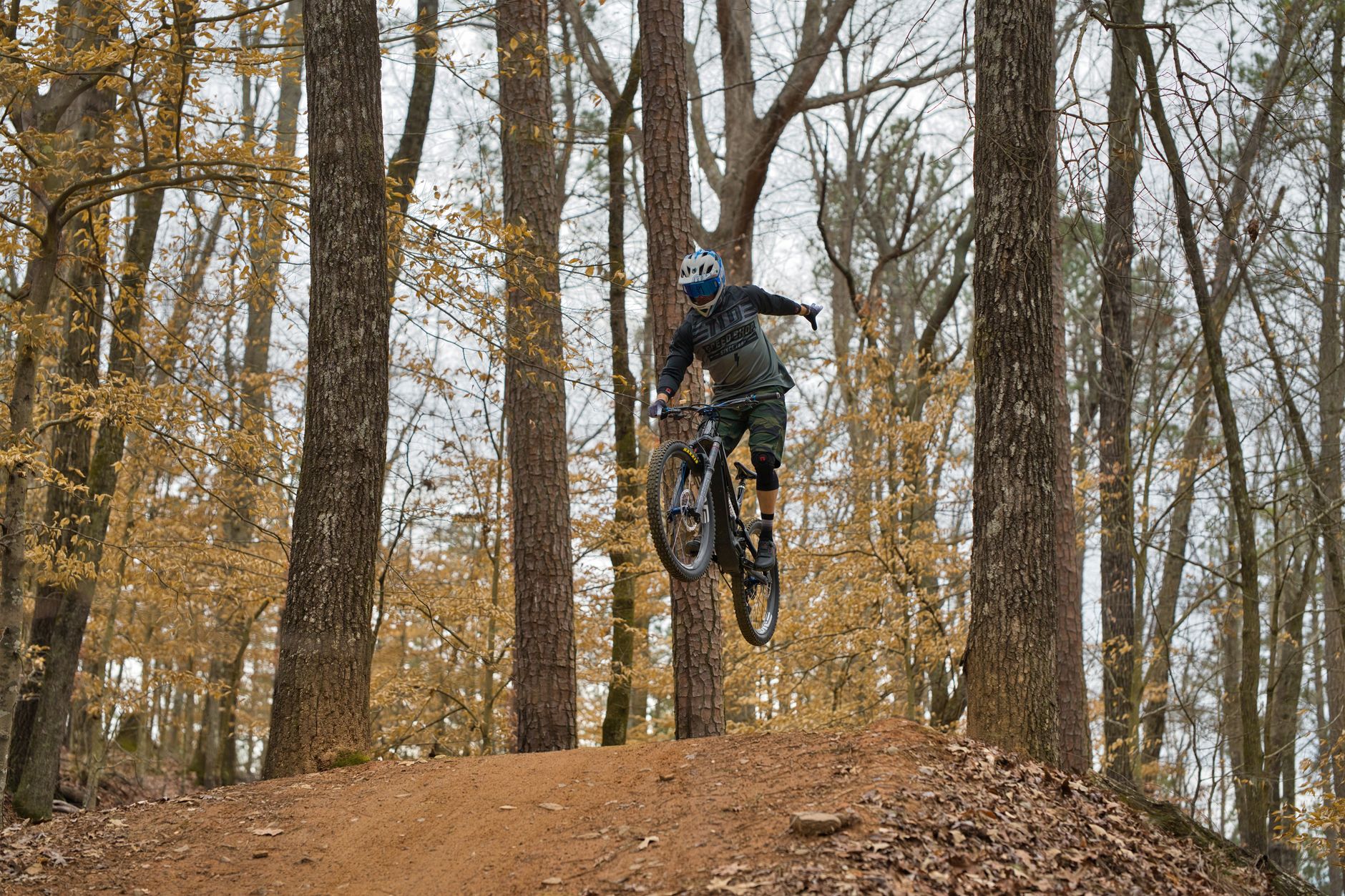
Schwalbe spent 2026 renaming most of its mountain bike range, killing three treads people actually liked, and selling the one piece of tire technology nobody else has at scale. If you learned this brand on Super Trail, Addix and Evolution, none of those words are on the new packaging. Here is the current range decoded, and an answer to the question everyone actually has, which is whether radial is worth it.
This is the second post in a series doing the same for every major tire brand. The Maxxis breakdown is worth reading alongside it, because the two brands now solve the same problem in opposite directions.
how to read the new sidewall
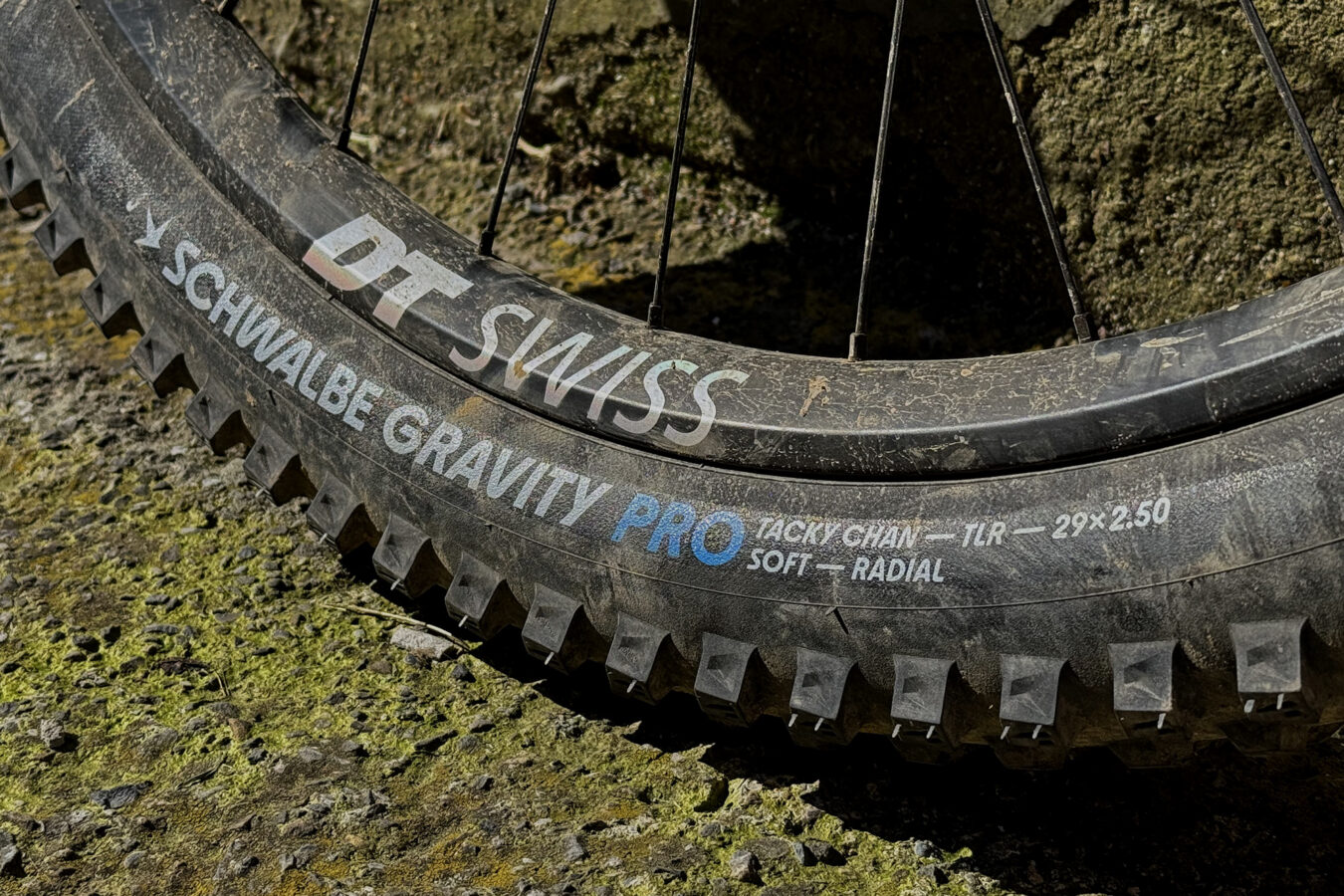
- ›Construction comes first. Gravity, Trail or Race. This is the casing, and it decides toughness and weight.
- ›Then the tier. Pro is the top line. The unlabelled standard line is the cheaper one.
- ›Then the tread, then the compound, then Radial if it is one. Diagonal tires carry no construction label at all, so no badge means conventional.
A useful physical detail while you are looking at the tire: the coloured stripes on the sidewall sit on the same side as your brake rotors. It is a two-second way to check a tire is mounted the right way round.
radial vs diagonal, and which you want
Every conventional bike tire is built with the threads inside its casing crossing each other diagonally, at roughly 45 degrees. A radial casing runs those threads straight across from one bead to the other, close to 90 degrees. Car tires made this switch decades ago. Bikes did not, until Schwalbe.
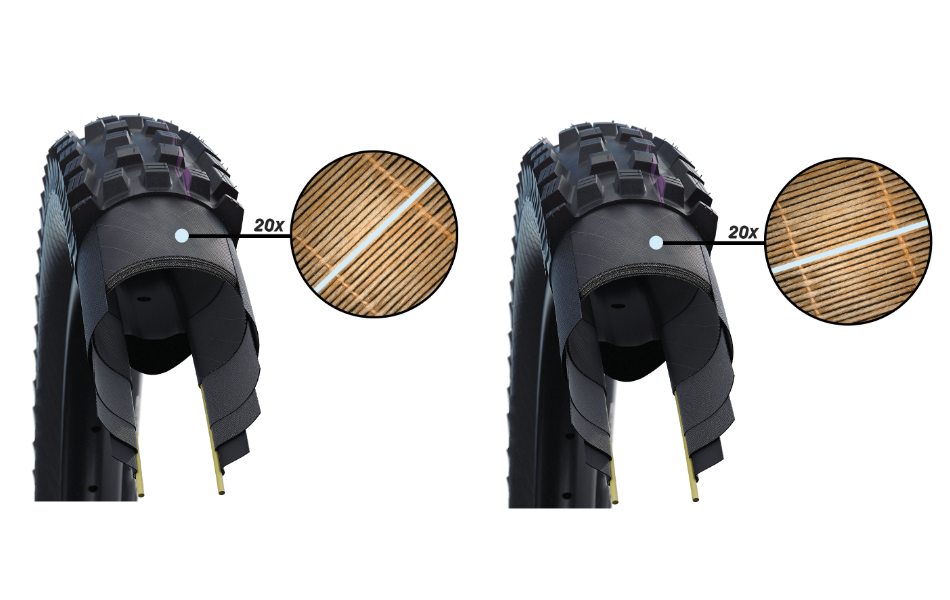
The reason it matters is that crossed threads brace against each other. Push on the tread of a conventional tire and the sidewall resists, so the tread can only deform so much. Straight threads let the tread squash into the ground more or less on its own, so more of it stays in contact with the dirt. Schwalbe puts that at around 30 percent more contact area at the same pressure.
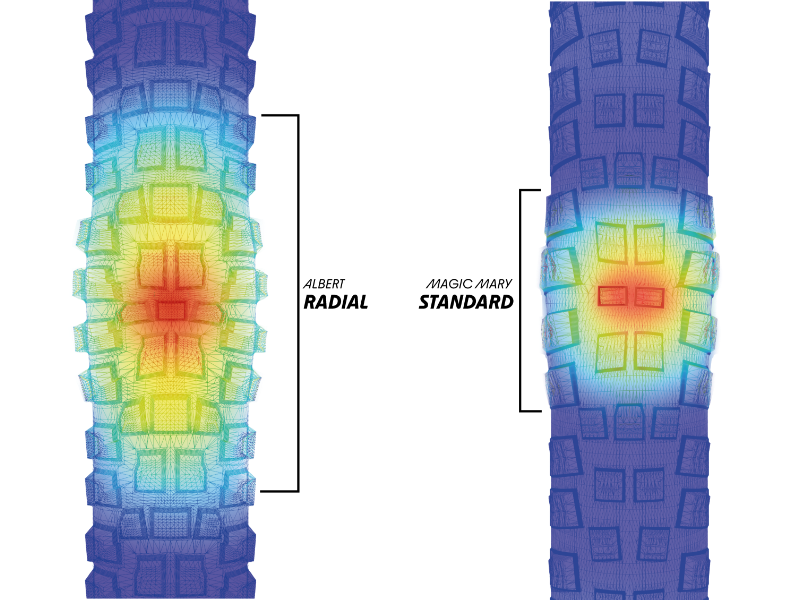
On the trail that shows up as grip and as damping. The most common description is that it feels like a few extra millimetres of suspension travel, because the tire absorbs the small, sharp stuff that the fork is too stiff to react to. On roots and rocks that is a real difference, not a marketing one.
The catch is that a more supple casing is also a vaguer one. Load a radial tire hard against a firm surface, a big hardpacked berm or the face of a jump, and it can squirm and roll under you in a way a conventional casing does not. Schwalbe now sells its Pro casings both ways for exactly this reason.
One thing that catches people out: a radial tire wants more air, not less. Around 2 to 3 psi more than the diagonal version of the same tire. The stiffer diagonal casing does more damping by itself so it can run softer, while the radial needs the air to hold its shape. Think of the casing as the damper and the air as the spring. This is the opposite of the story on the new Maxxis DH casing, which lets you drop 2 to 3 psi, and it is the clearest example of the two brands chasing the same grip from opposite ends.
the constructions
Three casings, each in a Pro and a standard version. The gap between the two tiers is real but narrower than the price suggests.
| Casing | What it is | Who it's for |
|---|---|---|
| Gravity Pro | 6 plies under the tread, 4 in the sidewall, Apex anti-pinch layer and fabric sidewall protection | Enduro, e-bikes, downhill, bike park |
| Trail Pro | The lighter all-rounder, around 200g less per tire than Gravity | Trail riding, and as a front tire on shorter-travel bikes |
| Race Pro | The new lightest casing | XC racing |
| Standard line | Same treads, plastic sidewall protection instead of fabric, no radial, no Ultra Soft | Bike park laps and anyone tired of $100 tires |
The Gravity Pro casing got tougher this year, going from four plies under the tread to six. Apex is the anti-pinch-flat layer down near the rim, doing the job Maxxis uses a butyl insert for. The standard line is an interesting one: roughly $69 against a little over $100, for a tire that gives up the fancy sidewall material and the two headline options rather than the tread itself.
the compounds
| Compound | What it is | Who it's for |
|---|---|---|
| Ultra Soft | Rebuilt this year, slower rebounding, claimed 50% more damping than before | Front tires, wet roots, World Cup downhill. Slowest rolling rubber they make, and the grippiest by a distance |
| Soft | Unchanged, grippy but harder wearing | The rear tire behind an Ultra Soft front |
| Mid | The old SpeedGrip, renamed. Second hardest | Trail riding where you still want to pedal |
| Speed | The old Addix Speed, renamed. Hardest and fastest | XC racing |
Slow rebound is the thing to understand about Ultra Soft. The knob squashes into a root and stays squashed for a beat instead of springing back and skipping off it. That is what makes it grip, and it is also what makes it slow.
Which explains why the slowest rubber Schwalbe makes is also what their World Cup racers run. A downhill racer is pointed down a mountain with gravity doing the work, so rolling resistance barely costs them anything, while traction is the entire race. You are probably pedalling to the top under your own power, and that trade looks very different. Which is why the usual pairing is Ultra Soft up front, where grip keeps you upright, and Soft out back, where the drag and the wear both live.
the treads
Schwalbe argues its modern treads work at both ends of the bike, which is why it just killed its rear-specific tire. That is a real difference from Maxxis, where front and rear treads are a whole product strategy. Here you pick by conditions, then decide which end gets the softer rubber.
| Tread | Built for |
|---|---|
| Magic Mary | The open, aggressive default. Loose and soft ground, wet roots, steep and scary |
| Albert | Tighter knobs than the Mary. Hardpack grip without the rolling penalty |
| Tacky Chan | World Cup DH brief: as much cornering and braking as possible, as little drag as possible |
| Romy | New. Fast-rolling trail tire for dry hardpack and flow. Replaces Nobby Nic and Hans Dampf |
| Shredda | The spike. What people reach for when the Magic Mary is not enough on steep, loose ground |
| Dirty Dan | The mud tire. Nothing else |
The safe answer is a Magic Mary in Ultra Soft up front with an Albert in Soft out back. That pairing is to Schwalbe what a DHF and a DHR II are to Maxxis, and it is the one you will see on most bikes running this brand. Or skip the decision and use the recommended combinations in the Builder, which are already matched front to rear.
what got killed
If you have been buying the same Schwalbe tire for years, check this list before you reorder.
- ›Nobby Nic and Hans Dampf are both gone, replaced by the Romy. That is two of the most-fitted trail tires in the sport retired in one go.
- ›Big Betty is gone, dropped for being rear-specific. Its heavy braking bite lives on in the redesigned Tacky Chan, which got bigger, wider-set centre knobs.
- ›Eddy Current Front is gone. The e-bike tire is now a rear-only radial.
is it worth switching from maxxis?
Schwalbe has the technology lead right now, and rider sentiment has moved with it: informal polls that would have been a Maxxis landslide five years ago now come back with Schwalbe on top. That is not market share, but it is a signal.
Maxxis is not standing still. Their answer arrived this August as the Minion DHX and a reworked DH casing, and it chases the same goal from the other side: rather than reorienting the threads, they stiffened the sidewall and softened the top of the tire so you can drop pressure. No radial tire, but not nothing either.
Two honest catches. Schwalbe is expensive, with Pro radial tires landing a little over $100 and roughly $20 above the diagonal version of the same tire. And it is genuinely hard to buy in the US, where stock comes and goes and most retailers carry a thin slice of the range. Maxxis is cheaper, deeper, and on the shelf.
So: if you ride rough, natural, technical trails and you can find the tire you want in stock, radial Schwalbe is the most interesting thing you can bolt to your bike this year. If you want to stop thinking about tires, Maxxis is still the answer.
common schwalbe questions
- What is a radial mountain bike tire?
- A radial tire has the threads inside its casing running straight across from bead to bead, close to 90 degrees, instead of crossing diagonally at roughly 45 degrees like a conventional bias tire. Car tires went radial decades ago. The straight threads let the tread deform on its own without fighting the sidewall, so more of the tread stays in contact with the ground. Schwalbe claims about 30 percent more contact area at the same pressure.
- Should I buy radial or diagonal Schwalbe tires?
- Radial if you ride natural trails that are rooty, rocky and technical, where the extra grip and damping pay off. Diagonal if you spend most of your time on hardpacked flow trails, big berms and jump lines, where a radial casing can feel vague and is more likely to fold over under hard cornering loads. Both work everywhere; this is about optimising, not about one being broken.
- Do radial tires need lower tire pressure?
- No, and this catches people out. A radial casing is more supple, so it needs a bit more air to support it, typically around 2 to 3 psi more than the diagonal version of the same tire. The stiffer diagonal casing does more of the damping itself, so it can run slightly lower. Start at your normal pressure and add air if the tire feels vague or folds in corners.
- What do Schwalbe Gravity, Trail and Race mean?
- They are casing constructions, listed from toughest to lightest. Gravity is the heavy-duty enduro and downhill casing, Trail is the lighter all-round option with less weight and still solid protection, and Race is the new lightest XC casing. Each comes in a Pro version, which is the top tier and the only way to get radial construction or Ultra Soft rubber, and a cheaper standard version.
- Which Schwalbe tires were discontinued for 2026?
- Nobby Nic, Hans Dampf and Big Betty are all gone. The new Romy replaces the Nobby Nic and Hans Dampf as the all-round trail tire. Big Betty was dropped because it was rear-specific and Schwalbe now argues its modern treads work at both ends. The Eddy Current Front is also gone, leaving a rear-only radial version.
- Is Schwalbe better than Maxxis?
- Neither brand is better across the board. Schwalbe currently has the technology lead with radial casings, which Maxxis does not offer, and its Ultra Soft rubber is genuinely grippy. Maxxis has a wider, cheaper, far more available range and a deeper bench of proven gravity treads. If you want maximum grip and damping on technical natural trails and can find stock, Schwalbe is the more interesting option right now. If you want to walk into a shop and buy a known quantity, Maxxis still wins.
Construction, tier, tread, compound, radial or not. Five decisions instead of Maxxis' three, which is the price of Schwalbe offering more genuinely different options. Get the first and last of those right and the rest is detail.
Matched setups, already picked.
The Builder's Recommended Setups fill your front and rear tire slots with a pairing that suits the conditions you name, in the right wheel size for your frame. Two of them are Schwalbe.
 filed under · build roadmap
Is There a PCPartPicker for Mountain Bikes? (Yes, and Here’s How It Works)
 filed under · suspension setup
How to Set Sag on a Mountain Bike (Front + Rear, by Discipline)
 filed under · compatibility
How to Build a Mountain Bike From Parts (And the Compatibility Traps)
 filed under · build roadmap
What Order to Choose Parts for a Custom MTB Build (Frame First, and Why)