Best MTB Tire Pressure: Front and Rear PSI by Weight, Tire and Trail
Where to start front and rear for your weight, why the front runs lower, what tire width, casing, tubeless and inserts change, and how to dial it in after one ride.
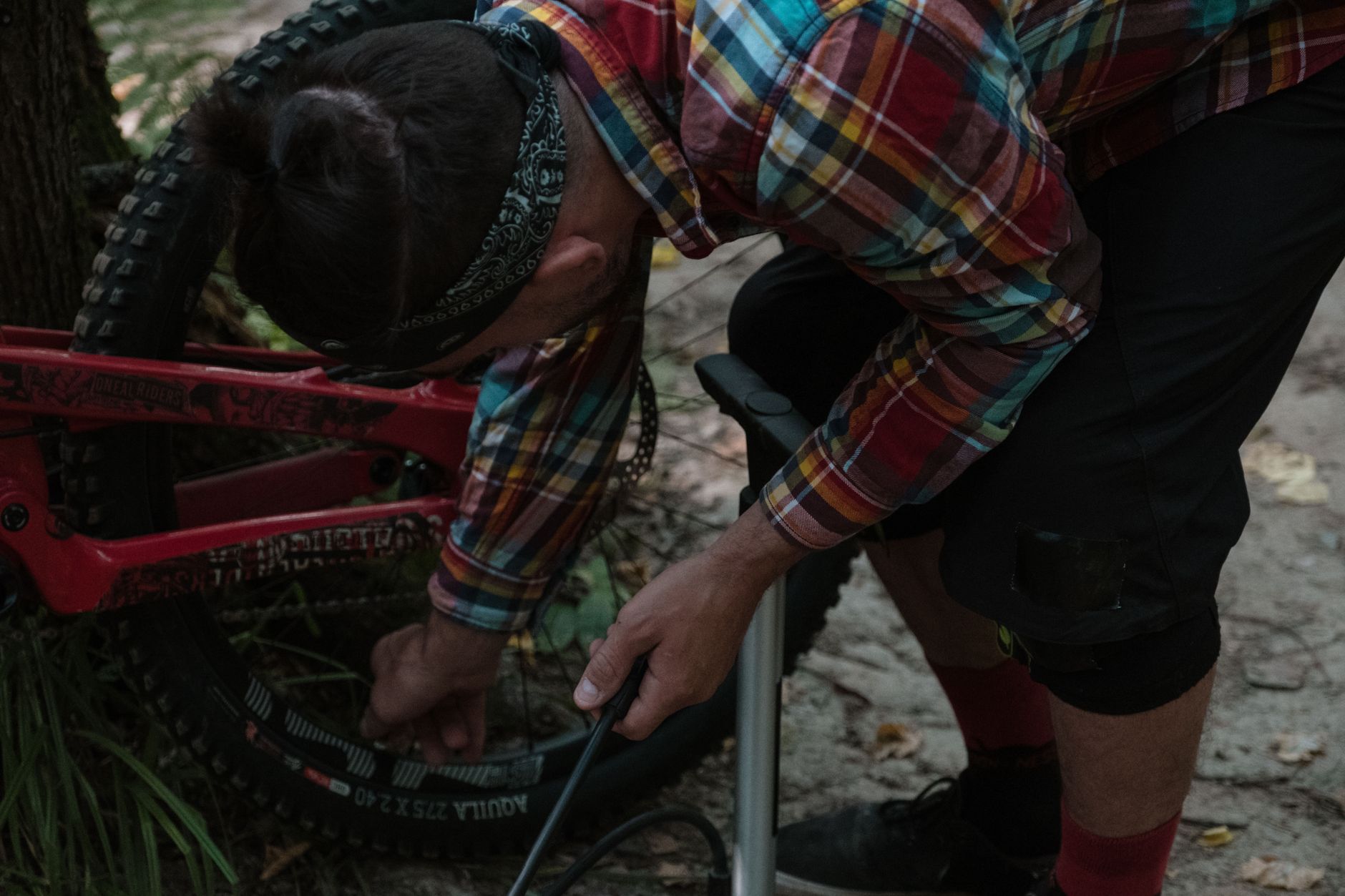
If you weigh about 175 lb in your riding gear, start a 29x2.4 tubeless trail tire at 22 psi front and 24.5 rear. Heavier riders, tubes, light casings and rocky trails push that up. Wider tires, inserts and wet ground bring it down. Our tire pressure calculator does the math for your exact setup.
mtb tire pressure chart by rider weight
These are starting pressures for a 29x2.4 tubeless tire with a trail casing (EXO+, Super Trail or similar) on mixed trail. Weigh yourself with your helmet, shoes and pack on, because the tire carries all of it.
| Rider with gear | Front psi | Rear psi |
|---|---|---|
| 130 lb (59 kg) | 18.5 | 20.5 |
| 155 lb (70 kg) | 20.5 | 23 |
| 175 lb (79 kg) | 22 | 24.5 |
| 200 lb (91 kg) | 24 | 26.5 |
| 225 lb (102 kg) | 25.5 | 28.5 |
| 250 lb (113 kg) | 27 | 30.5 |
On 27.5 wheels, add about half a psi. On an e-bike, the extra 9 kg or so of bike adds about 1.5 psi at each end.
why the front tire runs lower
The rear wheel carries more of your weight. The front carries a bit under half, and a bit more than it does standing still, because braking and cornering push your weight forward. Less load means it needs less air to squash the same amount.
A softer front also grips better, and the front is where grip matters most: a rear tire that slides can usually be saved, a front that slides puts you on the ground. Two to three psi lower than the rear is the usual gap.
what your tire setup changes
Starting from the chart, move both ends by about this much:
| If you run | Pressure |
|---|---|
| 2.6 tire instead of 2.4 | 2 psi lower |
| 2.3 tire instead of 2.4 | 1.5 psi higher |
| Light casing (EXO, single ply) | 1.5 psi higher |
| DH casing | 2 psi lower |
| Insert (CushCore and similar) | 2 psi lower |
| Tubes instead of tubeless | 3 psi higher |
are wider tires better?
A wider tire holds more air, so it carries the same weight at lower pressure, which means more rubber on the ground and a calmer ride. The cost is weight, and a 2.6 can feel vague when you lean on it hard, especially on a narrow rim. Our call for trail riding: a 2.4 or 2.5 on a rim around 30mm wide inside. Go 2.6 if you ride mostly slow, technical climbs or an e-bike.
casing
The casing is the body of the tire under the tread. A tough one holds the tire up on its own, so it needs less air to stop folding in corners. A light one needs more, and more air means more rim hits. If you keep adding pressure to protect your rim, a tougher casing is the better fix. Our Maxxis casings breakdown explains which is which.
tubeless vs tubes
Hit a rock hard enough and the rim pinches the tube against it, cutting two little slits. That is a pinch flat, and the only defense with tubes is more air, which costs grip. Tubeless has no tube to pinch, and the sealant inside plugs small holes as you ride. Our call: run tubeless on any trail bike. Tubes only make sense if your rims are not tubeless-ready.
inserts and radial casings
An insert is a foam ring that sits inside the tire. It protects the rim and props up the sidewall, so you can run less air before either becomes a problem. CushCore says most riders run 1 to 5 psi less with one. We start 2 psi under.
Radial casings, like Schwalbe's Trail Pro and Gravity Pro Radial tires, go the other way. The casing is softer by design and rolls under you in hard corners at your usual numbers, so start about 3 psi higher and work from there. Our calculator does not model radials yet, so add that yourself. The Schwalbe post covers why they feel different.
what your trail changes
- ›Wet roots, mud, loose dirt: about 2 psi lower, for more rubber on the ground.
- ›Rocky and fast: 1 to 2 psi higher. Square-edged rocks are what dent rims.
- ›Bike park: 2 to 3 psi higher. Big landings and hard berms load the tire far more than trail riding does.
Temperature counts too. Pump a tire to 25 psi in a 70°F garage, ride at 40°F, and you are on about 23. If it is much colder outside than where you pump, add a psi or two, or check at the trailhead. The calculator's Full mode takes both temperatures and tells you what to set on the pump.
how to dial it in after one ride
Set the starting numbers, ride a loop you know, then change one end at a time by 1 psi. Here is what the tire tells you:
- ›Rim strikes or burping (a sudden hiss and a spray of sealant at the rim): add 2 psi at that end.
- ›Squirms or folds in corners: add 1 to 2 psi.
- ›Pings off roots, skips, chatters: drop 1 to 2 psi.
- ›Harsh and hitting the rim at the same time: air will not fix both. The tire is too light or too narrow for the trail. Go to a tougher casing, a wider tire or an insert.
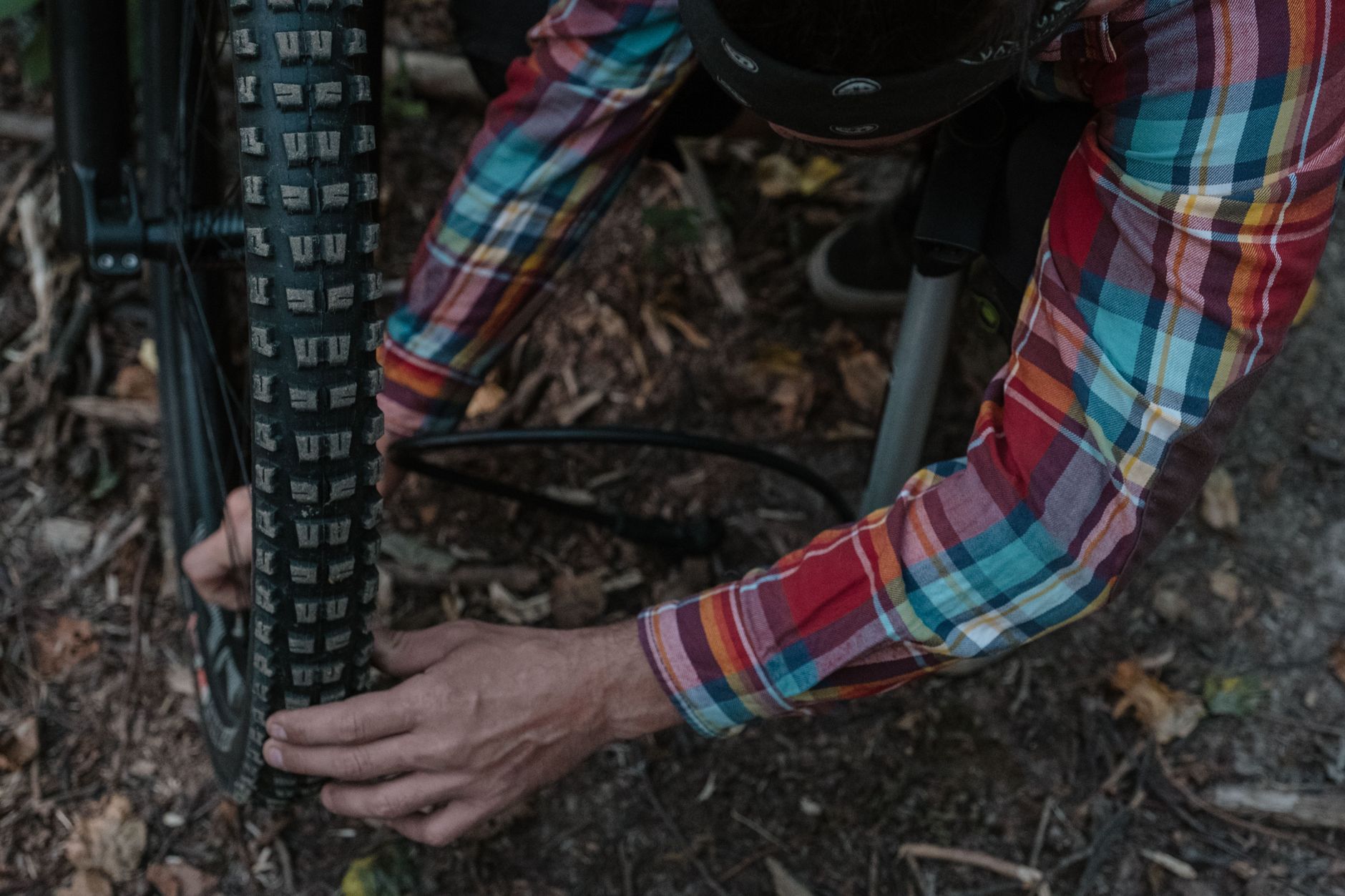
The calculator has this step built in: tick what the tire did and it gives you the next number. If your bike is in the Garage, it fills in your tires and shows how far your current pressures are from the start.
common tire pressure questions
- What PSI should I run in my mountain bike tires?
- For a 29x2.4 tubeless trail tire and a rider around 175 lb with gear, start at about 22 psi front and 24.5 psi rear. Add about 1.5 psi at each end for every 25 lb more, and take it off for less. Wider tires, inserts and wet trails go lower; tubes, light casings and rocky or bike park trails go higher.
- Should the front tire have less pressure than the rear?
- Yes. The rear wheel carries more of your weight, so the front needs less air to squash the same amount, and the extra grip helps where it matters most, because a front tire that slides is the one that puts you on the ground. Two to three psi lower than the rear is the usual gap.
- How much lower can I run tubeless tires than tubes?
- About 3 psi on a typical trail tire. A tube gets pinched between the rim and a rock when the tire squashes too far, so tubes need extra air to avoid pinch flats. Tubeless has no tube to pinch, and the sealant plugs small punctures as you ride.
- How much does temperature change tire pressure?
- Just under 1 psi for every 10 degrees Fahrenheit at mountain bike pressures. A tire pumped to 25 psi in a 70 degree garage reads about 23 psi on a 40 degree trail. Pump a little higher when it is much colder outside, or check pressure at the trailhead.
- What pressure should I run with a tire insert?
- Start about 2 psi below your tubeless pressure. CushCore says most riders run 1 to 5 psi less with its inserts. The insert protects the rim and props up the sidewall, so you can go lower before you hit the rim or the tire folds in corners.
get your exact number.
Put in your weight, tire width, casing, setup and trail, and get a front and rear starting pressure in psi or bar. Then tick what the tire did on the ride and it tells you which way to go.
 filed under · build roadmap
Is There a PCPartPicker for Mountain Bikes? (Yes, and Here’s How It Works)
 filed under · suspension setup
How to Set Sag on a Mountain Bike (Front + Rear, by Discipline)
 filed under · compatibility
How to Build a Mountain Bike From Parts (And the Compatibility Traps)
 filed under · build roadmap
What Order to Choose Parts for a Custom MTB Build (Frame First, and Why)