Maxxis Tires, Explained: Every Casing, Compound and Tread (Plus the New Minion DHX)
EXO, EXO+, DoubleDown, DH. 3C MaxxGrip, MaxxTerra, MaxxSpeed. DHF, DHR II, Assegai, Dissector. Here is what every one of those actually means, which Maxxis tire belongs on which end of your bike, and where the brand-new Minion DHX and its reworked DH casing fit in.
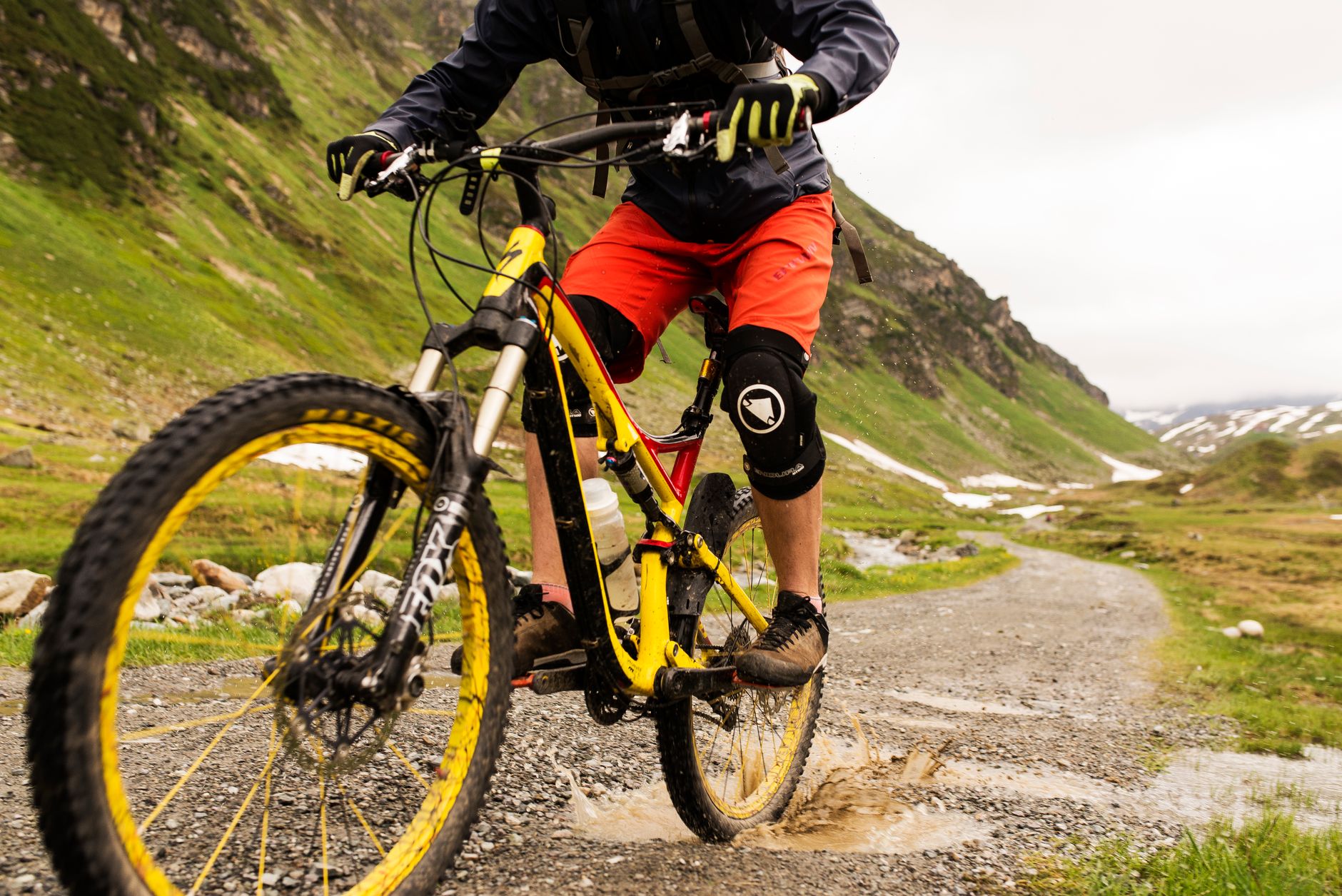
Here is the whole Maxxis mountain range in plain language: what each tread is for, what the casing letters buy you, what the compound names mean, and where the brand-new Minion DHX fits.
every maxxis tire is three decisions
- ›The tread. The knob pattern moulded into the rubber: Minion DHF, Assegai, Dissector, Aggressor. This decides how the tire behaves in dirt, mud, and corners.
- ›The compound. How soft the rubber is: MaxxGrip, MaxxTerra, MaxxSpeed. Softer grips more, rolls slower, and wears out sooner.
- ›The casing. The fabric carcass under the rubber: EXO, EXO+, DoubleDown, DH. This decides how much abuse the tire survives and how heavy it is.
Wheel size and width sit in there too, but those are set by your bike rather than chosen for feel. The three above are the actual decisions, so the rest of this post takes them one at a time.
casings: exo, exo+, doubledown, dh
The casing is the woven fabric skeleton of the tire, under the rubber you can see. It sets the weight, how much the tire resists cuts and pinch flats, and how much support you get when you lean on it in a corner. Maxxis measures the weave in TPI, threads per inch. Higher TPI is a finer weave that conforms to the ground better; lower TPI is coarser and tougher. Dual-ply means two layers of it.
| Casing | What it is | Who it's for |
|---|---|---|
| EXO | Single ply 60 TPI with a cut- and abrasion-resistant layer in the sidewall | XC and general trail riding |
| EXO+ | EXO plus a butyl insert at the bead | Harder-charging trail, light e-bikes |
| DoubleDown (DD) | Dual ply 120 TPI with a butyl sidewall insert | Enduro racing and e-bikes |
| DH | Dual ply with a large butyl insert, the gravity casing | Downhill, bike park, race tracks |
The butyl insert that keeps showing up there is a strip of dense rubber tucked into the sidewall or down by the bead (the edge of the tire that hooks onto the rim). Its job is to take the hit when you smack a rock hard enough to squash the tire flat against the rim, which is a pinch flat. It is also what stops that impact from denting your rim.
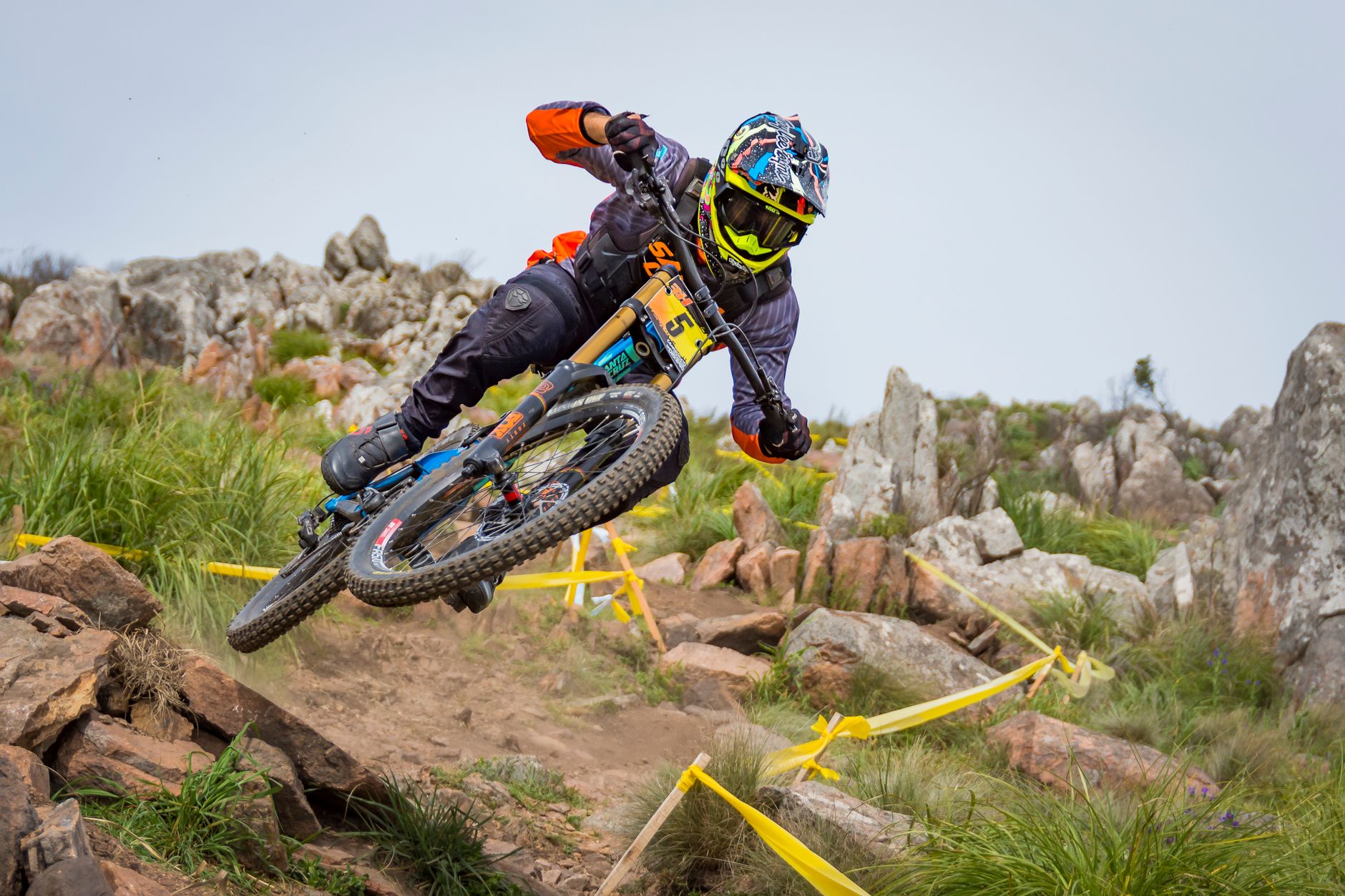
compounds: what maxxgrip, maxxterra and 3c mean
3C means three compounds in one tire, layered rather than mixed. A harder rubber sits underneath as a base, which holds the knobs up and keeps the tire rolling, and softer rubber goes on top where it touches dirt. The softest rubber of all goes on the side knobs, because that is where cornering grip comes from.
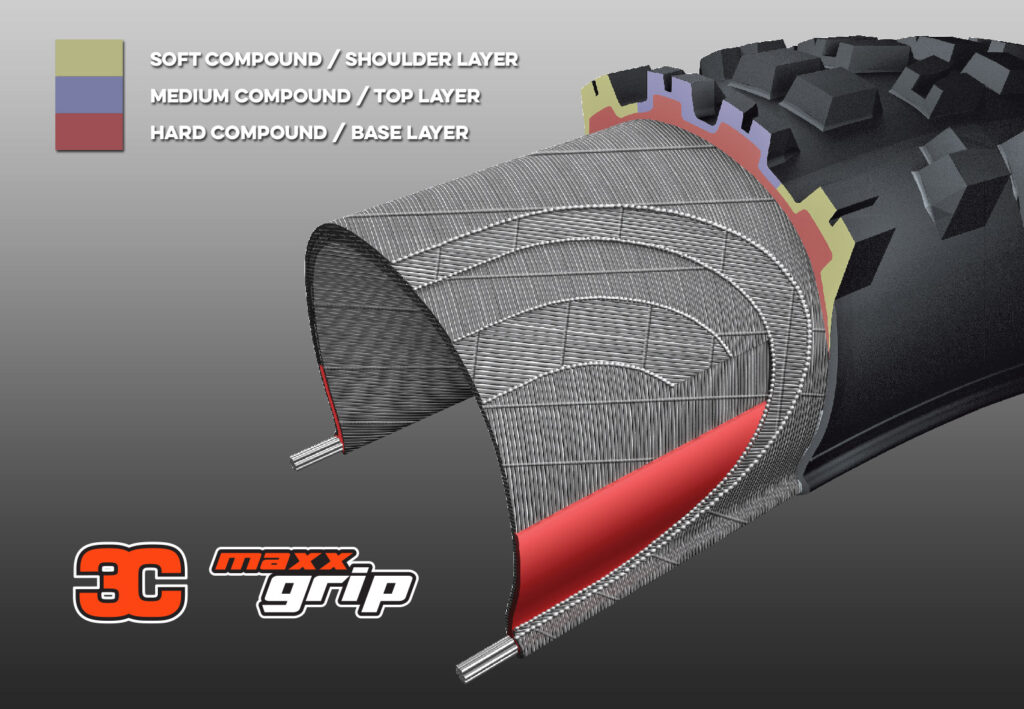
| Compound | What it is | Who it's for |
|---|---|---|
| 3C MaxxGrip | The softest, slowest rebounding rubber Maxxis makes | Downhill, wet, and front tires. Huge grip, slow rolling, wears fast |
| 3C MaxxTerra | The middle of the triple-compound range | Mixed conditions. The sensible default for trail and enduro |
| 3C MaxxSpeed | Triple compound tuned for low rolling resistance | XC racing. Seen on the Ikon, Rekon Race and Aspen |
| Dual / Single | Two layers or one, harder rubber, no 3C | Dry hardpack, and what most complete bikes ship with |
Slow rebound, the thing MaxxGrip is built around, means the knob squashes into a root and stays squashed for a beat instead of springing back and skipping off it. That is most of why the sticky compound feels planted.
Most trail and enduro riders land on MaxxGrip up front and MaxxTerra out back. If you are only going to change one, change the front.
the treads, sorted by which end they go on
Maxxis makes a lot of treads. Split by which end of the bike they belong on, the list gets a lot shorter.
front treads
Grip and cornering first. These are the ones designed to be steered with.
| Tread | Built for |
|---|---|
| Minion DHF | The all-conditions default. Balances rolling speed against braking and cornering |
| Assegai | Greg Minnaar’s signature tread. Grip at every lean angle, slower rolling |
| Minion DHX | New for 2026. Dry and hardpack race tracks, bigger blockier knobs |
| High Roller III | Soft and loose conditions that don’t need full mud spikes |
| Shorty | Wet and sloppy, or dry and loose. Tall knobs that shed mud |
| Wetscream | Pure mud race spike. Nothing else, no compromise |
rear treads
Braking, drive and durability. Faster rolling, because the rear is where the drag and the wear both live.
| Tread | Built for |
|---|---|
| Minion DHR II | Paddle-shaped centre knobs that dig in under hard braking. The default rear |
| Dissector | Troy Brosnan’s tread. Dry to loose, faster rolling than a Minion |
| Aggressor | Fast, hardpacked, rocky trails behind a DHF or Assegai |
| Minion SS | A DHF with the centre knobs shaved down. Dry hardpack, maximum speed |
either end
The lighter XC and downcountry treads are genuinely happy at both ends, and most riders run them as a matched pair.
| Tread | Built for |
|---|---|
| Rekon | Light-duty trail. Fast in technical terrain, hardpack to loose |
| Forekaster | Downcountry. More grip than an Aspen, faster than a Dissector |
| Ikon / Aspen | XC racing. Minimal knobs, minimal drag |
If you want the shortest possible version: an Assegai or Minion DHF up front and a Minion DHR II out back has been the safe answer for a decade and still is. Swap the rear for an Aggressor or a Dissector if you want more speed, and put a Shorty on both ends when the season turns to mud. Or skip the decision entirely and use the recommended combinations in the Builder, which are already matched front to rear.
That is all three columns, so the sidewall should read as English now. A tire listed as “Minion DHF 29x2.5 3C MaxxGrip DD TR” is the DHF tread, in the stickiest triple compound, on the DoubleDown casing, set up tubeless ready, in a 29 inch by 2.5 inch size. That is the entire code, and it works on any shop's listing.
the new minion dhx, and the reworked dh casing
Maxxis launched the Minion DHX in August 2026, but racers had been on it for a year. It won Jackson Goldstone the 2025 World Championship at Champéry and a World Cup at Mont-Sainte-Anne, and Luca Shaw the 2026 Loudenvielle World Cup, all before anyone could buy one.
The tread sits in the gap between the DHF and the Assegai. It runs bigger, blockier knobs than either, in a 2-2 centre pattern that alternates rectangular and L-shaped blocks, and it skips the small transition knobs the DHF and DHR II have. The side knobs are close to the same height as the centre ones, so leaning the bike over is one smooth motion rather than a handoff. The X, for the record, stands for Extreme.
Maxxis' lead designer described the brief as a dry tire for the racers: keep the DHR II's braking and rolling speed, add stability. His rule was blunt. If it is dry, you go to the DHX. Take that literally, because the knobs are too big and too widely spaced to do anything useful on wet roots.
The interesting part is not how much grip it has but the way it lets go. A tire that grips hard and then lets go all at once is harder to ride fast than one with slightly less grip that slides predictably, because you can feel the second one coming. The knob spacing lets the tread keep digging while it drifts instead of skating across the surface. It also rolls quicker than an Assegai, which for a tire with knobs this big is the surprising part.
so is the DHX a front or a rear?
Maxxis lists it for both, which is not an answer, and the comparisons genuinely do point in two directions. The tread's parts come from the rear of the range: the side knobs echo the DHR II, the L-shaped centre blocks are braking edges, and the designer benchmarked it against the DHR II for braking and rolling speed. What stands out on the trail is cornering support, which is front tire territory, and that is why it keeps getting measured against the Assegai instead.
Our read: run it up front. It works in the rear, but the grip back there is more than most riders need and you pay for it in rolling speed and tread life. Expect the common pairing to settle as a DHX up front with a DHR II in the new DH casing out back. If your trails are dry, loose and fast, running it at both ends is a real option.
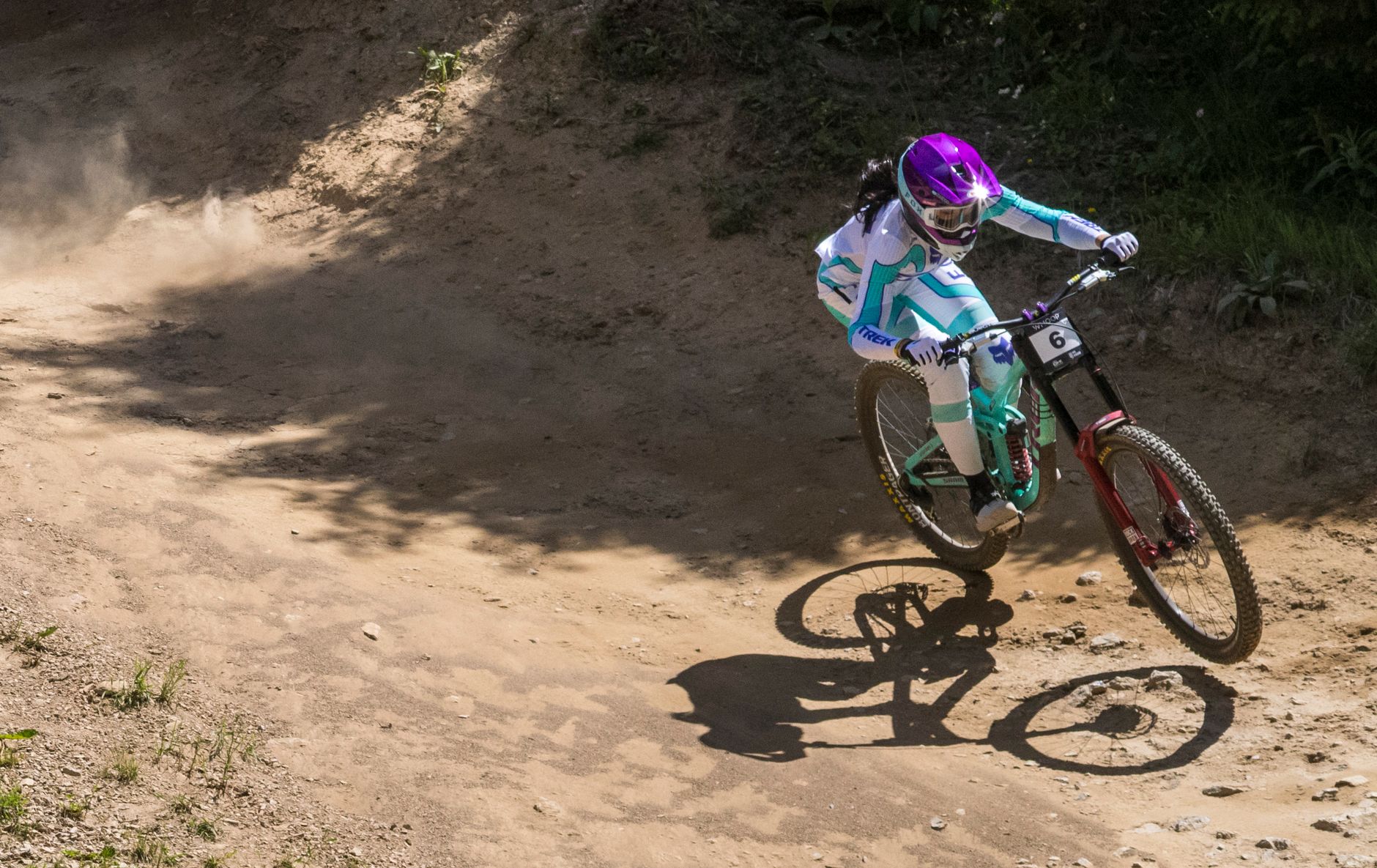
The bigger story is arguably the new DH casing, which is rolling out across the gravity line rather than living only on the DHX. Maxxis moved the dual-ply construction from 60 TPI to 120 TPI, added a stiffer butyl insert at the bead, widened the casing overlap so the two plies meet under the full width of the tread, and added a new sidewall protection material. Their claim is more than 20% improvement in cornering support, sidewall puncture resistance, tread puncture resistance and pinch flat protection, at essentially the same weight as the old casing.
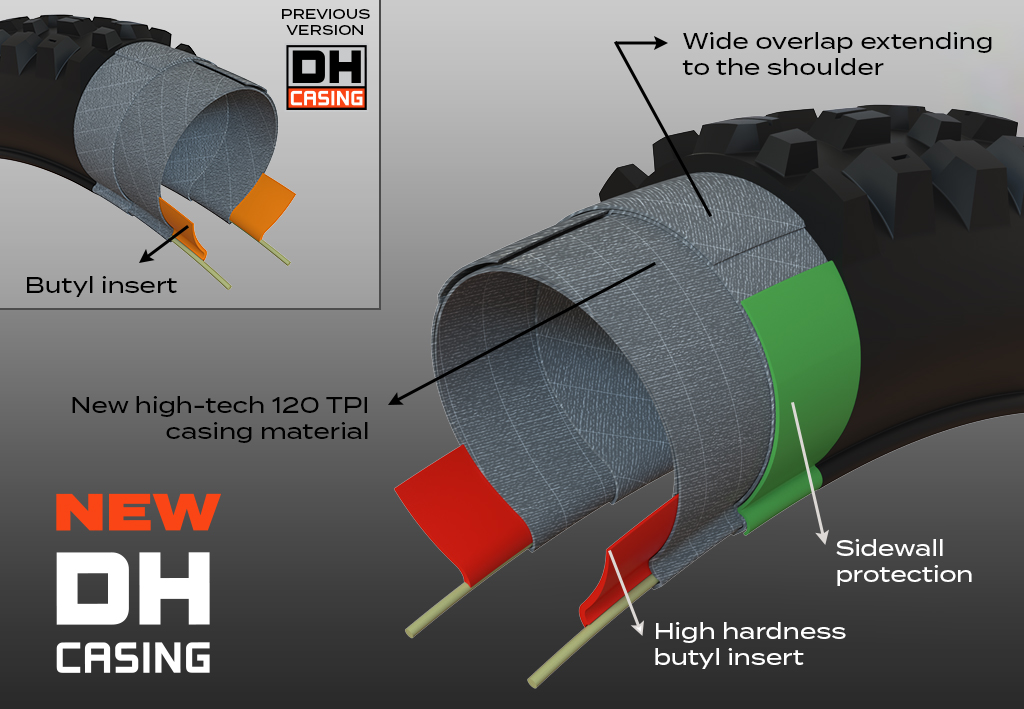
The designer's summary was progressive stiffness: firm enough low down to hold up a corner, soft enough on top to conform to the ground. It reads as Maxxis' answer to Schwalbe, whose radial casings have taken most of the attention this past year. Different route, same target.
In practice that means running 2 to 3 psi less than the old DH casing before the tire starts folding under you. The mistake to avoid is bolting these on at your usual pressure, where they feel harsh and deflect off things. Coming off an Assegai and DHR II at 21–22 psi front and 24–25 rear, the DHX wants closer to 19 and 21. Jackson Goldstone dropped from about 22–23 front to 20–21, and has broken far fewer wheels since. Two psi sounds like nothing. On a downhill tire it is the difference between skating across a rock and gripping it.
The stiff insert also holds the tire on the rim after a hard hit, to the point that racers have dented a wheel and still finished the run on air. That raises the question of whether you still need a tire insert, the foam ring some riders fit inside the tire to protect the rim and stop the sidewall folding. If the casing does both jobs, that is a part you can leave out.
your front and rear tires shouldn't match
The two ends of your bike are doing different jobs, so the smart default is a mismatched pair. The front tire steers and does most of the braking, and losing front grip means you are on the ground with no warning. Give it the aggressive tread and the soft compound.
The rear tire puts power down, gets dragged sideways under braking, and wears out two to three times faster than the front. A faster-rolling, harder-wearing tread there costs you very little and saves you real money and effort over a season. Mud is the one case where riders commonly run the same tire at both ends, because when traction is that scarce you want the tallest knobs everywhere.
One thing worth checking before you order: a tire has to match your wheel size, and your rim's internal width has to suit the tire width. A 2.5 inch tire on a narrow 25mm rim rolls onto its side knobs in corners in a way that feels vague. Sizing that up is the kind of check the Builder does for you, along with catching the classic error of buying a 29 inch rear tire for a mullet bike that takes a 27.5.
the setups we'd actually run
You do not have to assemble any of this from scratch. The tire step in the Builder has a row of Recommended Setups: matched front and rear pairings, labelled by the conditions they are for. Tap one and it fills both tire slots, in the right wheel size for the frame you already picked, and it knows to give a mullet frame a 29 up front and a 27.5 out back.
- ›The Velcro is the World Cup standard: Assegai MaxxGrip 2.5 front, Minion DHR II MaxxGrip 2.4 rear. Most grip, slowest rolling.
- ›The All-Rounder is the trail and enduro workhorse: Assegai MaxxTerra front, Aggressor MaxxTerra rear. Lighter than a DH casing setup, still grippy.
- ›The Mud Bog is Shorty MaxxGrip at both ends, for when the trail turns to soup and the knobs need to clear themselves.
- ›The XC Rocket is Forekaster MaxxSpeed front, Ikon MaxxSpeed rear, for race days where rolling resistance is the enemy.
You will notice the DHX is not in there yet. It is still not in stock at most retailers, and the lighter casings have not landed, so putting it in a recommended setup would be sending you after a tire you can't buy. We will add it once it is genuinely on shelves.
There are non-Maxxis setups in there too, because Maxxis is not the only good answer and the next posts in this series will get to Schwalbe and Continental. But if you are standing in front of a wall of black rubber with no idea where to start, picking a setup by the conditions you actually ride is a better method than reading a hundred product pages.
common maxxis questions
- What is the difference between EXO, EXO+, DoubleDown and DH casing?
- They are Maxxis tire casings, listed lightest to toughest. EXO is a single-ply 60 TPI casing with a cut-resistant sidewall layer, meant for general trail riding. EXO+ adds a butyl insert near the bead for extra pinch-flat and rim protection. DoubleDown is dual-ply 120 TPI plus a butyl sidewall insert, built for enduro racing and e-bikes. DH is the dual-ply gravity casing with a large butyl insert, and the new version launched in 2026 moved from 60 TPI to 120 TPI.
- What does 3C mean on a Maxxis tire?
- Three compounds in one tire. A harder rubber sits underneath as a base for support and rolling speed, and softer rubber sits on top, with the softest of all on the side knobs where cornering grip comes from. 3C MaxxGrip is the softest and stickiest, 3C MaxxTerra is the mixed-conditions middle option, and 3C MaxxSpeed is the fastest-rolling XC version.
- Is MaxxGrip or MaxxTerra better?
- Neither is better in general. MaxxGrip is softer and slower rebounding, so it grips more on wet roots, rock and loose dirt, but it rolls slower and wears out faster. MaxxTerra rolls faster and lasts longer with less outright grip. A common compromise is MaxxGrip on the front and MaxxTerra on the rear, since the front does most of the cornering and the rear does most of the wearing.
- What is the new Maxxis Minion DHX?
- The Minion DHX is a downhill tread Maxxis launched in August 2026, developed with its World Cup racers and raced to wins by Jackson Goldstone and Luca Shaw before it went on sale. It sits between the Minion DHF and the Assegai, with bigger, blockier knobs aimed at dry and hardpack tracks. It launched in 27.5x2.5 and 29x2.5 in the new DH casing with 3C MaxxGrip.
- Is the Maxxis Minion DHX a front or a rear tire?
- Maxxis lists it for both, but it works best as a front tire. Its tread borrows braking edges and side knob shapes from the rear-specific DHR II, which is why Maxxis compares the two, but its standout quality is cornering support, and that is a front tire job. Expect the common pairing to settle as a DHX up front with a Minion DHR II in the new DH casing out back. Running it at both ends works on dry, loose, fast trails.
- Why did Maxxis stop putting WT on tires?
- Wide Trail was a label for tires shaped around 30 to 35mm internal-width rims. Every 2.40 inch and 2.50 inch tire Maxxis currently makes already meets that definition, so the label stopped carrying information and was dropped from packaging and sidewalls. Maxxis has stated the tires themselves did not change, only the labeling.
- Should my front and rear mountain bike tires match?
- They usually should not. The front tire does the cornering and most of the braking, so it wants the grippiest tread and softest compound you can live with. The rear puts the power down and takes the abuse, so it can be faster rolling and harder wearing. Mixed front and rear pairings are the norm, and full mud tires are the main case where riders run the same tire at both ends.
The whole system comes down to three questions. What does the dirt look like where you ride, how much do you care about grip versus rolling speed, and how often do you hit things hard enough to flat. Tread, compound, casing. Answer those and the Maxxis catalogue turns from an acronym soup into about four tires you might reasonably buy.
Skip the sidewall decoder ring.
The Builder ships with Recommended Setups: tap one and it fills your front and rear tire slots with a matched pairing, in the right wheel size for the frame you picked, mullet bikes included.
 filed under · build roadmap
Is There a PCPartPicker for Mountain Bikes? (Yes, and Here’s How It Works)
 filed under · suspension setup
How to Set Sag on a Mountain Bike (Front + Rear, by Discipline)
 filed under · compatibility
How to Build a Mountain Bike From Parts (And the Compatibility Traps)
 filed under · build roadmap
What Order to Choose Parts for a Custom MTB Build (Frame First, and Why)