What Size Mountain Bike Do I Need? Size Chart by Height, Then Reach
Start with a height chart, then settle it with reach. Here's the size chart, how to measure the bike you already have, how to break a tie when you're between sizes, and what you can still change after the frame is bought.

You're on a brand's website, the size chart says you're somewhere between a medium and a large, and the two bikes are 25mm apart in a number you've never heard of. That's where most bike shopping stalls out.
Height charts are a starting point and not an answer. The size letter on a mountain bike is shorthand, and brands don't agree on what it means: one company's large is another company's medium. The number that honestly describes how big a bike is lives in the geometry chart, and it's called reach.
Start with the chart you came here for, then use reach to settle it.
mountain bike size chart by height
This is the rough consensus across modern trail and enduro bikes. If you land squarely in the middle of one row, take the win: that's your size, and the rest of this is background reading. The overlaps are the interesting part. If you find yourself sitting on the line between two rows, or the brand's own chart puts you in one size and this one puts you in another, that's the situation the rest of the post is written for.
| Rider height | Usual size | Typical reach |
|---|---|---|
| 5′0″–5′4″ (152–163cm) | XS / S | 405–435mm |
| 5′4″–5′8″ (163–173cm) | S / M | 430–455mm |
| 5′8″–6′0″ (173–183cm) | M / L | 450–480mm |
| 6′0″–6′3″ (183–191cm) | L / XL | 475–505mm |
| 6′3″ and up (191cm+) | XL / XXL | 500–530mm |
Two things this chart can't know. It doesn't know your proportions, and two people the same height can have noticeably different arm and leg lengths. And it doesn't know what you like to ride. Either one is worth a full size on its own, which is exactly why the rows overlap instead of stacking neatly.
why the s/m/l sticker isn't enough
There is no standards body for mountain bike sizing. A brand decides what a large is, prints it on the frame, and that's that. In practice you can put two size-large trail bikes from two respected brands next to each other and find 30mm of difference in how long they are. That's more than a full size gap at some other brand.
So the letter tells you where to look on a brand's chart. It does not transfer between brands, and it doesn't transfer between model years either, because geometry has been getting longer for a decade straight. A 2016 large and a 2026 large are not the same bike.
reach: the number that actually sizes a bike
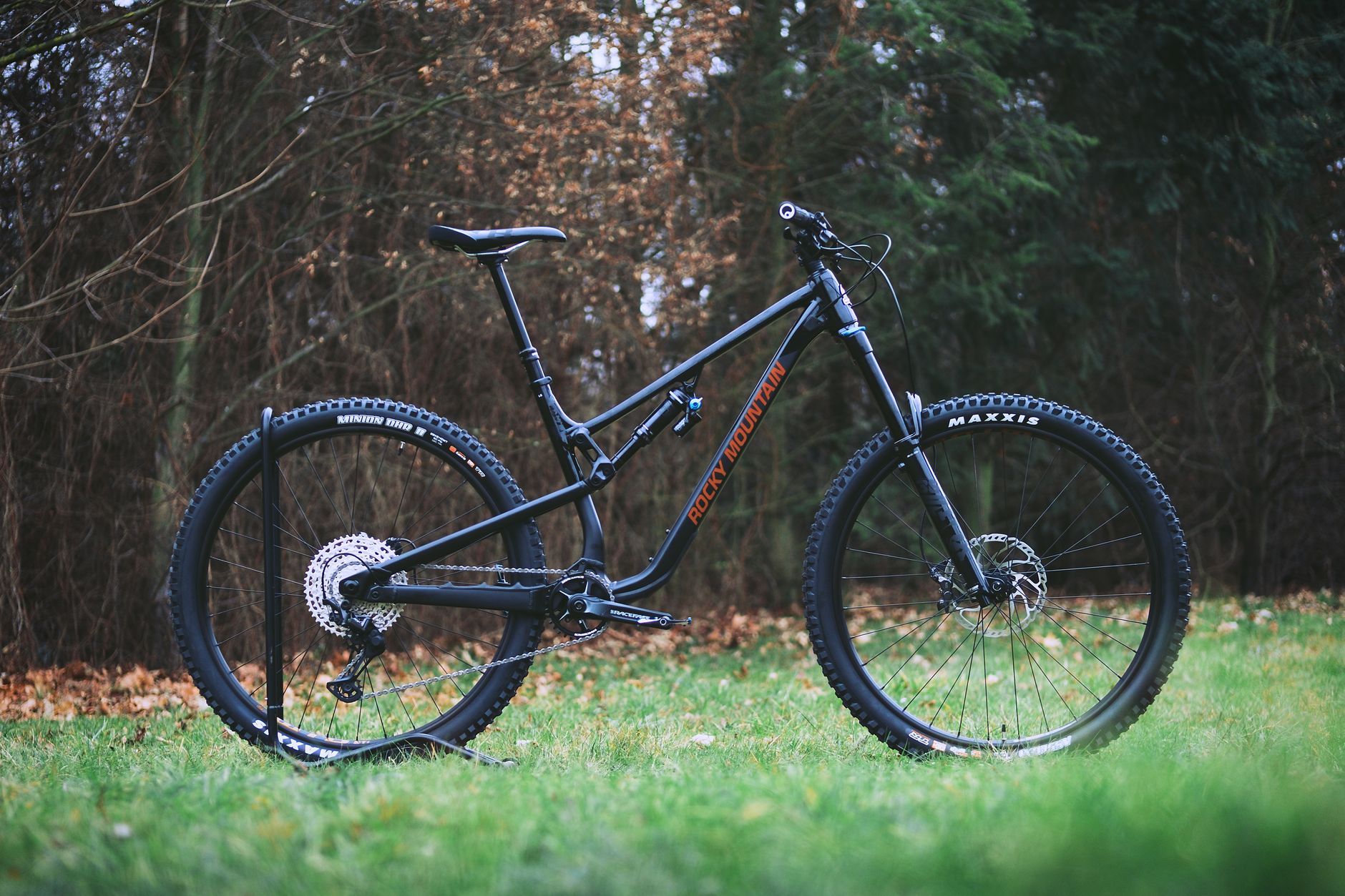
Reach is the horizontal distance from the bottom bracket (the spindle your cranks spin on) forward to the top of the head tube (the short tube at the front the fork steers through). In plain terms it's how much room the bike gives you to stand in when you're off the saddle with your pedals level, which is the position you ride in on anything interesting.
It's the useful number because it's measured the same way by every brand and it doesn't change when you slam the saddle down. More reach feels roomy and calm at speed. Less reach feels compact and easy to throw around. Once you know the reach number you got on well with, you can shop any brand on earth.
Reach has a partner called stack, the vertical height from the bottom bracket to that same point on the head tube, which sets how high the bars sit. Reach and stack together are the fit of the bike. There's a full walkthrough of both, plus head angle and the rest of the chart, in mountain bike geometry explained.
how to measure the bike you already have
The fastest sizing shortcut is a bike you've already ridden a lot. You don't need a tape measure for this. Search your bike's brand, model, year, and size plus “geometry,” find the reach number, and write it down. That single number is your baseline, and it's worth more than any height chart.
Then translate how the bike feels into millimeters:
- ›Feels about right. Shop within roughly 10mm of that reach and you'll be at home immediately.
- ›Feels cramped when you stand up. You're bunched over the bars on descents and the front wheel feels like it's under you. Go 15 to 25mm longer.
- ›Feels stretched out. Wrists and lower back complain, and it's work to weight the front wheel in a corner. Go 15 to 25mm shorter.
What about the old measurement, bottom bracket up to the top of the seat tube in inches? You can still take it, and a shop will still quote it, but it describes almost nothing about how long a modern bike is. It matters for exactly one thing now: seat tube length caps how much dropper post travel will physically fit, because the post has to slide down inside that tube. That's covered in are dropper posts universal.
how should a mountain bike fit?
Four checks, in the order worth doing them.
Standover. Straddle the bike in flat shoes, both feet on the ground, and look at the gap between you and the top tube. You want clearance, ideally 50 to 75mm (2 to 3 inches). Modern frames slope the top tube hard, so almost everyone clears almost every size, which is why standover is a safety floor rather than a sizing tool. If you don't clear it, the bike is out. If you do, it told you nothing else.
Saddle height. Sit on the bike, put your heel on the pedal, and spin it to the bottom of the stroke. Your leg should be completely straight with your hips level. When you move to riding position with the ball of your foot on the pedal, that leaves the slight bend you actually want. If your hips rock side to side to reach the bottom, the saddle is too high.
The standing position. Stand on the pedals, level, arms out to the bars. Elbows should be bent and out, not locked straight, and you should feel centred between the wheels instead of hanging off the back. This is the one that tells you whether the reach number suits you, and it's why a parking lot roll around beats a size chart.
The seated climb. Sit down and pedal up something. You should feel like you're over the pedals with weight still on your hands, not perched behind the bike. If the front wheel wanders on steep climbs, that's usually seat tube angle rather than size, but it shows up here first.
am i between sizes? how to break the tie
If your height landed cleanly on one size and you liked the answer, you wouldn't still be reading. So let's assume the useful case: you've got two sizes on the table and nothing so far has told you which one to buy. That's the only version of this decision that takes any thought, and here's how to settle it.
first, find out how much the choice costs you
Open the geometry chart and pull the reach number for both of your sizes. Subtract. That gap is the entire decision, and it's worth knowing before you agonise:
- ›Under about 15mm apart. Genuinely close. A stem and bar change covers most of that difference, so pick on gut feel or on whichever one is in stock and stop worrying.
- ›Around 20 to 25mm apart. The usual gap on a modern bike. You'll feel it, and parts can only partly paper over it. This is where the rest of this section earns its keep.
- ›30mm or more apart. Some brands only make three sizes, and the jumps are big. You cannot split this difference with parts. Get on both before you buy if there's any way to do it.
then measure your wingspan
This is the tiebreaker most people never take, and it decides more than the last inch of your height does. Stand with your arms straight out to the sides and have someone measure fingertip to fingertip. That's your wingspan. Compare it to your height.
Shorter than your height means your reach to the bars runs out sooner than your height implies, and the smaller of your two sizes is probably right. Longer than your height means you have room to give, and the bigger one likely fits better than the chart suggested. If it's within an inch either way, this one abstains and the next two blocks decide it.
lean to the smaller of your two if
- ›You ride for play, not the clock. Jumps, side hits, manuals, popping off whatever the trail gives you. A shorter bike gets light and changes direction with less effort from you.
- ›Your trails are tight and slow. Switchbacks, close trees, awkward low-speed tech. Quick steering is worth more than high-speed calm when you rarely get up to speed.
- ›Your wingspan is shorter than your height. Less reach keeps you from stretching out to the bars, which is what starts wrecking your wrists and lower back.
- ›You like riding actively. If you're happiest throwing the bike around under you, leaning it hard, moving it in the air, a smaller frame gives you the leverage to do it.
lean to the larger of your two if
- ›You're chasing speed and stability. Enduro or DH racing, bike park laps, wide-open rocky trails. Length is what keeps a bike calm when everything is coming at you fast.
- ›Your trails are steep and rough. A longer front end puts more bike out ahead of you, so the bike is far less inclined to pitch you forward when it's pointed straight down.
- ›Your wingspan is longer than your height. The extra room lets you stand up straight instead of hunching, and you get there without bolting on a long stem to fake it.
- ›You want to feel in the bike, not on it. A longer cockpit sits you centred between the wheels, so staying balanced takes less constant work from you.
Count them up. If you're leaning one way on three of the four, that's your answer, and no amount of re-reading the height chart is going to improve on it.
Dead even? Take the smaller one. It's the recoverable mistake: a slightly short bike can be stretched with a longer stem and a taller bar, and a bike that's too long has no fix at all. Two more things to ignore while you decide, because both come up constantly and neither means anything about fit. How much seatpost ends up showing. And what size the same brand sold you five years ago.
what you can change later, and what you can't
Sizing feels high stakes because it is. Almost everything bolted to a frame is swappable. The frame's own dimensions are not.
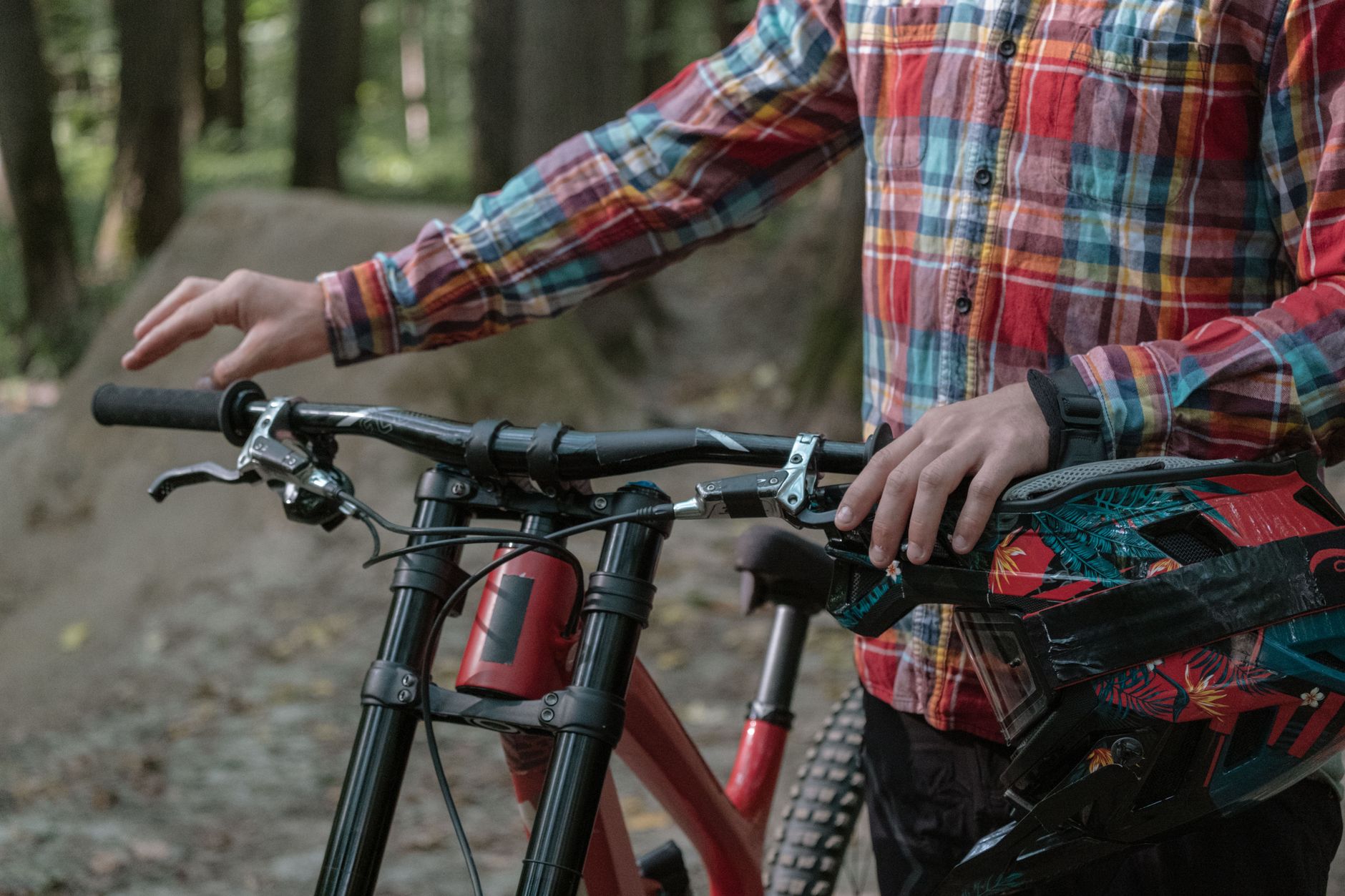
Adjustable after you buy: stem length (a 35mm stem to a 50mm stem moves your hands about 15mm), handlebar width and rise, headset spacers under the stem, saddle fore and aft on its rails, crank length, and dropper travel within what the seat tube allows. Together those are worth maybe 20 to 25mm of fit tuning, and they cost a fraction of a frame.
Locked the moment you choose the frame: reach, stack, seat tube length, head angle, seat tube angle, chainstay length, and wheelbase. No part swap moves those. Which is why the sizing decision gets made carefully once, and then the rest of the build is just parts that fit it.
does wheel size change what size i need?
Not directly. Frame size and wheel size are separate decisions, and brands build small frames around 29 inch wheels all the time. The honest caveat for shorter riders is rear tire clearance: on a small frame with a big rear wheel, a deep compression can bring the tire close to the underside of the saddle. That's the main reason some brands spec a smaller rear wheel on their small sizes, which is what a mullet setup is. If you're under about 5′4″ it's worth checking whether the size you want comes that way.
common sizing questions
- Is it better to size up or size down on a mountain bike?
- Size up if you ride fast, open, descending terrain and want stability. Size down if you ride tight, twisty, technical trails and want the bike to move around easily. Neither is more correct. If you have no strong preference, take the smaller size, because a slightly short bike can be stretched with a longer stem and a bike that is too long cannot be shrunk.
- How do I know if my mountain bike is too big?
- The usual signs are a front end that feels far away and hard to weight in corners, wrist and lower back ache after an hour, and trouble lifting the front wheel over obstacles. A bike that is too small feels cramped when you stand up, twitchy at speed, and like you are going over the bars on steep descents.
- Does height alone determine what size mountain bike I need?
- No. Height gets you to two candidate sizes, and reach picks between them. Two riders of the same height with different arm and leg proportions, or different riding styles, can be genuinely happier on different sizes of the same bike.
- What size mountain bike do I need if I am 5 foot 10?
- At 5 foot 10 (178cm) most riders land on a medium or a large, with a reach somewhere around 455 to 480mm on a trail bike. Check the specific frame’s geometry chart rather than the size letter, because a large from one brand can be shorter than a medium from another.
- Can I ride a 29er if I am short?
- Usually yes. Brands build small and extra-small 29ers with shorter head tubes and lower standover, and plenty of riders under 5 foot 4 ride them happily. Where 29 inch wheels genuinely get awkward on a small frame is rear tire buzz against the saddle on deep compressions, which is why some brands spec a smaller rear wheel on their small sizes.
- Is seat tube length still how mountain bikes are sized?
- Not really. Seat tube length used to be the frame size, quoted in inches, and it barely tracks the length of a modern bike. It still matters for one thing: it caps how much dropper post travel you can fit, because the post has to slide down inside it.
The short version: use height to get to two sizes, use reach to pick one, and use a test ride to confirm it if you can. Then let the frame you picked decide the rest of the build, because it will anyway.
size is a frame decision. make it once.
Every frame in the Builder carries its full geometry chart, so you can line up reach, stack, and seat tube length across sizes and brands before you commit to one. Everything else you bolt on is adjustable. This part isn't.
 filed under · build roadmap
Is There a PCPartPicker for Mountain Bikes? (Yes, and Here’s How It Works)
 filed under · suspension setup
How to Set Sag on a Mountain Bike (Front + Rear, by Discipline)
 filed under · compatibility
How to Build a Mountain Bike From Parts (And the Compatibility Traps)
 filed under · build roadmap
What Order to Choose Parts for a Custom MTB Build (Frame First, and Why)